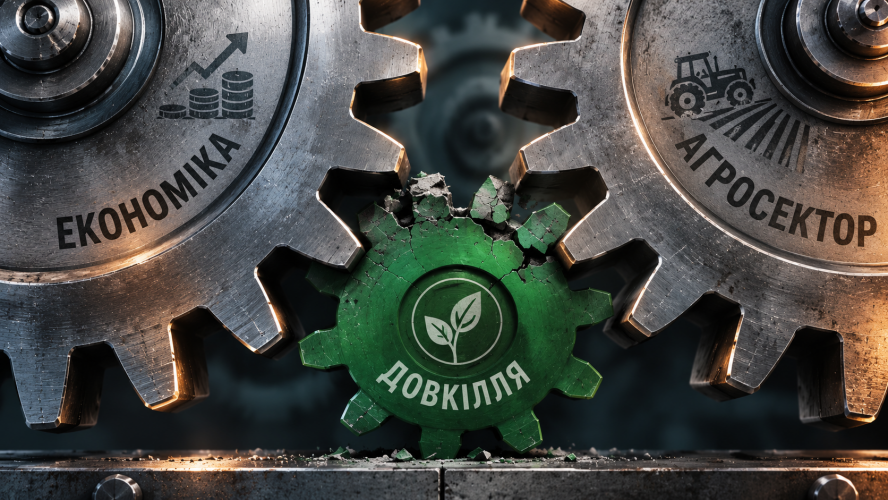
The abolition of Ukraine’s Ministry of Environmental Protection and Natural Resources and its merger with the Ministry of Economy have been among the government’s most controversial decisions in recent years. Despite criticism from the environmental community, academics and relevant experts, the Cabinet of Ministers has brought the economy, the environment and agricultural policy under one roof. The latest government reshuffle a week ago changed nothing: the environment remains firmly in the grip of the economy.
21 July marks the first anniversary of the creation of the ‘mega-ministry’. The key question is no longer ‘why was this done?’, but ‘what has it achieved?’. Has the expanded Ministry of Economy managed to operate more effectively and fulfil its promises – both its own and those of the government?
EcoPolitic has analysed the ministry’s work in the field of environmental protection over this period: what has been achieved, which reforms have stalled, which decisions have caused the greatest stir, and whether one of the most ambitious experiments in reforming the system of public administration has proved its worth.
So, what were we promised a year ago?
Improvement No. 1 — Creating synergy between economic, environmental and agricultural policies
The government assured us that merging the ministries would ensure a unified state policy in which economic development, environmental protection and the agricultural sector would not compete with one another, but would work together. In fact, the very word ‘synergy’ was one of the most frequently used terms in the statements made by Minister Oleksiy Sobolev a year ago.
"We will combine the best practices of the three ministries – the Ministry of Economy, the Ministry of Agrarian Policy, and the Ministry of Environmental Protection – and add modern tools: digital services, deregulation, support for entrepreneurship, attracting investment, and access to international financing. We plan for this to become a new institutional platform for a comprehensive vision of the country's development,” – he said.
And even in his farewell post on Facebook, Oleksii Sobolev claims:
"We became a single machine in which the three ministries worked in synergy."
In the Program of Activities of the Cabinet of Ministers of Ukraine, which the government presented in August of last year but which was never approved by the Verkhovna Rada, we see that same message:
"The Ministry of Economy unites three key areas of state policy – the economy, the agrarian sector, and environmental protection. This is a new institutional platform that will provide a comprehensive vision for the country's development, effective resource use, and better management of state assets.”
What we checked: whether environmental issues truly became an organic part of economic policy, rather than being pushed into the background?
Ecopolitics' conclusion
There was no real synergy among the ministry's areas of work: in all the mega-ministry's plans and programs, environmental issues received the least attention.
In cases where there was a conflict of interest between the environmental sector and the economic or agricultural components, decisions were almost always made to the detriment of the environment.
The most striking evidence:
-
A telling fact: in the 56-page presentation "Government achievements over the year", which former Minister Yuliia Svyrydenko presented on her own pages, there is not a single (!!!) word about the environment. Apparently, despite the existence of the eurointegration negotiation Chapter 27 "Environment and climate change", this area is still not considered a priority…
-
Among the eight operational goals of the Ministry of Economy in the Government Program, only one concerned the environment.
-
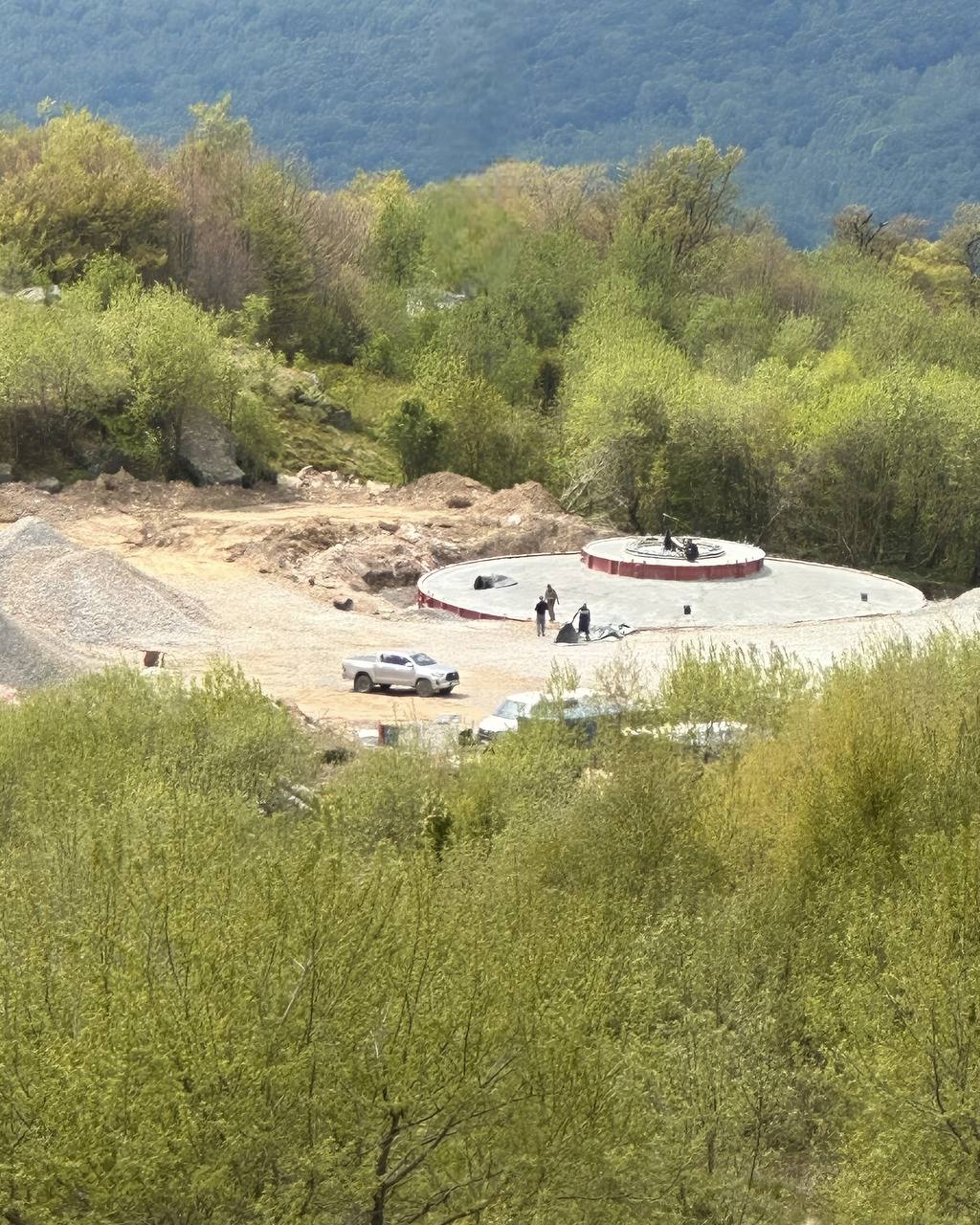
The case of Polonyna Runa clearly demonstrated the ministry's priorities. When the interests of an investor planning to build a wind farm clashed with demands from the environmental community to preserve one of the most valuable high-mountain areas of the Ukrainian Carpathians, the ministry sided with the developer, despite obvious environmental violations. Neither appeals from scientists, nor interventions by parliamentary committees, nor a petition to the president helped.

Photo: Mark Melnychenko.
-
To address issues in the forestry sector, the government and former Minister Sobolev saw the solution in lifting some of the existing environmental restrictions on timber harvesting. However, systemic corruption and numerous criminal cases against senior officials in the sector for illegal logging worth hundreds of millions of hryvnias went ignored.
- There have been regular attempts to revoke or weaken the EIA – the only real tool to prevent the implementation of environmentally hazardous projects. Such deregulation initiatives were supposed to make life easier for businesses but posed a threat of significant environmental degradation. For example, the Government Program envisaged submitting to parliament by the end of 2025 a draft law to simplify the EIA process. Activists, as well as the European Commission, insisted that such weakening was unacceptable. The draft law was never submitted; instead, they opted for a Cabinet of Ministers resolution that streamlines this process for businesses in territories affected by military action.
Improvement No. 2 – Improve, not "reset," environmental policy
“We are not starting from scratch but will improve the existing programs of the Ministry of Agrarian Policy and the Ministry of Environment by supplementing them with competencies in investment planning, access to donor resources, risk mitigation mechanisms, and reforming the permitting system,” the minister assured.
What we verified: Which environmental reforms have been continued, and which have actually stalled?
EcoPolitic's conclusion
The flagship reform that the Ministry of Economy most actively undertook to promote was the industrial pollution reform. All necessary resolutions were passed through the Cabinet of Ministers. Officials were actively preparing a draft law on the National Greenhouse Gas Emissions Trading System (NGGETS). The document was presented to stakeholders and published on May 15.
We have not seen significant progress on other reforms. There were some cosmetic changes, but no conceptual breakthroughs.
The most striking evidence:
-
An attempt to carry out another "optimization" of environmental protection agencies. It envisaged merging the State Forest Agency and the State Fisheries Agency into a new Biodiversity Agency, as well as combining three other agencies within the newly established Natural Resources Management Agency: the State Service of Ukraine for Geodesy, Cartography and Cadastre, the State Service of Geology and Mineral Resources, and the State Water Resources Agency. Environmental community representatives reminded that a similar idea–to consolidate the management of natural resources in one set of hands and eliminate environmental safeguards–had already been implemented in 2003 during Viktor Yanukovych's premiership, but after the Orange Revolution, this structure was abolished.
-
Catastrophic staff shortage: the halving of the number of ministry officials dealing with environmental matters. Almost all work clusters previously managed by the Ministry of Environmental Protection were assigned to a single deputy–Oleksandr Krasnolutskyi.
-
Worsening institutional incapacity. Even when the Ministry of Environmental Protection was a separate agency with over 300 employees, experts spoke of its weak institutional capacity. After the merger, the capabilities of the Ministry of Economy in this sector became even more limited. Note: the drafting of regulations related to the environment was frequently outsourced by both the former and current ministries to foreign consultants and projects. As a result, the produced documents often do not correspond to Ukrainian realities.
And as the cherry on top: the former Ministry of Environmental Protection building was transferred for use by the High Anti-Corruption Court, while environmental staff of the Ministry of Economy are being relocated to a rented building. Activists consider this step to be “a continuation of the deliberate destruction of the environmental protection sector.” Despite the environmental component being among those with the most benchmarks for European integration, a permanent place for the specialists who are to ensure their implementation has somehow not been found.
-
Downsizing, or in bureaucratic terms – "optimization," of the environmental inspectorate. By reducing the number of divisions and inspectors, the ministry referred to the “Strategy for Reforming the System of State Supervision (Control) in the Sphere of Environmental Protection, Rational Use, Reproduction, and Protection of Natural Resources until 2029”, while at the same time managing to contradict it: the Strategy emphasizes excessive workload on environmental inspectors, whereas the Ministry of Economy proceeded to further "optimize" their number.
-
On the positive side: the ministry facilitated the approval of important documents developed by the Ministry of Environmental Protection and Natural Resources, such as the updated Long-Term Low-Emission Development Strategy of Ukraine and the Cabinet of Ministers directive "On Approval of the Second Nationally Determined Contribution of Ukraine under the Paris Agreement" (NDC2). It also launched an environmental monitoring checkpoint network project prepared by the Ministry of Environmental Protection and Natural Resources.
Improvement No. 3 – Making Decisions Faster
At first glance, the idea was logical and clear: instead of approvals involving several ministries, decisions are concentrated within a single agency, which should decrease bureaucracy and expedite management processes.
What we checked: did the timelines for drafting bills, regulations, implementing reforms, and making decisions actually get shorter?
EcoPolitic's conclusion
We did not observe any fundamental acceleration. The regulatory acts agreed upon and approved during this year were mostly initiatives of the Ministry of Environmental Protection and Natural Resources.
We have noted a stronger focus of the Ministry of Economy on business welfare rather than environmental well-being. Decisions that could make life easier for entrepreneurs are made fairly quickly, though not always. On the other hand, those not affecting business interests may be ignored and left pending in the ministry for months. When choosing between the economy and the environment, in 99% of cases the choice will favor the economy.
Improvement No. 4 – Enhancing the Investment Capacity of the Environmental Sector
“We will improve existing policies of the Ministry of Agrarian Policy and Food and the Ministry of Environmental Protection and Natural Resources, supplementing them with competencies in investment planning and access to donor resources,” promised Oleksii Sobolev.
What we checked:
Has it been possible to attract new international financial sources and integrate environmental projects into recovery programs?
EcoPolitic's conclusion
In nearly a year of operations, the expanded Ministry of Economy has not attracted new foreign sources of financing specifically for environmental restoration. Among the listed achievements are joining the global BIOFIN program to finance biodiversity recovery – which is more of a symbolic “green” component in industrial and energy recovery programs – and a new biodiversity conservation strategy.
However, for now, this is more of a preparation for the use of financial mechanisms, the creation of strategic documents, and the continuation of programs that were launched before the liquidation of the Ministry of Environmental Protection and Natural Resources.
The ministry has not raised any new substantial funding flow for the restoration of ecosystems, protected areas, or nature destroyed by the war. The environment has been included in reconstruction programs, but mostly in the role of a “green” add-on to energy, industry, and investment policy.
Improvement No. 5 – Reforming the permitting system
In the Cabinet of Ministers' Action Program, the Ministry of Economy planned "to carry out another round of deregulation by December 31 through reviewing and abolishing excessive requirements for businesses, optimizing permitting and approval procedures, taking into account the results of consultations with businesses and parliamentary discussions."
A similar promise was made by former Minister Soboleva:
“Next comes large-scale deregulation, digitalization of procedures, and reducing inspections for businesses. Wherever we have not finished work in this direction, we will do everything necessary-in all three sectors we currently oversee.”
What we verified:
Have permitting procedures become faster, more transparent, and less bureaucratic? How have the innovations in the permitting system affected the environment?

EcoPolitic’s conclusion
Some permitting procedures have indeed been moved online and simplified, but the ministry currently lacks proof that the entire system has become faster and less bureaucratic. The Ministry of Economy is also involved in deregulation, but the results of such activities for the environment usually turn out to be regrettable or even very regrettable.
The most striking evidence:
-
The Unified State Register of Integrated Environmental Permits has started operating. Applications and all supporting documents can be submitted through the online platform “EcoSystem.” However, in more than half a year of the registry's operation, only one application has been registered, and it has already been returned for revision three times. The convenience of this service is also questionable: remarks must be addressed within 15 days so that the application is not considered unsubmitted, and the status of review is displayed not in chronological order, but in a completely random manner.
-
Since the time of the Ministry of Environmental Protection and Natural Resources, the speed of issuing licenses for handling hazardous waste has remained very low. Thus, in more than five months of its work during 2025, the Ministry of Economy issued only three such documents.
-
The deregulation promised by the minister and the government threatened to backfire on the environment. In September, the Cabinet of Ministers submitted draft law No. 13554 for consideration by the Environmental Committee, proposing to abolish several dozen environmental permits and approvals. Despite the existing environmental risks posed by the adoption of this document, representatives of the Ministry of Economy not only presented and fully supported this bill but were also outraged that other government bodies-particularly the State Water Resources Agency-expressed disagreement with the proposed changes.
Improvement No. 6 – Ensuring Ukraine fulfills its international environmental obligations
“Much attention will be paid to fulfilling Ukraine’s international environmental obligations, as well as to implementing priority programs in the fields of ecology and agribusiness,” emphasized former Minister Sobolev.
What we checked: What progress has Ukraine made in fulfilling its European integration and international environmental commitments?
EcoPolitic’s conclusion
There is progress, acknowledged by the European Commission, but much of the work so far remains at the level of laws, strategies, and implementation plans. It is disappointing that this movement is only noticeable on paper: the regulatory train has already left the station, but practical implementation is still waiting on the platform. Of particular concern are direct violations of international obligations, which the Ministry of Economy has ignored.
The most telling evidence:
-
On the positive side: update of NDC2, adoption of the Low Carbon Development Strategy until 2050, and publication of the draft law on the National Emissions Trading System.
-
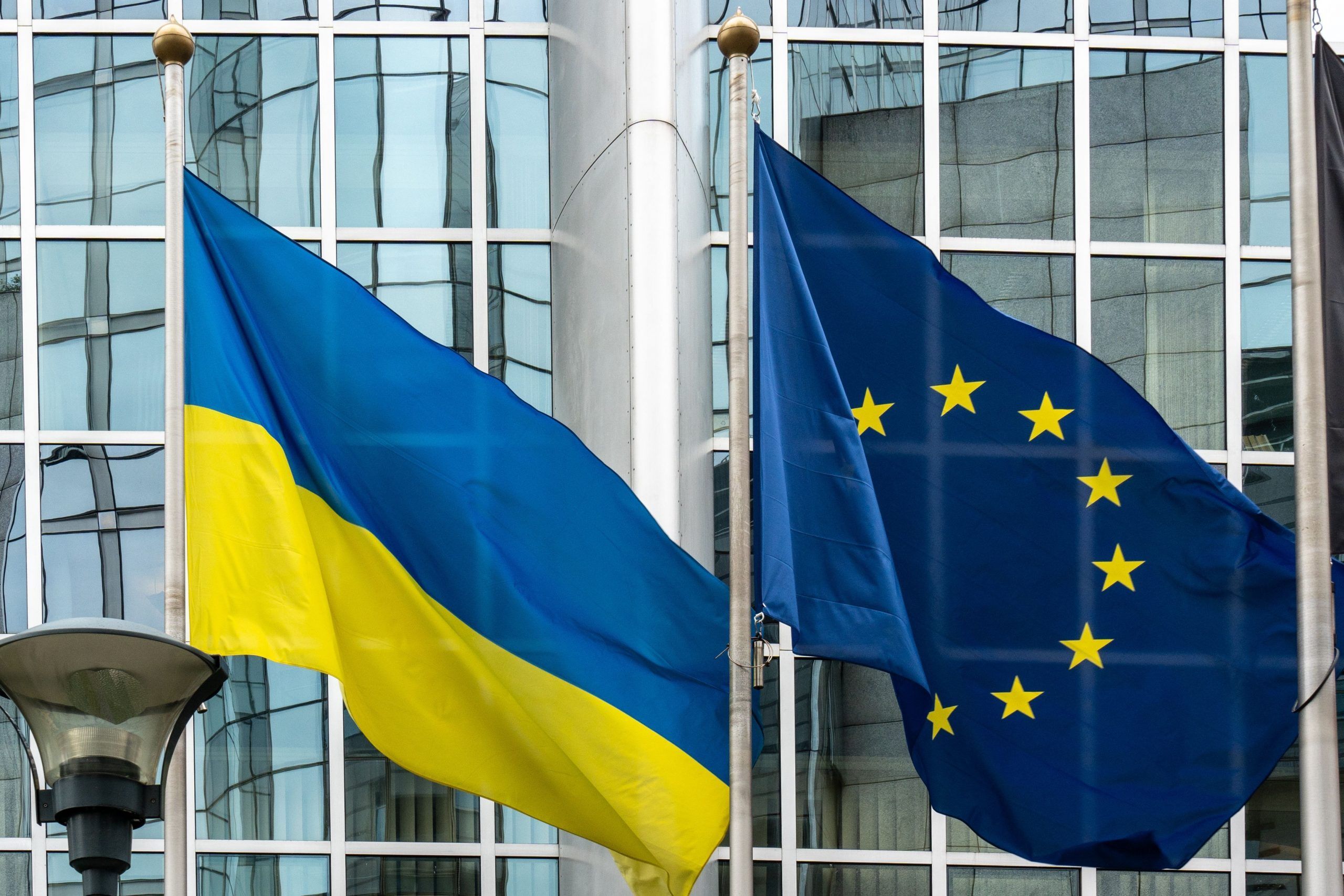
The European Commission directly points to weak administrative capacity, lack of funding, legislative delays, problems with EIA and SEA, poor public access to environmental information, and actual environmental control deficiencies.
-
The Ministry of Economy, like the Ministry of Environment before it, could not care less about the illegal construction of the National Military Memorial Cemetery on the territory of an Emerald Network site, which Ukraine is obliged to protect. The Standing Committee Bureau of the Bern Convention of the Council of Europe confirmed a number of serious environmental risks and once again demands explanations from Ukraine regarding this construction.
-
The Ministry of Economy prepared a draft Cabinet resolution, which in fact legalizes deforestation and contradicts the EU Deforestation Regulation (EUDR).
Improvement No. 7 – Close cooperation and transparency
“We want to listen to the business community and the public sector, and work closely together: to meet, discuss shared tasks, and implement them effectively. […] We also want the public sector to be fully engaged in cooperation, to help shape ministry policies and ensure their effective implementation,” assured Oleksii Sobolev at the start of his tenure as minister.
What we examined: Has the ministry actually started heeding the appeals, proposals, and comments of stakeholders and the public? Has it become more open?
EcoPolitic’s conclusion
Despite the former minister’s eloquent statement, representatives of the business and environmental communities regularly complained about the Ministry of Economy’s “deafness.” The agency typically preferred to ignore scandals that resonated throughout the environmental community and disregarded numerous citizens’ appeals on these issues.
Promises made to stakeholders during meetings often remained mere promises.
The most striking evidence:
-
Regarding the previously mentioned Runa meadow, the ministry renewed the environmental impact assessment (EIA) procedure for the wind farm, previously suspended by the courts, and gave the public only three days to submit comments on this high-profile and controversial project. All subsequent communication with the public on this case consisted of numerous form replies and unfulfilled agreements.
“Minister of Economy Oleksii Sobolev promised on Facebook to oversee adherence to the EIA conclusions. But no – our letters with dozens of GPS coordinates of Red Data Book species found in the meadows went unanswered,” stated the Ukrainian Nature Conservation Group (UNCG).
-
The Ministry of Economy attempted to abolish EIA for clear sanitary felling without public disclosure or discussion.
-
Information about the ministry’s working groups and their membership cannot be found on the Ministry of Economy’s website.
-
It cannot be said that, as during Minister Strilets’s tenure, the ministry is closed to communication and discussion: roundtables, working meetings, and other events are held, but their efficiency is usually close to zero.
-
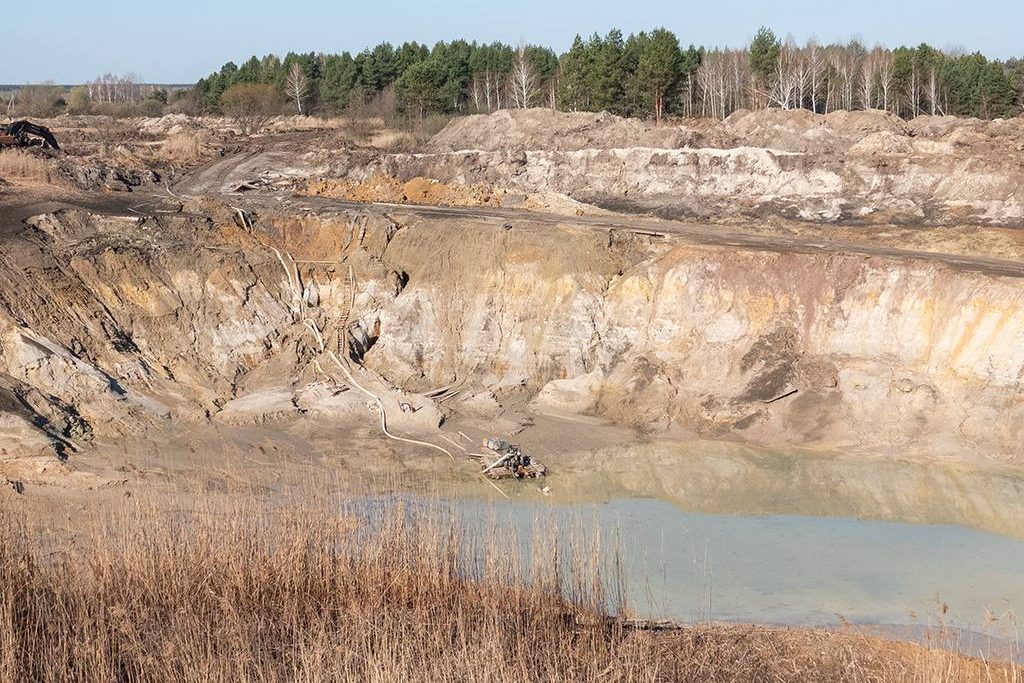
Case of the Negrebivsky quarry in Zhytomyr region: it took more than half a year for local residents, the Radomyshl City Council, environmental NGOs, and scientists to compel the Ministry of Economy to grant the State Environmental Inspectorate permission to verify whether the subsoil user was complying with the EIA conclusion. Environmental inspectors confirmed that all this time Dolomine LLC had been destroying forests and polluting the river with impunity. All under the ministry’s silent inaction. The UNCG described this conduct as “an example of paralysis of the state environmental protection system.”
Seven Promises Later: Once Again, the Environment Must Be Defended
The year's work of the "mega ministry" can be summed up briefly with the following points:
-
Environmental interests are increasingly being sacrificed to economic considerations.
-
Environmental safeguards that are the norm in the EU are perceived in Ukraine solely as obstacles for business.
-
Civil society and international partners have to literally fight to ensure that the Ukrainian authorities comply with environmental standards and European integration commitments.
-
The familiar gap in domestic environmental policy between “adopted” and “implemented” still remains.
This is why experts and activists have often criticized not just specific decisions made by the Ministry of Economy, but the governance model established after the Ministry of Environmental Protection was abolished.
At the same time, it would be an exaggeration to talk about a total dismantling of state environmental policy. Occasionally, the ministry has taken individual positive environmental decisions, sometimes even contrary to business expectations.
The real issue is that environmental protection now increasingly demands additional justification, external pressure, and public campaigns. This directly contradicts the promises the government made a year ago to explain the liquidation of the specialized ministry.
The merger was supposed to make state policy swifter, stronger, and more balanced. Instead, after a year of the merged Ministry of Economy, we are left with a rhetorical question: if one now has to fight even harder for the environment to be heard, was this attempt at reform truly successful?