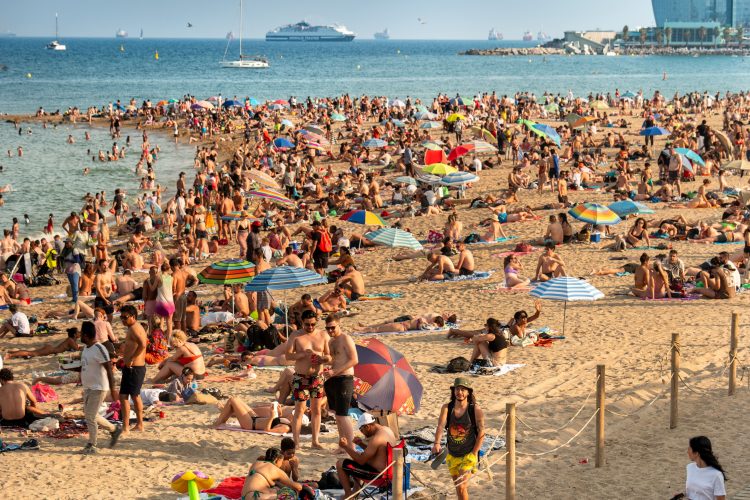
Scientists have reported that the world’s oceans have experienced the hottest June on record. During the first month of summer 2026, the sea surface temperature averaged 20.98°C. This exceeded the previous, disputed records set in 2023 and 2024.
This was reported by Euractiv, citing data from the European monitoring service Copernicus.
A long road to the record
June’s temperature readings were the result of nearly six months of almost unprecedented ocean warming. On average over the six-month period, the ocean surface temperature stood at 20.04°C. This is only slightly lower than in the hottest year on record, 2024.
It’s set to get worse
Scientists have noted that this warming of the waters may only be the beginning, as the El Niño weather phenomenon is set to gain strength later on.
“Current conditions may indicate the onset of a new phase that once again leads to uncharted territory. Given these ocean temperature levels and the approaching El Niño, we are likely to see more temperature records in the coming months,” said Carlo Buontempo, Director of the Copernicus Climate Change Service.
El Niño is already raging in the Southern Hemisphere
The El Niño climate phenomenon, which is characterized by abnormally warm waters in parts of the Pacific Ocean, affects global weather patterns by altering winds, cloud cover, and temperature regimes across the planet.
Experts warn that it increases the risk of extreme weather events – ranging from floods in Peru to droughts in Africa and wildfires in Australia. In addition, El Niño may temporarily push average global temperatures higher, amplifying the long-term warming caused by greenhouse gas emissions.
Specialists note that, after the record high temperatures of 2024, the new El Niño cycle could make 2026 one of the warmest years on record. This is due both to natural climate fluctuations and to the ongoing impact of anthropogenic emissions.
Regional nuances
The highest sea surface temperature was recorded in the tropical part of the Pacific Ocean – 27.26°C.
At the same time, in the Mediterranean Sea, water warmed up to 24.3°C, surpassing previous maximums recorded in 2023 and 2025. During half a year, marine heatwaves have affected 98% of the basin.
EcoPolitic previously reported that because of El Niño, summer continues in Peru instead of winter.
European experts emphasize that prolonged heat threatens labor productivity. This could have significant economic consequences. For example, the most pessimistic scenario forecasts that France could lose $240 billion in economic output as early as 2030.