
The increase in periods of extreme heat threatens labor productivity in Europe, which could, in turn, affect the entire economy. Experts warn that unless countries adapt workplaces and infrastructure overall, economic growth may slow significantly.
This was reported by The Guardian.
According to specialists' estimates, just four days of extreme heat can reduce quarterly labor productivity in Western Europe by 2%.
“Temperatures from +30 to +40°C are likely to lead to substantial productivity losses and directly impact work in construction, agriculture, manufacturing, retail, hospitality, as well as other sectors unable to provide a protected working environment,” said Robert Marks, lead climate economist at Oxford Economics.
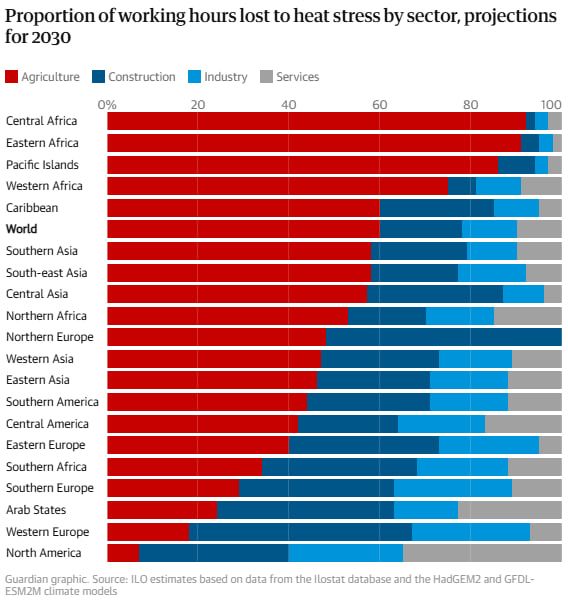
The sectors most vulnerable to heat are construction and agriculture. Researchers from the International Labour Organization forecast a maximum loss of working hours in these sectors by 2030.
Structural economic risk
Productivity drops sharply once the temperature crosses the 30°C threshold. At the same time, energy costs rise as more is consumed for cooling premises and equipment. These additional economic expenses have proven to be most painful for France, Italy, and Spain.
For example, the most pessimistic scenario predicts that economic output in France will fall by $240 billion as soon as 2030. For Italy, these losses will amount to $147 billion, and for Spain – $120 billion.
“Extreme heat is costly for all of us-as workers, as businesses, and as taxpayers-but there is a significant difference between countries that adapt and those that wait. It would be better to stop treating this as a summer problem and start viewing heat as a permanent challenge for economic policy,” emphasized co-author of the study from Allianz Investment Management, Katharina Utermöhl.
EcoPolitic previously reported that Europe was hit by a second wave of extreme heat in 2026. Some countries declared a red alert level.