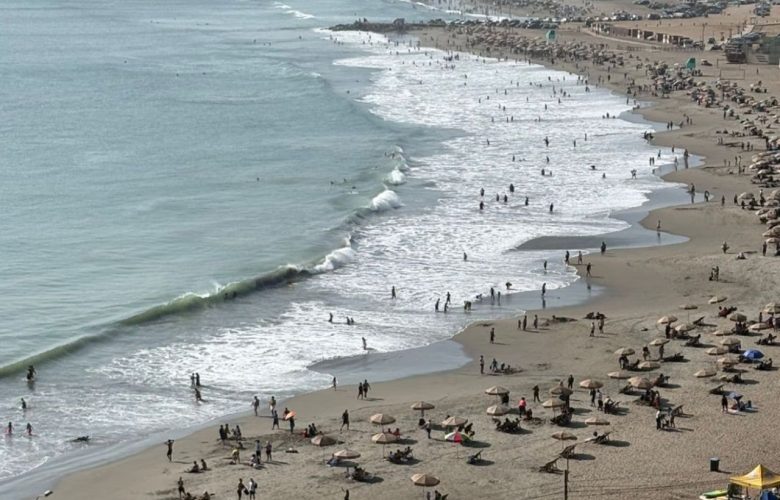
May and June are usually a time of gradually cooling temperatures in Lima, the capital of the South American country of Peru. However, this year, instead of cold weather, people experienced temperatures of 27°C. This was caused by the El Niño phenomenon, which brought a mass of warm ocean water to the country’s shores.
As reported by The Washington Post, the water temperature off the coast was 10°C above average. In Paita, north of Lima, the temperature was 14.2°C above average.
"The ocean’s warmth is unthinkable in a normal year. Peruvians are watching the situation with great concern, even when spending time outdoors," said Abraham Levy, director of a meteorological consulting firm.
Due to the warming of the ocean, its level has risen, which has already caused coastal flooding.
The economy is already feeling the effects. In particular, anchovy fishing has been suspended, even though Peru is a leader in this sector, and agricultural productivity is declining.
Infernal El Niño
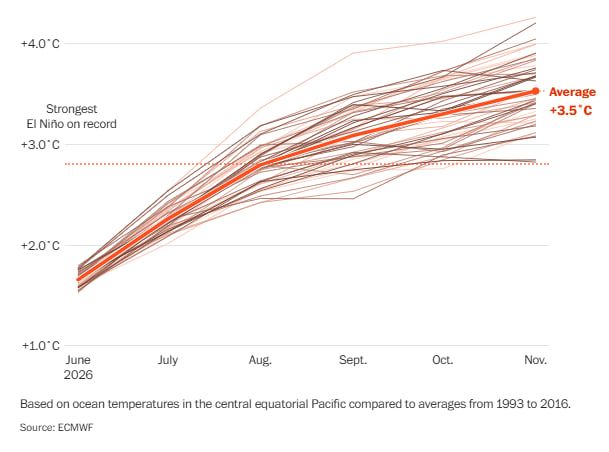
This year’s El Niño will likely break the records of 2015 and 1877. According to calculations by the European Centre for Medium-Range Weather Forecasts (ECMWF), in the equatorial part of the Pacific Ocean, temperatures will rise by 3.5°C by November.
Among the potential consequences that El Niño could cause in 2026:
- droughts on the islands of the Caribbean basin;
- an increase in typhoons in the Pacific Ocean, potentially impacting certain regions of East Asia, as well as Haiti and Guam;
- extremely hot summer throughout Europe, the northwestern Pacific region, and the Mid-Atlantic;
- droughts in northern Southern Africa and India, in Indonesia, Australia, and the islands of Oceania.
The impact of El Niño is extremely destructive due to its duration and increasing strength. Warming tends to accumulate and gradually heat both water and air, altering weather conditions across almost the entire planet.
EcoPolitic previously reported that in May, temperature records were already broken in a number of European countries, also resulting in loss of life. In London, for example, the temperature was 16°C above average values.