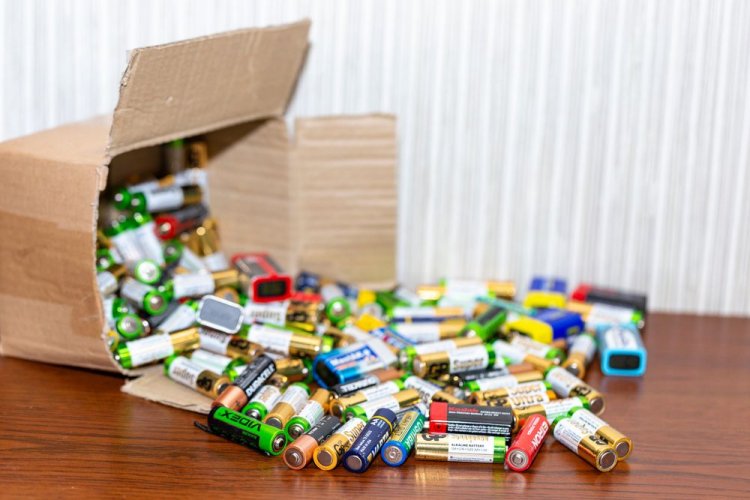
Batteries in a small metal container contain a veritable cocktail of substances that are toxic to the environment. Many Ukrainians realise that they should not be thrown away with ordinary rubbish, and towns and businesses offer various options for collecting this hazardous waste.
EcoPolitic has compiled information for its readers on why and how to hand in batteries for safe disposal.
Source of danger
In a normal landfill, the metal casing of the batteries will eventually corrode under the influence of moisture, sunlight and temperature, causing the entire contents to leak out. This includes various acids and alkalis, as well as mercury, lead and zinc.
The contents of just one such mini-battery are enough to contaminate up to 400 litres of water or up to 20 m² of soil.
Rules for sorting and collection
Collecting used batteries can quickly become a simple household habit. To do this, experts advise setting aside a separate container, whether plastic or cardboard. The main thing is to ensure no moisture gets in, as this can cause the casing to corrode.
The key rule for recycling is that the batteries must be intact. If toxic components are already leaking from them, the collection point may refuse to accept such waste.
Collection points
The most comprehensive map of battery collection points is provided by the nationwide movement “Batteries, surrender yourselves!”, which sends waste for recycling to European plants. On the project’s website you can find a complete list of collection points located in partner businesses, as well as descriptions of how much and what types of hazardous waste they accept.
Specifically, batteries can be handed over in the “Epicentr” network, at JYSK, WOG, or COMFY outlets.
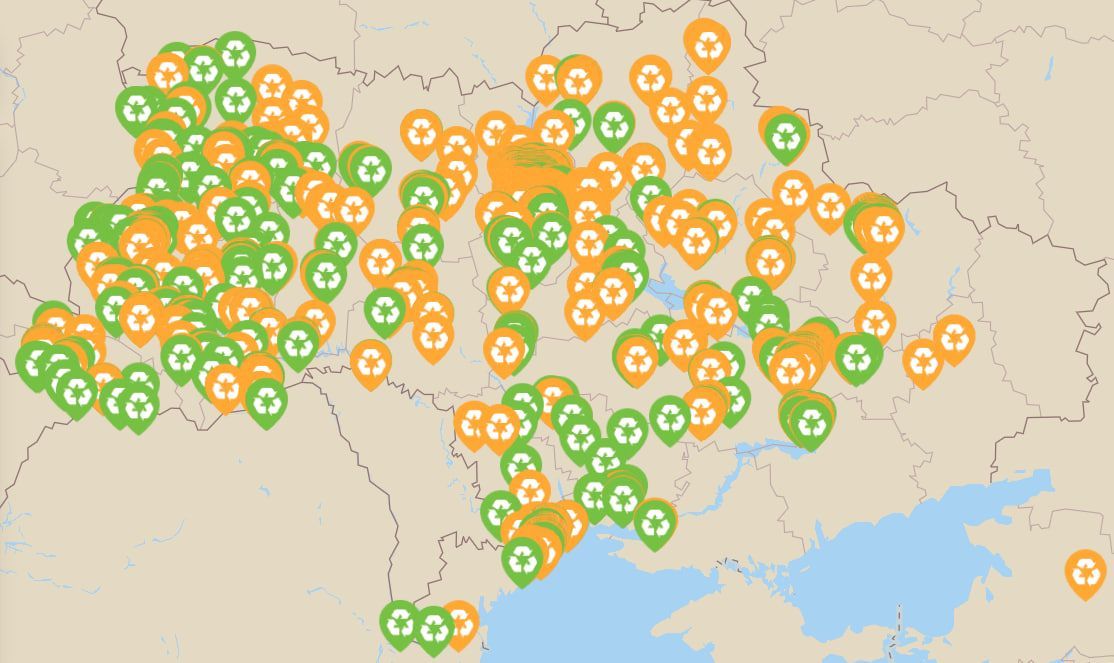
Source: “Batteries, surrender yourselves!”
Companies and even neighbors in one building can also join the project by opening their own collection point.
Municipal programs
In three regional centers – Lviv, Poltava, and Khmelnytskyi – hazardous waste is collected by a special “ecobus”. This is a specialized vehicle that follows a set route and schedule, allowing residents to hand over used batteries as well as mercury thermometers, fluorescent lamps, and other waste that should not end up in regular trash bins.
Each month, EcoPolitic publishes the schedule for the ecobuses. Please note that these vehicles often visit other settlements within city communities as well. You can find the schedule for the mobile waste collection point in June at this link.
In general, collection may be organized differently in Ukrainian cities. In some places, batteries are accepted by municipal enterprises or even schools. So if there isn't a collection facility nearby, it's worth checking with your local authorities.
For tips on how to develop the habit of sorting waste, EcoPolitic has previously shared advice.