Ukrainian scientists have studied the water supply situation in southern Ukraine and reached a grim conclusion: even the theoretical restoration of the Kakhovka Reservoir will not be able to restore water levels in the arid regions. This is due to additional factors, including climate change.
This is evidenced by the results of a study presented by Volodymyr Osadchiy, director of the Ukrainian Hydrometeorological Institute of the State Emergency Service and the National Academy of Sciences of Ukraine.
A Complex problem
The destruction of the Kakhovka HPP dam had more than just environmental and hydrological consequences. According to scientists, the disaster undermined the water, energy, food, and economic security of the southern regions. Because of this, the study of the consequences was interdisciplinary, involving specialists from various fields.
Source: NASU
Experts have carried out a detailed analysis of the water management balance for the sub-basins of the Upper and Middle Dnipro, as well as the Prypiat and Desna rivers. The modeling proposes three levels of scenarios: medium, low, and very low water content. As it turned out, in the last scenario, water scarcity may become systemic, progressively affecting a larger area of the Dnipro river basin.
No simple solutions
The analysis showed that restoring water flow in the Lower Dnipro basin is impossible by building a single facility alone. Therefore, reconstructing the Kakhovka Reservoir will not resolve the situation.
The problem can only be addressed through comprehensive management of the entire Dnipro basin. This requires taking all possible factors into account, such as climate change, the ecological needs of the rivers, and actual water consumption.
A climate blow
Ukrainian researchers have created a series of Euro-CORDEX climate models. Based on them, forecasts were made up to the end of the 21st century, and they are quite pessimistic. The trend of declining precipitation and warming is persistent for southern Ukraine.
The conclusion is that water scarcity in the Lower Dnipro was inevitable. The destruction of the Kakhovka HPP exacerbated the problem, while global warming continues to worsen it.
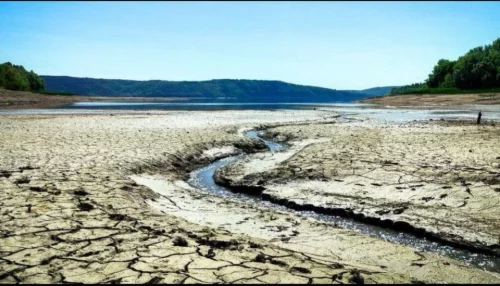
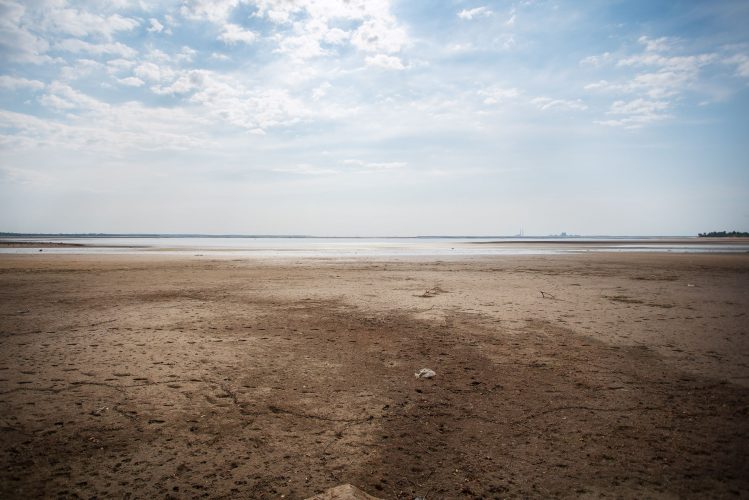
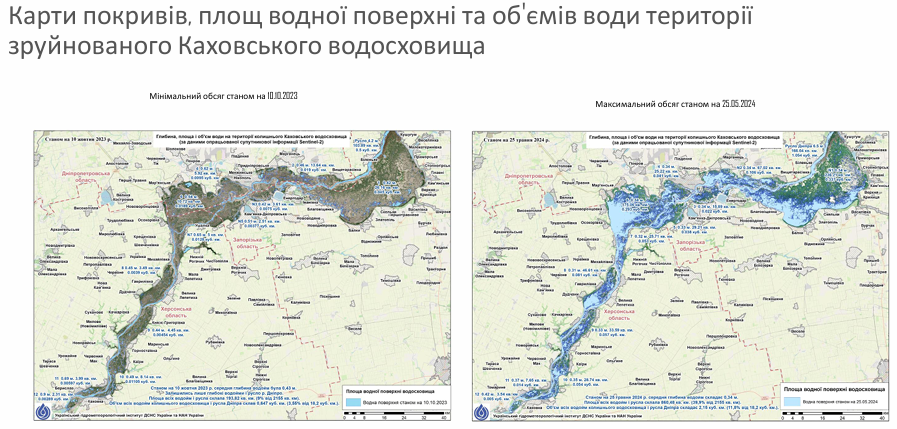
Currently, residual water bodies can be observed in the area of the former reservoir. However, the maximum amount of water recorded there is only 12% of the volume of the destroyed “Dnipro Sea.”
EcoPolitic previously reported on the threat of desertification facing southern Ukraine. The cause is global climate change, as well as the human factor: tree felling in forest belts and unsustainable, destructive farming practices.