Energy consumption in the European industrial sector continues to decline. In 2024, consumption was 8.1% lower than it had been ten years earlier. At the same time, the share of renewable energy sources (RES) and biofuels in the structure of final energy consumption continues to grow.
This is evidenced by the latest Eurostat data.
Energy sources for industry
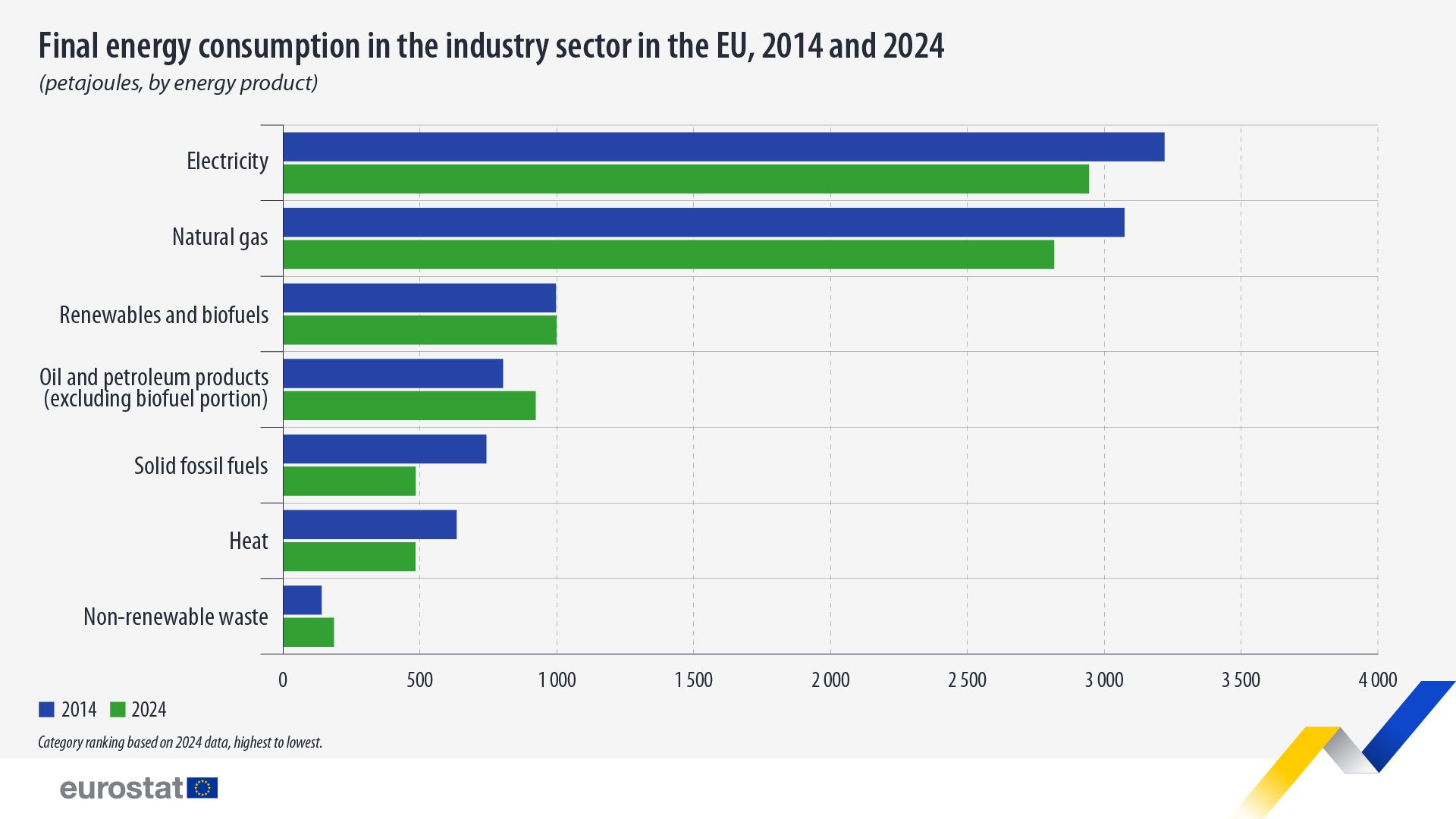
That year, renewable energy sources, together with biofuels, surpassed petroleum products in consumption statistics. Overall, the structure looked as follows:
- electricity – 2,945 PJ and 33.3%;
- natural gas – 2,817 PJ and 31.9%;
- renewable energy sources and biofuels – 999 PJ and 11.3%;
- oil and petroleum products – 922 PJ and 10.4%;
- solid fossil fuels – 484 PJ and 5.5%;
- thermal energy – 483 PJ and 5.5%;
- non-renewable waste – 186 PJ and 2.1%.
A surge in consumption
For most energy products, a decline in consumption was observed. Compared to the previous year, the sharpest drops were seen in fossil fuels (-34.8%) and heat (-23.7%).
There are only two exceptions, and renewable energy is among them. This segment’s share of final industrial consumption rose by 24.3%.
Source: Eurostat
EcoPolitics previously reported that some "green" technologies have already become more cost-effective than fossil fuels. The most competitive include wind and solar energy, electric vehicles, and biofuels.