Russia’s full-scale invasion of Ukraine has triggered a fossil fuel crisis in Europe. Biomethane production could serve as the foundation for both energy security and the “green” transition. However, despite interest in the sector, its development remains insufficient.
This is reported by the Bioenergy Association of Ukraine, citing the sixth international bulletin of the BIOMETHAVERSE project.
Growth has slowed
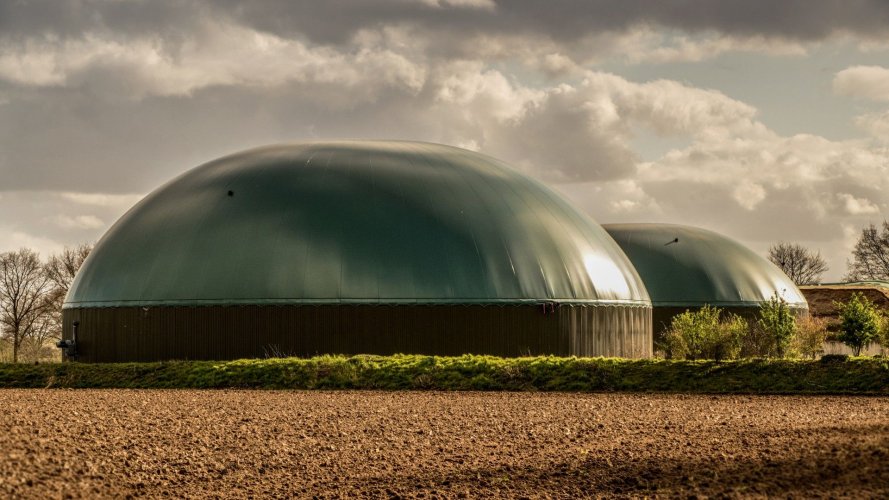
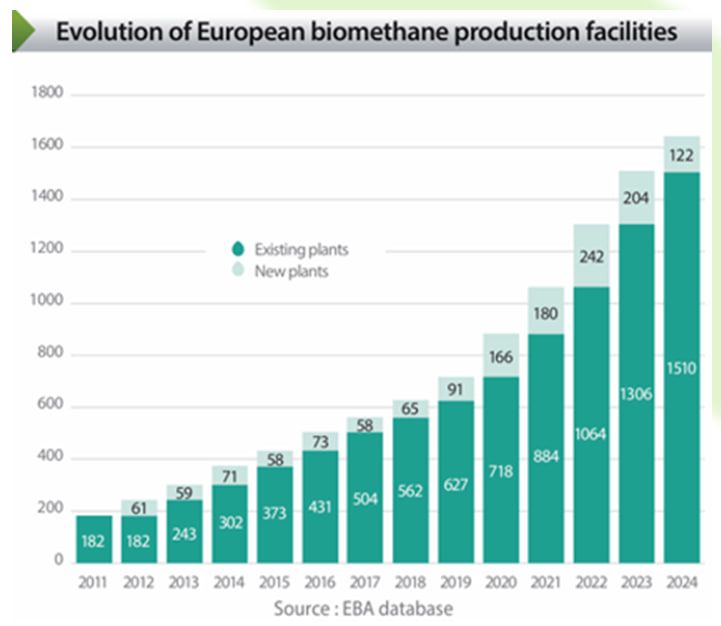
As of the end of the first quarter of 2025, the total capacity of biomethane production in Europe reached 7 billion m³ per year. Investors have allocated €28 billion to the development of this energy segment, indicating high interest. However, these relatively high figures are still insufficient and point to a slowdown in the growth of biomethane production.
The foundation of resilience
The development of the biogas segment is strategic for Europe. Renewable gases can help eliminate dependence on fossil fuels, which in turn will support the region’s economic growth and reduce greenhouse gas emissions.
To achieve this goal, Europe should reconsider its targets for biogas. The European Biogas Association calls for setting them at the level of 100 billion m3 of annual production by 2040.
Ukraine's export potential
Back at the beginning of 2025, Ukrainian producers exported biomethane to the EU for the first time. For Ukraine, this is the only option to commercialize “green” gas, as on the domestic market it competes with natural gas.
The sale of biomethane abroad could become an effective measure for strengthening the economy. According to experts, this will also help diversify energy markets and be a step towards energy independence.
“The development of the domestic market, whose potential significantly exceeds the capabilities of biomethane producers, is the main priority. Obviously, this goal can only be achieved after the end of the war with Russia,” the Bioenergy Association emphasizes.
With the onset of Russia’s full-scale aggression, interest in biomethane has increased significantly. A step towards cooperation in this sector was the signing of the Memorandum of Understanding between the European Union and Ukraine on strategic partnership regarding biomethane, hydrogen, and other synthetic gases in February 2023.
EcoPolitic previously reported that Ukraine adopted a biomethane market development strategy. The government program sets an ambitious goal – to reach an annual production volume of 2.1 billion m3 by 2035.
Reports about the intention to export Ukrainian biomethane have already appeared in Germany, where they plan to increase its share in heat energy generation.