The environmental tax in Ukraine serves as a mechanism whereby businesses pay for environmental pollution, and communities can use these funds to improve the environment. Each region has considerable freedom in deciding exactly how to do this, but it almost never involves directly reducing the pollution itself. Chernivtsi Oblast is also following the standard scenario for all regions, prioritizing waste and wastewater management.
EcoPolitic presents another article in our series dedicated to the use of the eco-tax in Ukraine’s regions.
Pollution tax in Bukovina
Chernivtsi Oblast does not have a large number of polluting enterprises, so not much eco-tax revenue comes from here.
During 2025, 1107 business entities paid over UAH 19 million in environmental payments, with the largest share-UAH 8.5 million-coming from discharges of pollutants into water bodies. In the previous year, there were more paying enterprises-almost 1,200-but they contributed less: just over UAH 17 million.
After reaching the consolidated budget, the environmental tax funds are typically distributed between the state budget of Ukraine and the budgets of the regions and communities from which the payment originated. There, these funds go to the target fund for Environmental Protection (EPF). These funds can be spent exclusively on environmental protection measures.
However, the Cabinet of Ministers’ Decree No. 1147 from 1996 grants communities a wide range of activities that may be classified as "environmental". In practice, this means that the repair of the sewage system, which belongs to the housing and utilities sector, or planting flowerbeds in a park, which is clearly an improvement of public amenities, are both allowed by the government to be regarded as environmental measures.
Chernivtsi region has also taken advantage of this provision.
The region’s environmental program
Currently, Bukovina operates a comprehensive program for environmental protection, "Ecology", adopted back in 2022. The total budget through 2026 is projected at UAH 268.5 million. The EPF funds in the regional and local budgets are listed as one of the sources of financing, but the specific amount is not mentioned.
The most expensive area in the environmental program is the protection and use of water resources, with a budget of UAH 70 million. It is not possible to specify the allocation for particular activities, as the program does not provide itemization. However, this section does mention the construction and reconstruction of wastewater treatment plants and sewerage networks in the region’s communities, flood control facilities, river cleaning, and management of the water cadastre.
UAH 46 million was planned for plant resources. This area includes reforestation, greening of settlements, and the identification and protection of reserves of valuable plant resources.
Дovoli uzahalnena “Adaptation to Climate Change” covers both educational training sessions and the creation of an air quality monitoring system. A total of UAH 21 million has been allocated for this area.
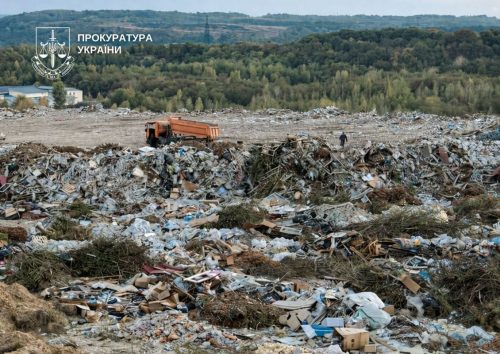
UAH 26.5 million has been earmarked for municipal waste management. This section includes the construction of necessary facilities, the purchase of waste collection vehicles, the arrangement of landfills, and more.
Chernivtsi region planned to spend UAH 24 million on wildlife conservation. This refers to breeding wild animals in nurseries, activities for the semi-free keeping of deer, combating poaching, as well as supplying water to natural spawning grounds.
An additional UAH 21.5 million was planned for the preservation of natural reserve funds, and UAH 29 million for scientific and informational activities in the field of ecology.
The fight for ecology in smaller communities
Mamaivtsi Village Council outlined its environmental measures in the program “Protection of the Natural Environment and Environmental Safety.” Overall, for the period from 2025 to 2028, 14 measures have been planned here, with funding for 11 of these measures, in part, coming from the Environmental Protection Fund.
Specifically, using money from polluting enterprises, the following are planned:
- expand the sewer network in private homes,
- maintain sewer infrastructure,
- green public areas, including the establishment of a park in Mamaivtsi,
- remove hazardous and dry trees,
- purchase and plant trees and flowers, create flowerbeds,
- maintain green spaces.
Alongside the village council, a municipal enterprise with a name more closely aligned with the nature of these activities – “Improvement” – is responsible for implementation. It should be noted that the eco-tax will also fund riverbed clearing and well restoration, as well as the protection and rational use of water resources, whatever may be encompassed by this abstract formulation.
The city of Zastavna also plans to implement its environmental programme through funds from the environmental tax, as well as pollution charges, compensation for environmental damage, and other permitted sources.
The list of measures for 2025–2027 starts with greening initiatives involving the creation of flowerbeds and planting of flowers. The eco-tax will also cover the removal of damaged trees here. Several measures are dedicated to waste management: landfill reclamation, elimination of illegal dumpsites, and ensuring the safe collection and disposal of waste. The environmental programme also provides for riverbed cleaning, bank stabilization, and the certification of water bodies.
The Banyliv Village Council has prudently divided its environmental programme for 2026–2028 into three blocks:
- Protection and rational use of water resources. Here, only one measure is “funded” – the certification of small rivers and water bodies.
- Greening and improvement of public spaces. This refers to the elimination of hazardous and dry trees, and, naturally, greening the settlements of the community.
- Development of solid municipal waste management. Funds here are allocated for the elimination of illegal dumps and the improvement of existing ones, as well as arranging waste collection points and purchasing containers.
Although the table of measures lists the source of funding as the local budget, the resolution itself clarifies that it specifically refers to revenues from the payment of the environmental tax. The program’s budget is rather modest – a total of 100,000 UAH.