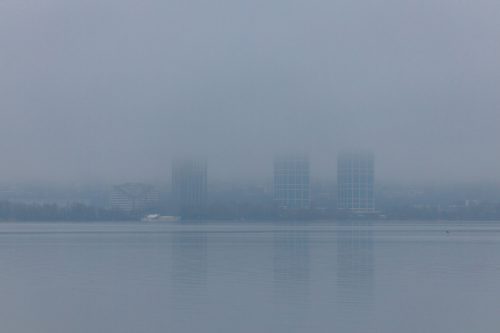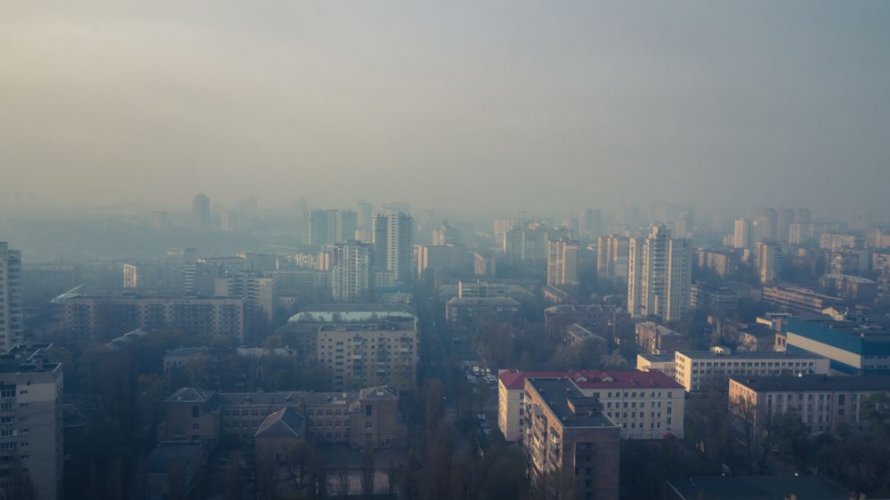
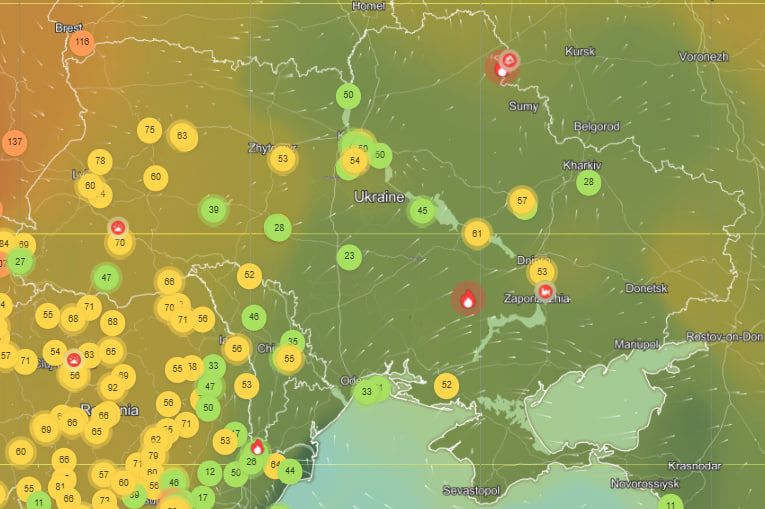
As of the morning of April 16, Ukrainian regional centers are recording "green" or "yellow" pollution levels—with no significant exceedances or health risks to residents. The majority of cities with average air quality are located in the west and north of the country.
This is according to data from the IQAir monitoring platform.
In Kyiv, air quality on average corresponds to the "green" level according to the IQAir classification. The concentration of PM2.5 fine particulate matter slightly exceeds the World Health Organization (WHO) standard—7.2 μg/m³ versus 5.5 μg/m³.
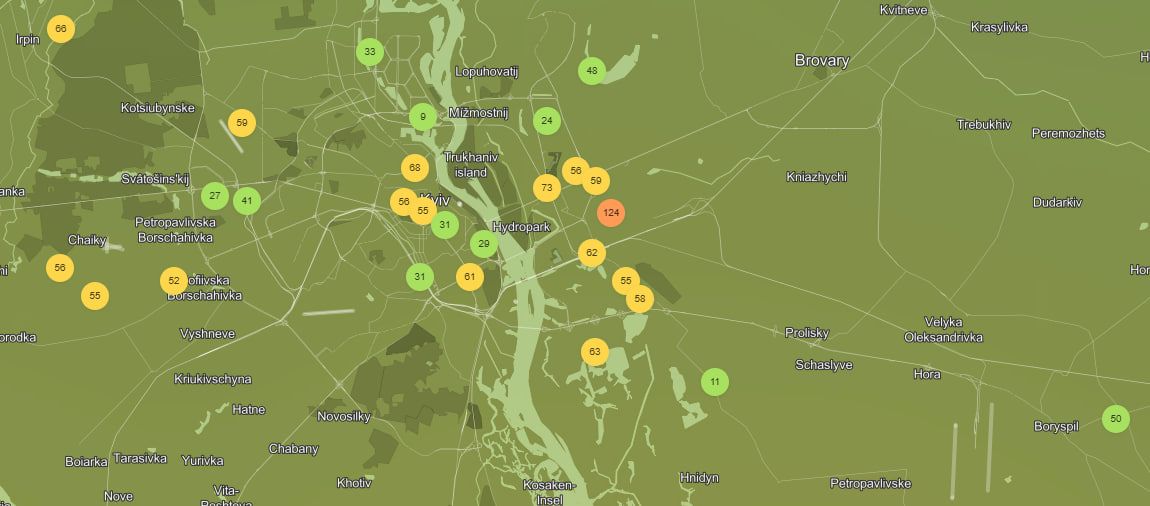
However, many monitoring stations are recording average pollution levels, while one location is reporting a level unhealthy for sensitive groups. This concerns the site on Khodkevych Street, where the particulate matter concentration reaches 45 µg/m3, exceeding the norm by more than eightfold.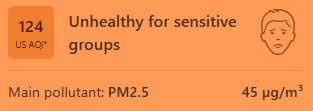
No significant exceedances of pollution were recorded on April 16 in cities such as Odesa, Khmelnytskyi, Kharkiv, and Cherkasy.
In a number of regional centers, the equipment indicates average levels of air pollution, including:
- Lutsk. Here, the air is among the most dust-laden in Ukraine, at 21.9 µg/m3;
- Dnipro. Equipment shows particulate matter content at 10.5 µg/m3;
- Lviv. Fine dust concentration here averages almost 2.5 times above the norm, at 13.3 µg/m3;
- Zhytomyr, with a particulate content of 9.8 µg/m3;
- Rivne. The urban air contains nearly three times more dust than the WHO recommendation, at 15.7 µg/m3.
Earlier, EcoPolitic reported on a study by Ukrainian scientists on the impact of war on air quality. Air is affected both by the general decline in pollution due to a halt in industrial activity and by local exceedances that can reach dozens of times above the norm as a result of hostile attacks.