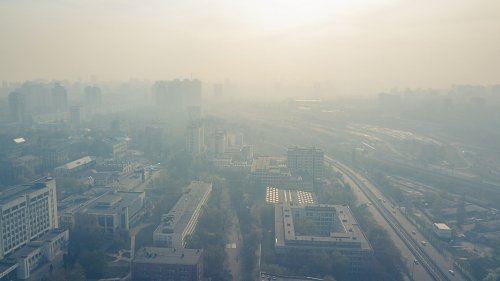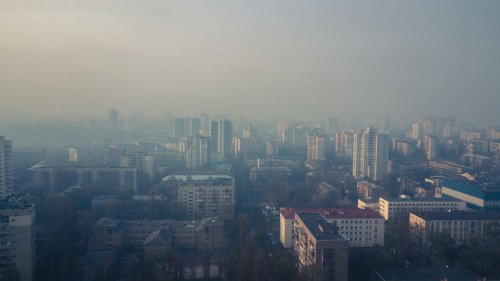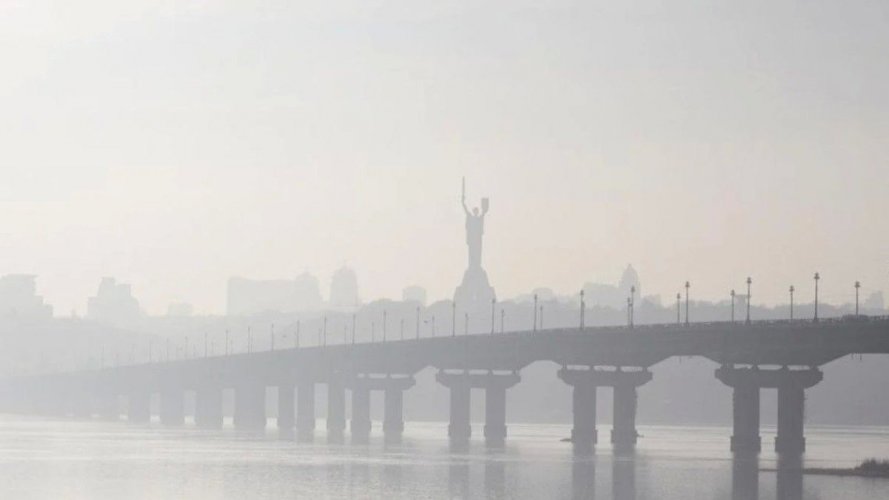
As of the morning of March 27, Ukraine’s capital ranks 33rd among the world’s largest cities in terms of air pollution. Overall, air quality in Kyiv is rated as moderate, but in some areas, being outdoors poses a health risk.
This is according to the latest data from the Swiss monitoring platform IQAir.
On the morning of March 27, Ukraine’s capital ranked 33rd among the world’s largest cities in terms of air pollution. Overall, the air quality in Kyiv is assessed as moderate, but in some districts, being outside is hazardous to health.
This is evidenced by the latest data from the Swiss monitoring platform IQAir.
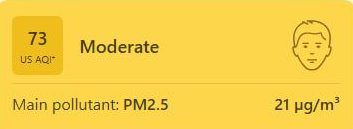
On average in Kyiv, the concentration of fine particulate matter PM2.5 is 21 µg per 1 m3. This is almost four times higher than the recommended level of 5.5 µg/m3 set by the World Health Organization.
The nearest location to the city with good air quality is the suburban village of Khotiv. Within the capital itself, the vast majority of monitoring stations indicate a moderate level of pollution.
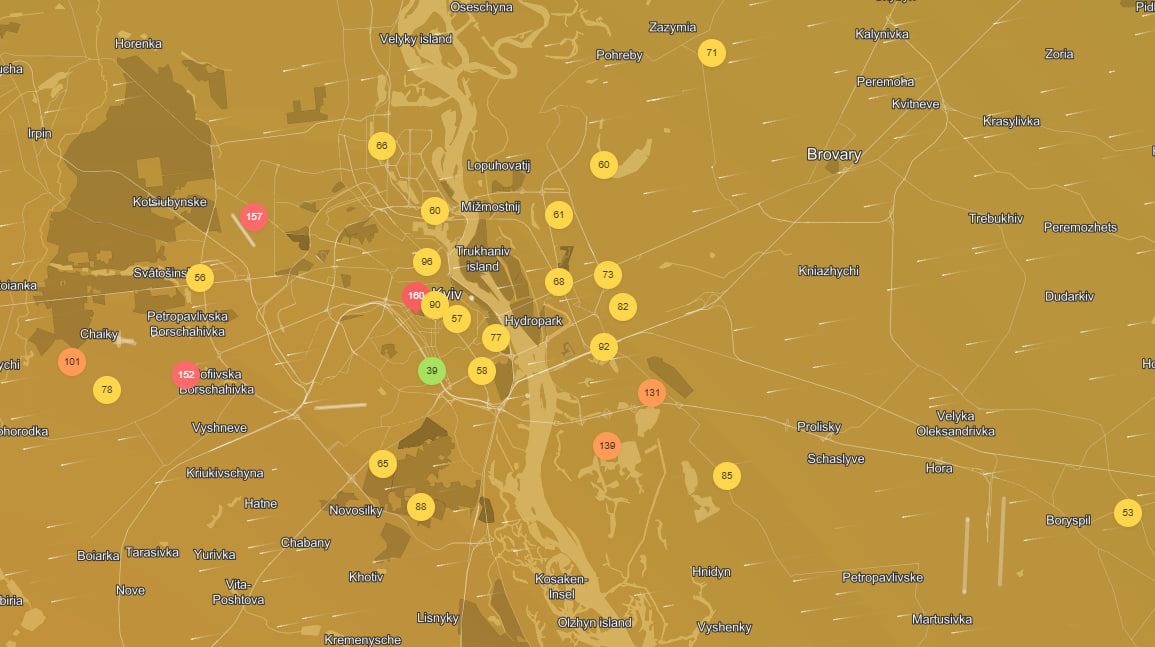
Monitoring equipment in the Darnytskyi district of the capital recorded unsatisfactory air quality, which is unhealthy for sensitive groups of the population. There, the dust concentration nearly reaches 51 µg/m3.
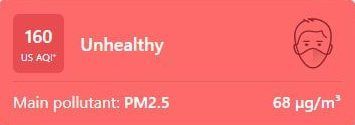
In two locations in Kyiv, pollution is extremely high, reaching a “red” danger level. The IQAir platform classifies this as unhealthy for people. These locations are Sofiivska Borshchahivka, where the dust concentration is 57.1 µg/m3, and Sichovykh Striltsiv Street, where the dust content reached a record 68 µg/m3 for the capital, which is more than 12 times above the WHO standards.
EcoPolitic previously reported on a study by Ukrainian scientists on the impact of war on air quality. They discovered contradictory trends – from a general decline in pollution due to industrial stagnation to local exceedances by dozens of times as a result of hostile attacks.