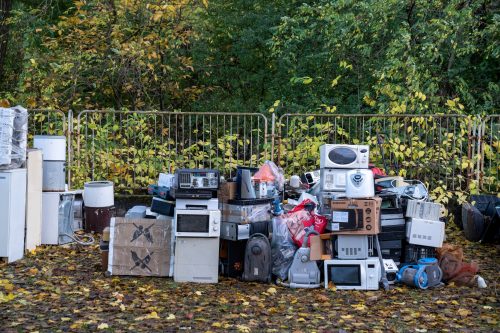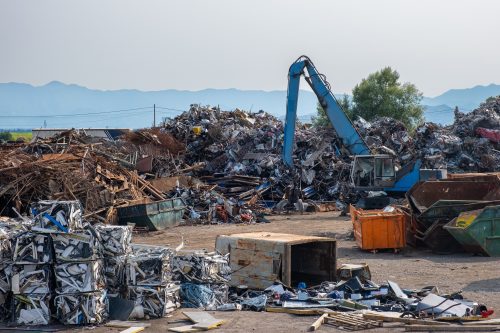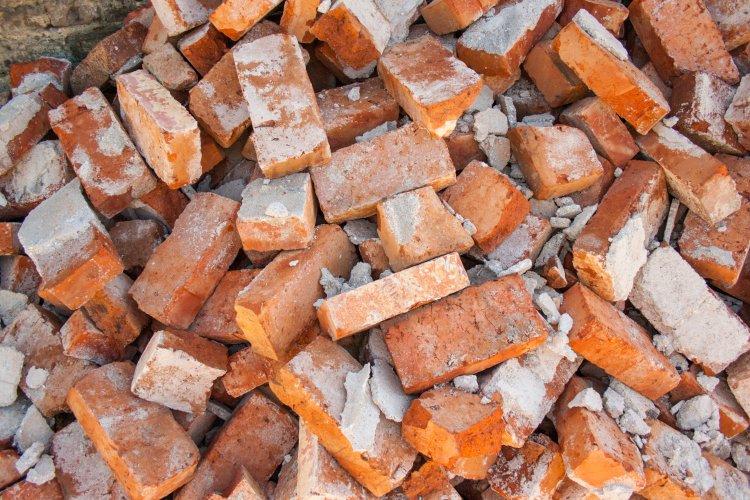
Demolishing buildings produces tons of construction waste. However, the EU has its own mechanism in place to ensure that this waste can be reused, reducing the burden on landfills.
The Ukraine Support Team (UST) explained the stages that construction waste goes through in Europe.
Preparation
In the EU, buildings are not demolished without planning what to do with their components. Thus, before obtaining a demolition permit, it is necessary to identify materials suitable for reuse and to identify hazardous elements and materials.
After that, a report is usually prepared containing recommendations for safe dismantling and waste sorting.
Transportation
Logistical details are planned even before the building is dismantled, at the preparation stage. After demolition itself, the waste is transported to a landfill.
Separate rules apply to hazardous waste-they are transported according to special requirements, including marking, packaging, and control procedures.
Recovery
This stage consists of preparation for recycling and reuse, including cleaning from impurities, crushing, sorting, or treatment.
New status
After the recovery process, the waste legally ceases to be “waste” and is ready for use again.
However, in order to become a commodity, the new "form" of construction debris must be in demand, comply with technical standards, and not harm people or the environment.
One of the most popular ways to use construction waste is as secondary aggregates. These can substitute for crushed stone and sand in concrete or during road construction.
However, not all construction waste can be recycled-some is buried or incinerated. Nevertheless, the European Union creates economic incentives so that recovery is more profitable than disposal in landfills.
EcoPolitic has previously covered the waste problem in Ukraine in more detail.
Recently, the environmental committee of the Verkhovna Rada presented a working draft of the law “On Packaging and Packaging Waste”. A review from EcoPolitika is available at this link.