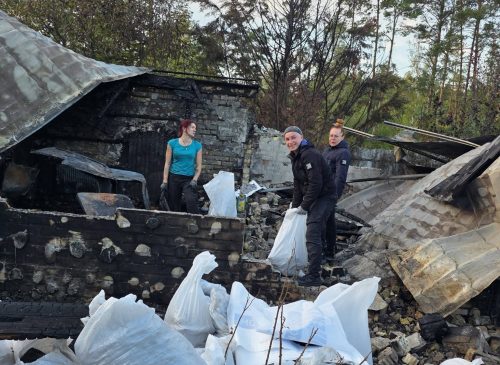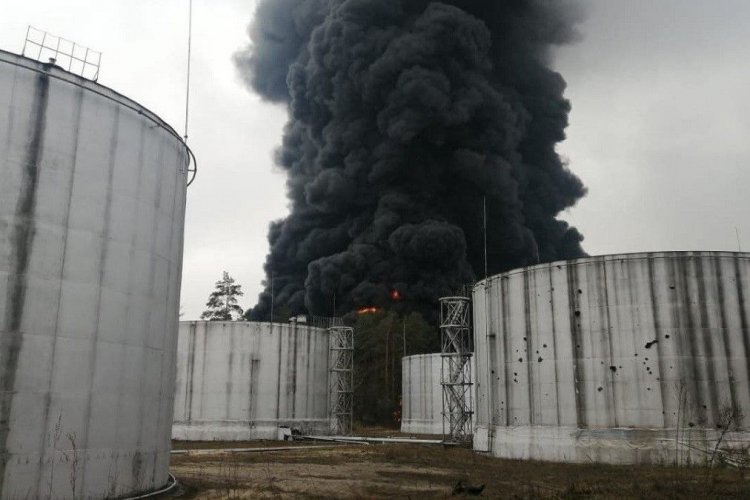
Russian attacks on Ukrainian cities cause instant air pollution, but at the same time, the destruction of industry and infrastructure reduces emissions. Ukrainian scientists were the first in the world to comprehensively study how war affects air quality in the short and long term.
According to the National Academy of Sciences of Ukraine, teams from the Ukrainian Hydrometeorological Institute of the State Emergency Service of Ukraine and the National Academy of Sciences analyzed data from ground-based monitoring systems and Sentinel-5 Precursor satellite data. The report records changes in atmospheric pollution during 2022-2024.
Short-term changes
Ukrainian scientists analyzed the state of the air after thousands of enemy strikes with missiles and strike drones. The results are simply shocking: immediately after the attacks, the concentration of harmful impurities increases by an average of 100-400%. Extreme exceedances of more than 1000% were also recorded.
The NAS of Ukraine notes that they worked with limited data, as ground-based monitoring systems do not cover all locations. Instrumental confirmation of the influence on ground-level air resulting from attacks was obtained in 255 cases. This refers to situations where harmful substances traveled from the epicenter of an attack to an air quality monitoring station.
Long-term impact
Air pollution arises not only from the attacks but also from their subsequent consequences. The NAS highlighted that long-term changes in air quality are influenced by the following factors:
- destruction of industrial enterprises,
- interruptions in energy supply,
- widespread use of diesel generators in populated areas,
- population migration,
- changes in transportation dynamics.
Researchers observed that concentrations of particulate matter, carbon monoxide (CO), and nitrogen dioxide (NO₂) displayed a downward trend in industrial centers and large cities. However, near the line of hostilities, the quantity of these substances only increased.
“Wartime” energy consumption, with a shift to more environmentally harmful types of fuel, has led to an increase in sulfur dioxide (SO₂) levels in the air.
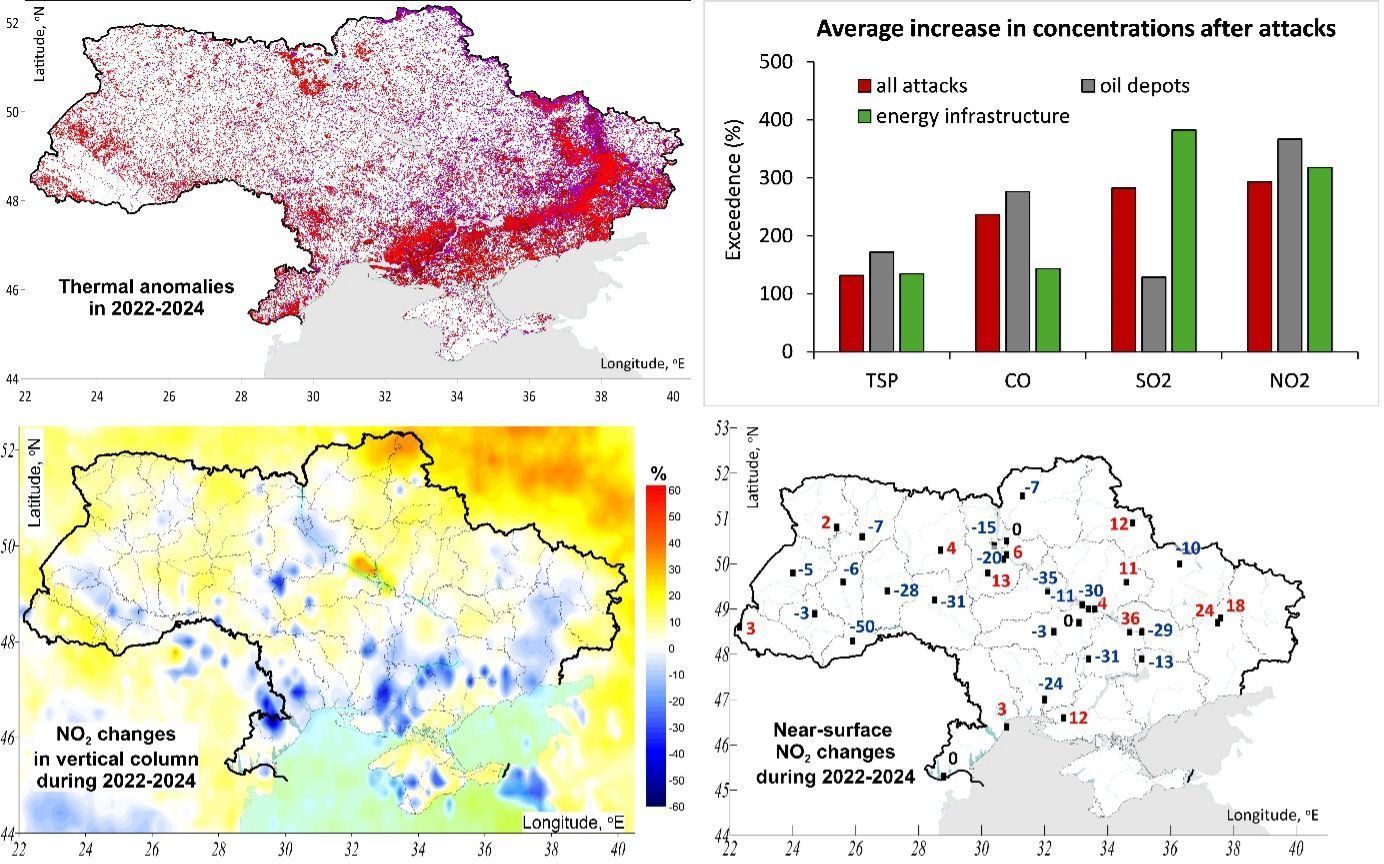
Source: National Academy of Sciences of Ukraine
Change in pollution structure
At the same time, Ukraine shows an anomalous overall improvement in air quality. The Sentinel-5 Precursor satellite system recorded that in most regions, pollution levels have decreased. For example, both in major cities and along the line of combat, NO₂ concentrations dropped by 10–30%.
The reason for air purification is the destruction of Ukrainian industry by the enemy, the demolition of infrastructure, and economic changes. Emissions from destroyed facilities are no longer polluting the air. As a result, this has even outweighed the impact of enemy attacks and the fires they caused. Mariupol vividly illustrates this trend – pollution there decreased following the shutdown of "Azovstal".
Meteorological factors also contributed to atmospheric purification. In particular, Ukrainian scientists associate the reduction in formaldehyde levels in the northern regions with these factors, where its concentration fell by 10–12%.
The study has identified an environmental paradox: overall emissions are decreasing due to the impact of the war on industry and transportation, yet there are extremely dangerous local pollution spikes that pose a threat to the health of Ukrainians.
“Understanding this dual role of military factors is essential for documenting the environmental consequences of Russian aggression, substantiating international claims for damage compensation, and developing post-war strategies for rebuilding Ukraine’s air quality management system,” the scientists emphasize.
EcoPolitic previously reported that, after a shelling, harmful smog was detected over Kyiv, and in Ternopil, the concentration of air pollutants increased sixfold.