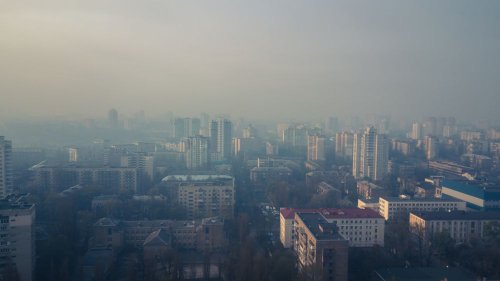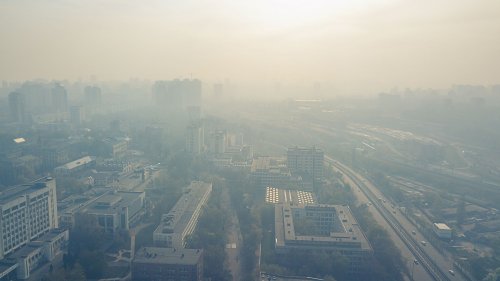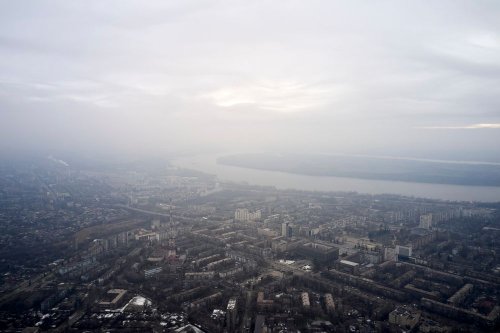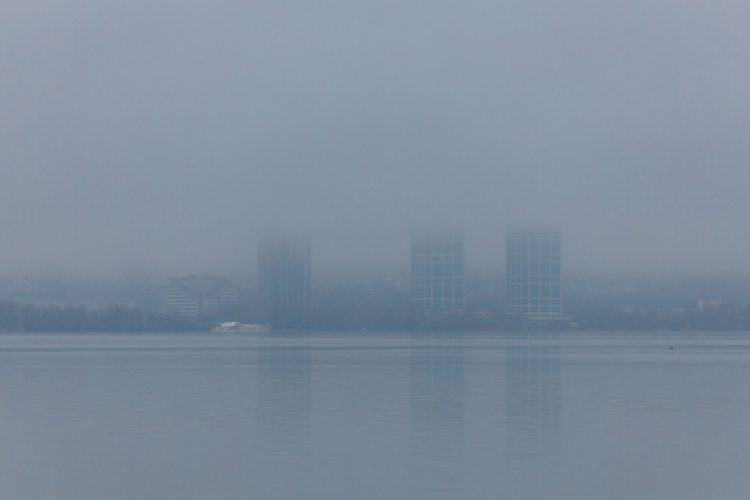
As of the morning of 7 October, moderate levels of pollution are being observed in virtually all towns and cities across Ukraine. However, there are isolated areas where it is dangerous to be outdoors due to high concentrations of pollutants.
This is evidenced by data from the international monitoring platform IQAir.
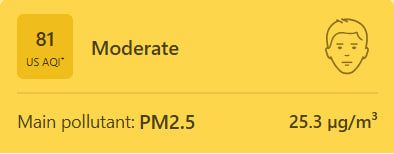
In Kyiv, the average level of air pollution is moderate. The main type of pollution at present remains fine particulate matter (PM2.5). Its concentration stands at 25.3 µg/m3. It should be noted that the upper limit of the standard set by the World Health Organisation is 5.5 µg/m3.
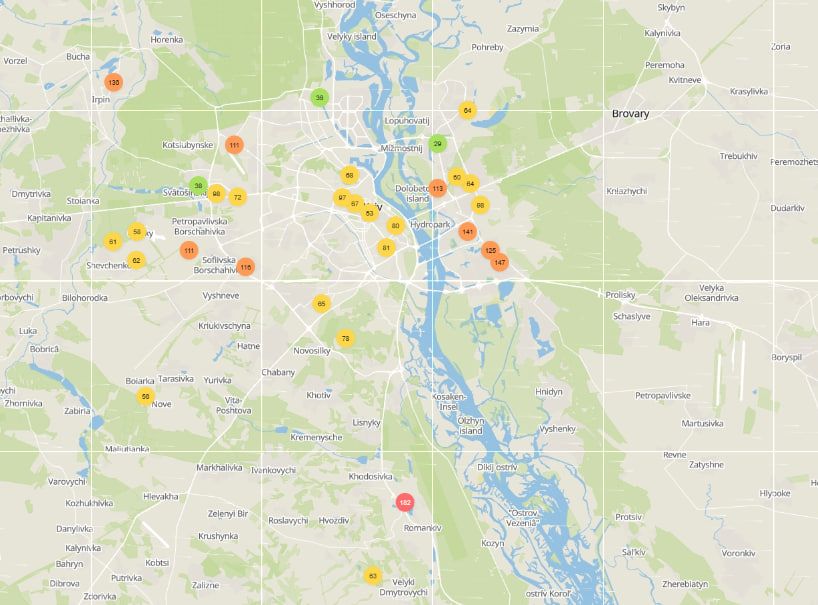
However, at certain locations, monitoring stations are recording dangerous levels. For example, on Regeneratorna Street, air quality is unhealthy, with a dust concentration of 67.3 µg/m3. It is dangerous for everyone, without exception, to be there. For vulnerable groups only, pollution poses a risk on Kakhovska Street (40.3 µg/m3), Horlivska Street (45.2 µg/m³) and Trostyanetska Street (54.2 µg/m³).
Dangerous levels of pollution were also recorded this morning in the vicinity of the capital. In Velyki Dmytrovychi, the air quality is unhealthy, with a dust concentration of 101.3 µg/m3, whilst in Sofiivska Borshchahivka, Kotsyubynske and Irpin, it is unhealthy for people with sensitive respiratory or cardiovascular systems. There, dust concentrations stand at 40.7, 41.9 and 47.5 µg/m3 respectively.
The only regional centre with good air quality at present is Uzhhorod. There, the concentration of particulate matter is 3.4 µg/m3.
In the other towns, pollution levels are moderate:
- Ternopil — 30.4 µg/m3;
- Ivano-Frankivsk — 28.7 µg/m3;
- Odessa — 23.3 µg/m3;
- Vinnytsia — 21.1 µg/m3;
- Dnipro — 20 µg/m3;
- Lviv — 19 µg/m3;
- Cherkasy — 19 µg/m3;
- Rivne — 18.8 µg/m3;
- Khmelnytskyi — 16.5 µg/m3;
- Lutsk — 16.3 µg/m3;
- Chernihiv — 16.1 µg/m3;
- Mykolaiv — 14.4 µg/m3;
- Zaporizhzhia — 13.6 µg/m3;
- Zhytomyr — 13.4 µg/m3;
- Poltava — 12.7 µg/m3;
- Kharkiv — 11.8 µg/m3.
It is worth noting that enemy attacks may be one of the causes of localised spikes in pollution levels. According to data from a study by Ukrainian scientists, concentrations of harmful substances can increase up to tenfold.