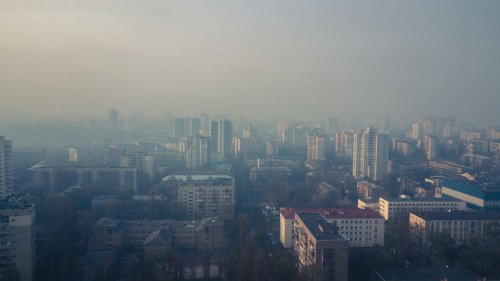
At present, there are no regional centres in Ukraine where it is completely safe to breathe. In the vast majority of towns and cities, pollution levels are classified as moderate; however, as of the morning of 8 October, there are a few towns and cities where it is best to avoid going outside if at all possible.
EcoPolitic reports this based on data from the international monitoring platform IQAir.
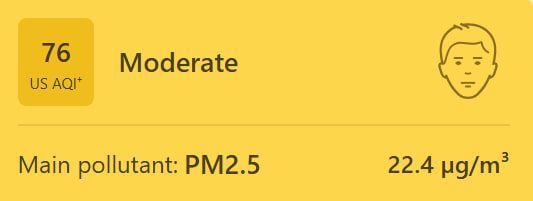
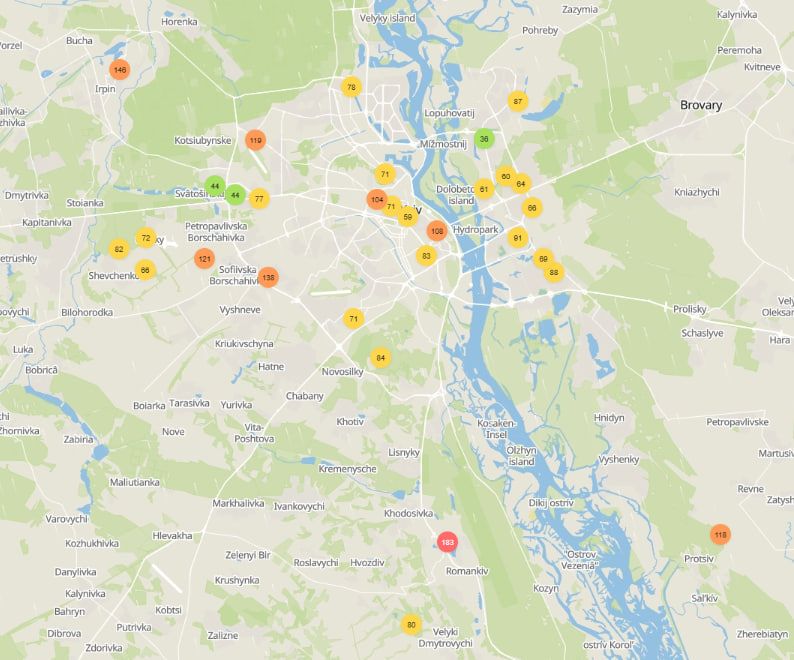
The average readings from the monitoring stations set up in Kyiv indicate a moderate level of pollution. The main pollutant at present is PM2.5 fine particulate matter. Whilst the World Health Organisation’s upper limit is 5.5 µg/m3, the average figure for the capital is more than four times higher – 22.4 µg/m3.
Within the city limits, air quality is at its worst on Sichovykh Striltsiv Street, with a particulate matter concentration of 36.6 µg/m3, which poses a risk to vulnerable groups. In the suburban areas of Sofiivska Borshchahivka and Protsiv, dust concentrations stand at 50.2 and 42.3 µg/m3 respectively, which also corresponds to the ‘orange’ danger level. In Irpin and Velyki Dmytrovychi, however, the air is currently harmful to everyone without exception, with a ‘red’ pollution level. There, PM2.5 levels are 57.1 and 111.6 µg/m3 respectively.
People with sensitive respiratory and cardiovascular systems are currently advised not to go outside in Ternopil and Ivano-Frankivsk. An ‘orange’ pollution level has been recorded there, with concentrations of fine particulate matter of 44.8 µg/m3 and 35.8 µg/m3 respectively.
In the other major cities, air quality is average, with moderate levels of pollution:
- Cherkasy – 28.3 µg/m3;
- Dnipro – 27 µg/m3;
- Chernivtsi – 20.9 µg/m3;
- Odessa – 19 µg/m3;
- Zhytomyr – 17.3 µg/m3;
- Rivne – 16.6 µg/m3;
- Vinnytsia – 15.4 µg/m3;
- Lutsk – 13.8 µg/m3;
- Poltava – 13 µg/m3;
- Chernihiv – 12.8 µg/m3;
- Khmelnytskyi – 12.7 µg/m3;
- Zaporizhzhia – 12.3 µg/m3;
- Kharkiv – 11.1 µg/m3;
- Lviv – 11 µg/m3;
- Mykolaiv – 10.8 µg/m3;
- Uzhhorod – 10.4 µg/m3;
- Kherson – 9.6 µg/m3.
As a reminder, prolonged exposure to polluted air can worsen the condition of people with chronic cardiovascular and respiratory diseases. Find out more about the impact of the environment on health in this article from EcoPolitics.