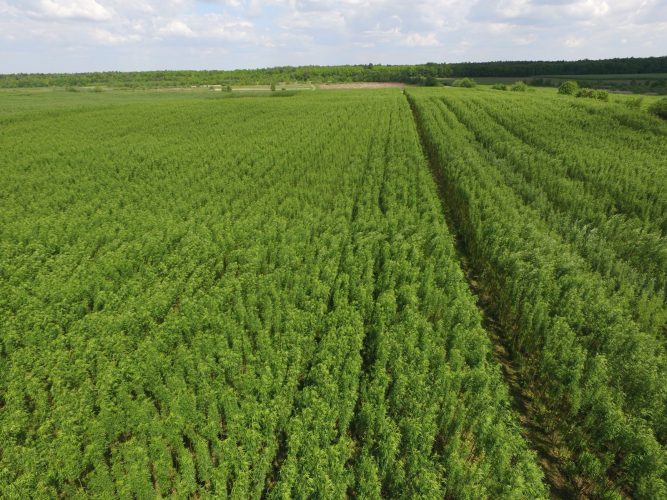
The Volyn region is home to Europe's largest willow plantation, covering an area of 1,800 hectares. This plant is quite undemanding and grows rapidly, making it a promising option for biofuel.
According to an article by RBC-Ukraine, willow chips from these fields provide heat to schools and other institutions in three regions of Ukraine.
From abandoned land to a willow garden
The bioenergy company Salix Energy has been growing willow since 2010. Due to the instability of the biofuel market, the business decided to grow its own raw materials for its own boiler rooms.
The future willow plantation was previously uncultivated, abandoned land.
“We saw that there was a lot of uncultivated land there – people simply did not see the point in doing agribusiness on it. It had stood abandoned for 20 years,” said company co-founder Kostyantyn Bohatov.
A year was spent on plowing and pest control, after which the willow forest was established. The principle is similar to creating a vineyard or a walnut orchard. During the first two to three years, willows require careful maintenance to prevent them from being overtaken by weeds. In the third year, a technical harvest of raw materials is carried out, and in the fourth year, a full-fledged harvest begins.
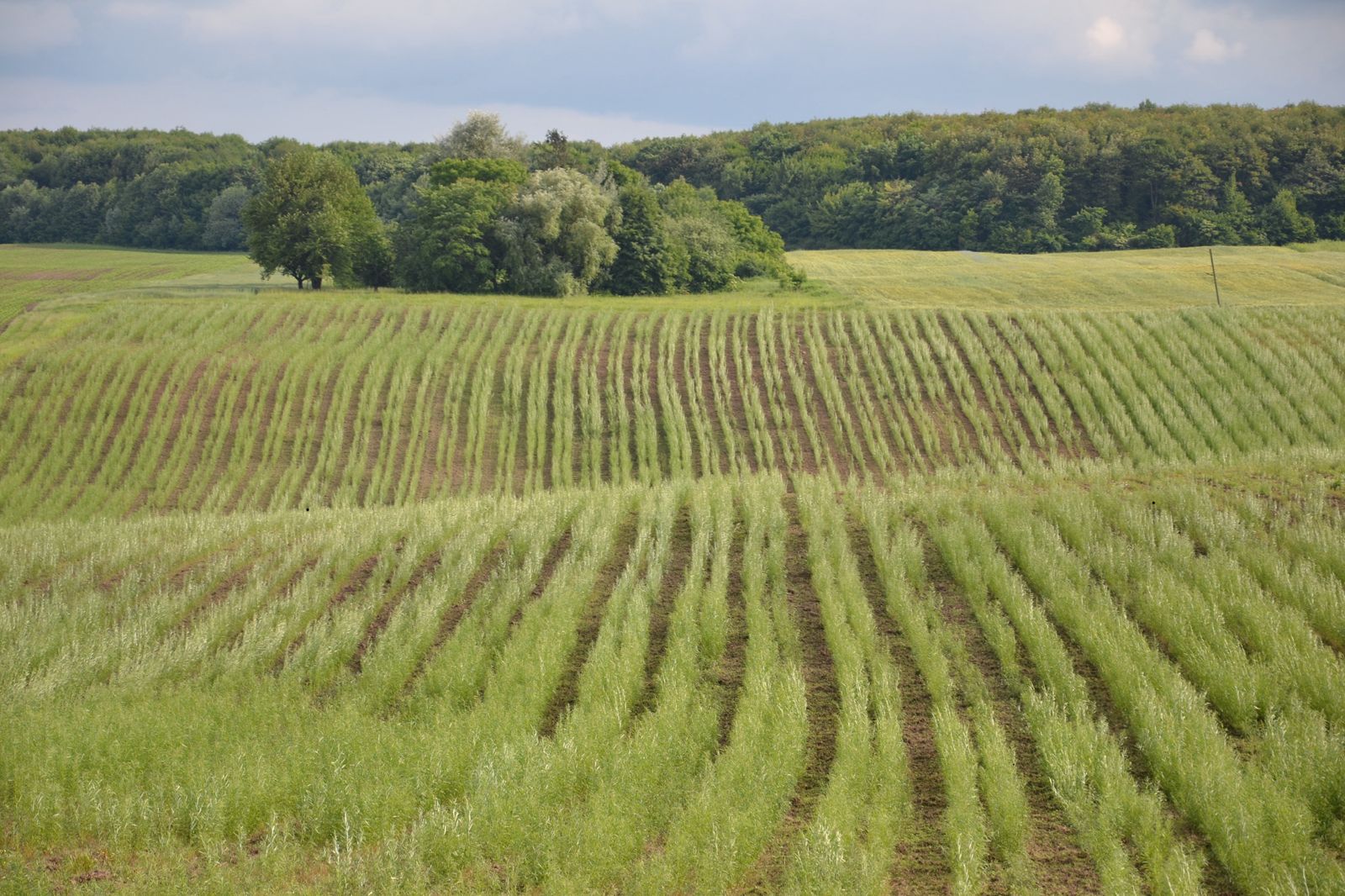
Source: Salix Energy for RBC-Ukraine
The company harvests in three clusters, moving to a new one each year. This gives the plants an opportunity to accumulate more mass.
Each year, Salix Energy produces approximately 50,000 cubic meters of willow chips. The company uses 10% of the biofuel for its own needs, while the rest is sold. Buyers include municipal enterprises, military units, and other institutions where boiler houses run on biofuel.
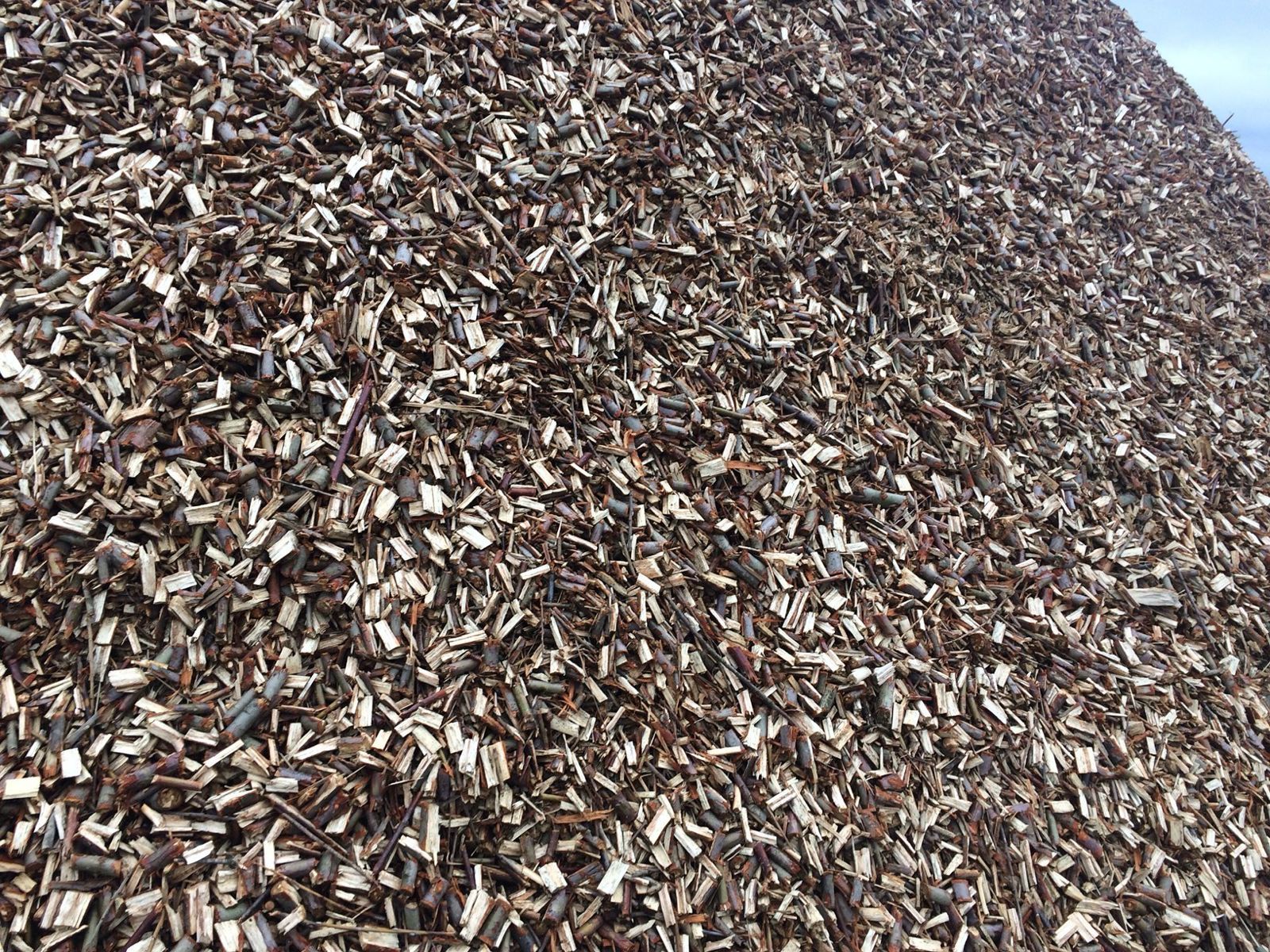
Source: Salix Energy for RBC-Ukraine
Is willow profitable?
Growing willow makes it possible to quickly obtain a large amount of biomass. According to the manufacturer, this plant yields as much as 20 tons per hectare per year. For comparison, the growth of wood in a forest during the same period is approximately 3 tons.
Experts say that this fuel is profitable for commercial and budgetary institutions, as the price of gas for the population is subsidized by the state. For ordinary households, dirty fossil fuels remain more affordable, and there is no incentive to switch to biofuel.
Compared to the market price of gas, heating buildings with willow chips is 30-40% cheaper.
Another bioenergy crop actively grown in Ukraine is miscanthus. EcoPolitic reported that this perennial grass produces 20% more thermal energy upon combustion than gas.