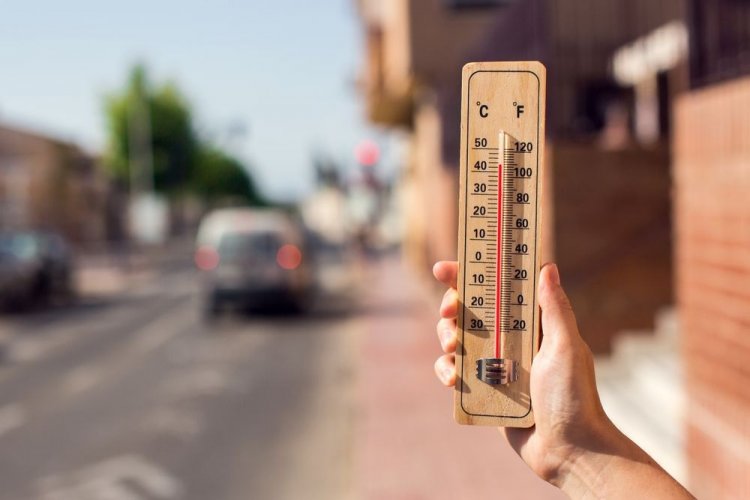
Financial inequality directly affects the ability to adapt to climate change at the household level. As it turns out, two-thirds of EU residents cannot afford to keep their homes cool during summer, which is becoming hotter and longer every year.
This is according to a survey reported by Politico.
While the European Commission is developing its plan to increase resilience to climate change, the European Environment Agency and the European Foundation for the Improvement of Living and Working Conditions have conducted a study. They surveyed 27,000 EU residents to find out how each person personally experiences global warming and whether they are prepared for its consequences.
The poor and sick feel the heat more
The report on the survey results shows that global warming has a disproportionate impact depending on the availability of resources for adaptation.
More than 50% of respondents reported installing roller shutter systems or thermal insulation in their homes. More than 30% of respondents purchased air conditioners or fans. However, this percentage varies depending on the level of wealth: among the wealthy, about 40% of respondents did so, while among people with lower incomes, about 20% did so.
There is also a striking gap between homeowners and tenants, who make up about a third of the EU population. Twenty-nine percent of property owners and over 50% of tenants cannot afford to cool their homes.
Poor health also reduces resistance to warming. Among respondents who reported poor health, more than 50% cannot afford to cool their homes. Meanwhile, among those who reported good health, this figure is just over 25%.
Regional differences
Overall, almost half of those surveyed said they suffered from heat at home. More than 60% of people felt overheated outdoors.
However, global warming has affected the lives of northern and southern Europeans differently. One can compare the differences in forest fires, the scale of which has increased significantly due to climate change. On average, 8% of people in Europe have been affected by them, while in Greece, 41% of respondents reported such an impact.
Overall, concern about the extreme weather consequences of warming is twice as high in southern European countries. There, people fear increased heat, floods, and fires.
In the center, the highest number of households (46%) reported difficulty cooling their homes. In the north, this figure is 30%, and in the south, 37%.
The survey results also showed that Europeans are generally not sufficiently prepared for extreme weather conditions. Less than 50% of respondents have insured their homes against weather disasters, and only 13.5% of respondents have an emergency kit at home.
EcoPolitic previously reported that starting in the summer of 2026, Spain plans to deploy a network of “climate shelters.” In these shelters, residents can wait out the hottest hours in cool conditions.
Overall, by the end of the century, summer in Europe will last for about eight months.