In 2024, 47.5% of all electricity consumed in the European Union came from renewable sources. This is 2.1% more than in 2023 and 18.9% more than ten years earlier, in 2014.
According to recent data from the statistical organization Eurostat, the share of RES in energy consumption has almost tripled in 20 years.
Sources of green generation
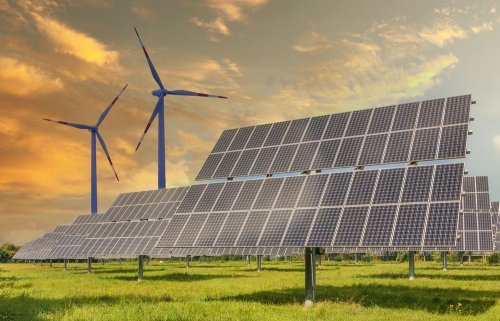
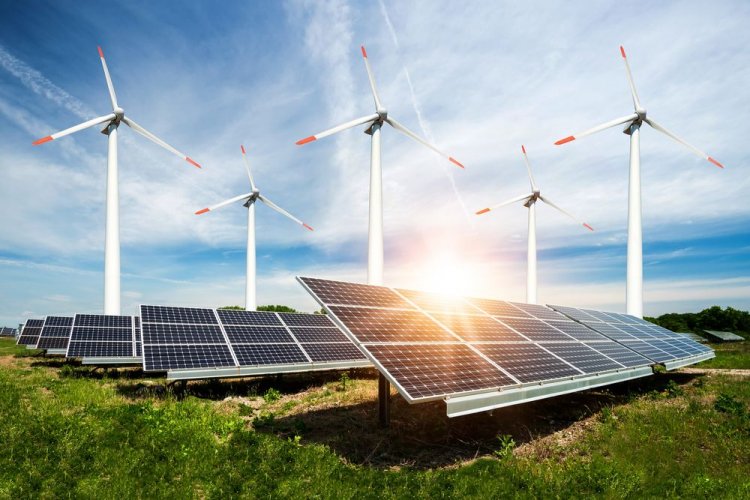
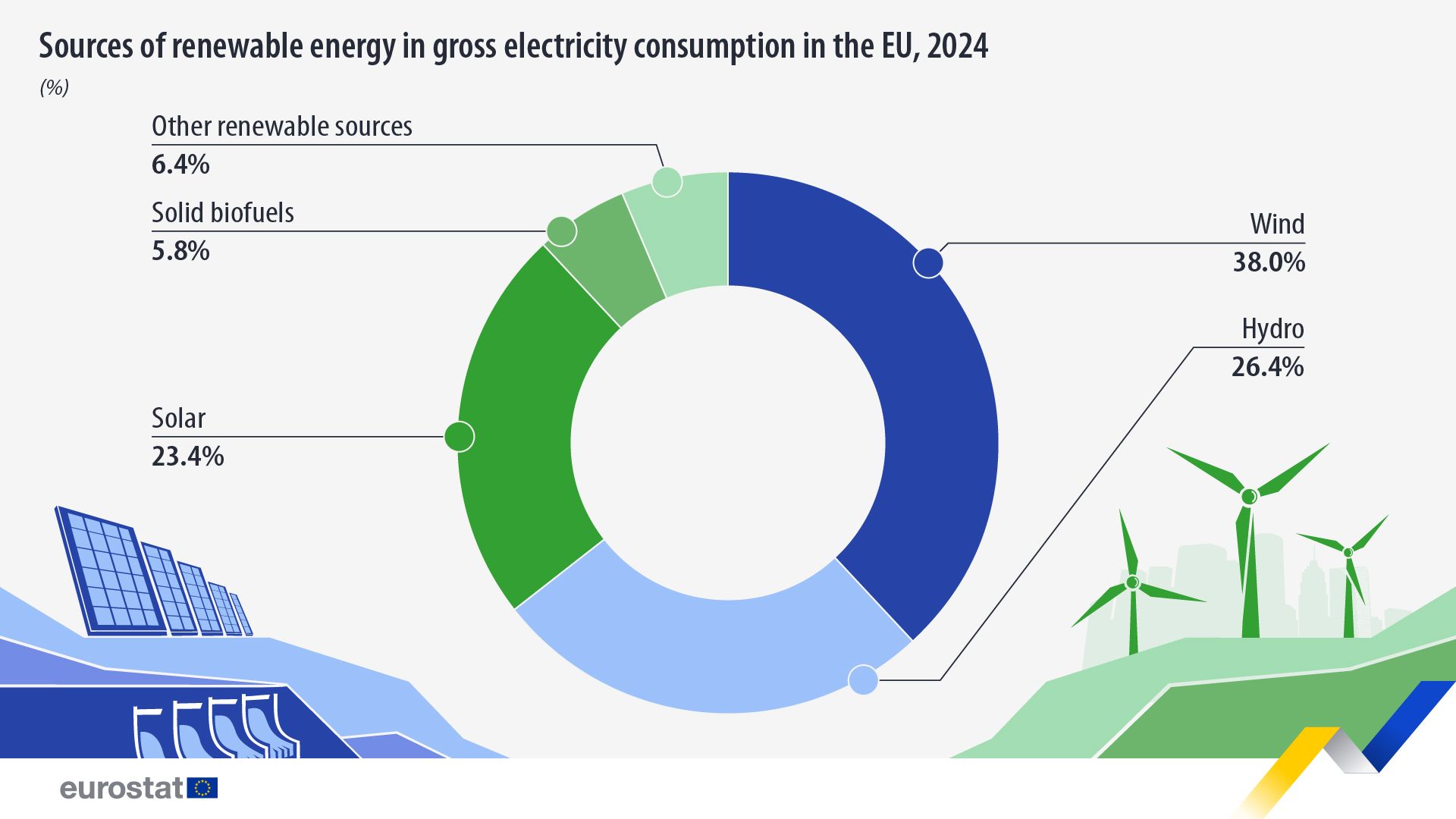
Most of the energy was "extracted" from wind, water, and the sun. Accordingly, this is 38%, 26.4%, and 23.4% of the total amount of energy from RES. Solid biofuels became a source of 5.8% of energy generation, with the rest accounting for a total of 6.8%.
Solar energy shows the most dynamic growth in generation capacity. In 2008, it produced only 1% of clean energy in Europe, but by 2024, it was already generating 304 TWh instead of 7.4 TWh.
Source: ec.europa.eu.
Leaders in the green energy market
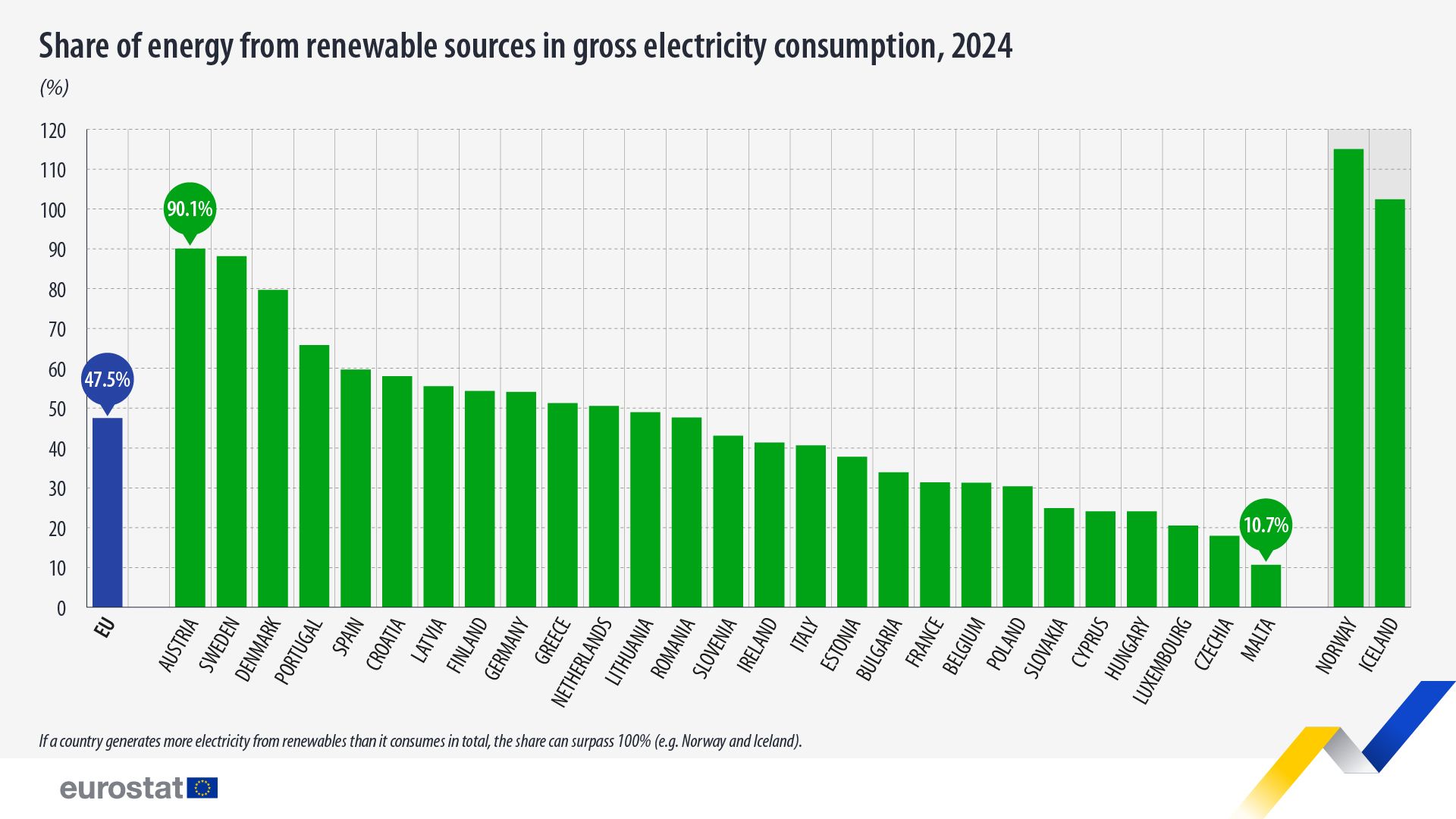
The statistics also provide data on the share of clean energy in the total consumption of individual EU member states.
Over 75%:
- Austria – 90.1%. Hydropower dominated generation here.
- Sweden – 88.1%. The largest sources of green energy were hydropower plants and wind farms.
- Denmark – 79.7%. In this country, wind power prevailed.
Over 50%:
- Portugal – 65.8%;
- Spain – 59.7%;
- Croatia – 58%;
- Latvia – 55.5%;
- Finland – 54.3%;
- Germany – 51.2%;
- Netherlands – 50.5%.
However, Malta, Czechia, Luxembourg, Hungary, Cyprus, and Slovakia were unable to exceed even the 25% mark. Malta had the lowest share of renewable energy – only 10.7%.
Source: ec.europa.eu.
EcoPolitic previously reported that in the same 2024, the share of renewables in Ukraine's energy generation reached 11%.
At the COP28 Climate Summit in 2023, more than 100 countries agreed to triple green generation by 2030. To achieve this, the world must annually increase renewable energy capacity by 16.6%.