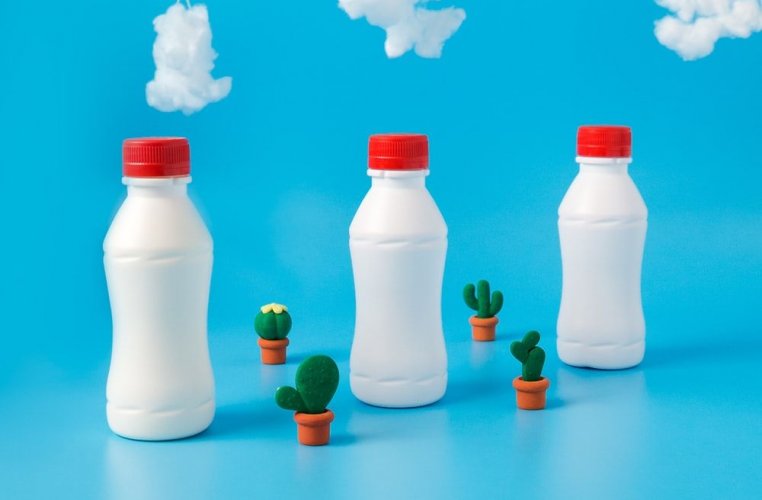
Scientists at the University of Oldenburg are working on a project to produce biodegradable plastic from organic waste. Agricultural waste, garden waste, straw, and even algae will be used as raw materials. The researchers have received nearly €2.7 million in government funding to carry out their research.
According to Informationsdienst Wissenschaft, the goal of the project, called EcoPBS, is to develop an environmentally friendly replacement for plastics used in medical devices, automotive components, insulation, and packaging.
Environmentally friendly polymer
Researchers are studying the production of polybutylene succinate (PBS). This biopolymer has technological characteristics comparable to polyethylene and polypropylene.
Its striking advantage is biodegradability. While analogues are made from petroleum products, PBS can be produced using organic raw materials. The result is a material that will decompose naturally and without leaving a harmful trace in the form of microplastics.
Searching for profitable solutions
The task of German scientists is to develop a PBS production technology that will be economically profitable and suitable for scaling up in large-scale industry. According to University President Ralf Bruder, the funding of the project demonstrates interest in it and its high potential for the circular economy.
The research will consist of several stages:
- Fermentation process optimization. Scientists will evaluate the impact of various types of microorganisms on transforming organic waste into bioplastic. They plan to test two fermentation processes – with succinic acid and acetone-butanol-ethanol.
- Removal of impurities. At this stage, organic n-butanol is decomposed into components, including the one needed for bioplastic production. It is important for researchers to find the most energy-efficient and high-quality option for this process. To fully remove contaminants, the researchers have developed a new chemical compound, which is currently being patented.
- Test samples. At the final stage, the researchers intend to create several types of products from bio-PBS – packaging or medical devices.
Additionally, the project authors also plan to find a way to utilize the byproducts of bioplastic production. The researchers will study their potential for generating clean energy.
Previously, EcoPolitic reported research data on the shocking level of plastic pollution. Every year, 130 million t of this material enter the environment. Production dynamics indicate that by 2040 this figure will reach 280 million t per year.
The EU aims to increase the share of recycled materials. The highest rate is found in the Netherlands – more than 32.7%.