In the second quarter of 2025, 54% of the European Union's electricity was generated by renewable energy sources.
This is reported by the press service of the Eurostat organization.
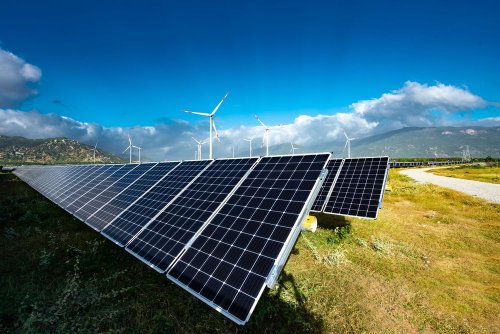
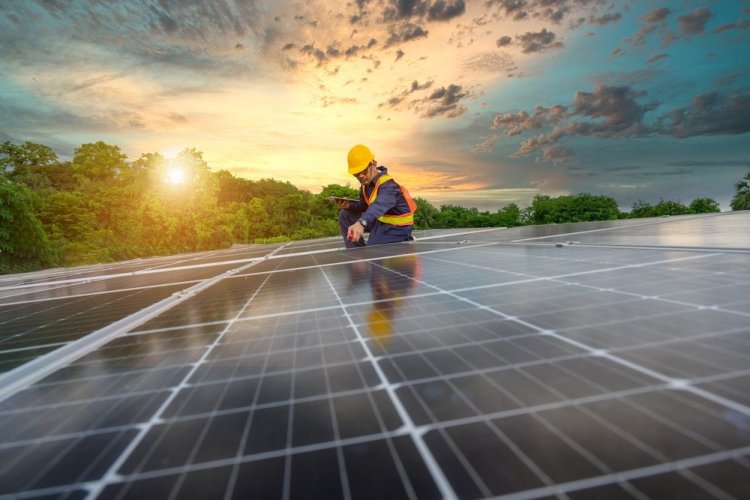
Last year, for the same period, the share of renewable energy in the EU was 52.7%. This growth was due to an increase in the weight of solar energy, which produced more than 122 thousand GWh in the second quarter of 2025. This is almost 20% of all generated energy in the EU.
Which EU countries have the largest share of renewable energy:
1) Denmark – 94.7%;
2) Latvia – 93.4%;
3) Austria – 91.8%;
4) Croatia – 89.5%;
5) Portugal – 85.6%.
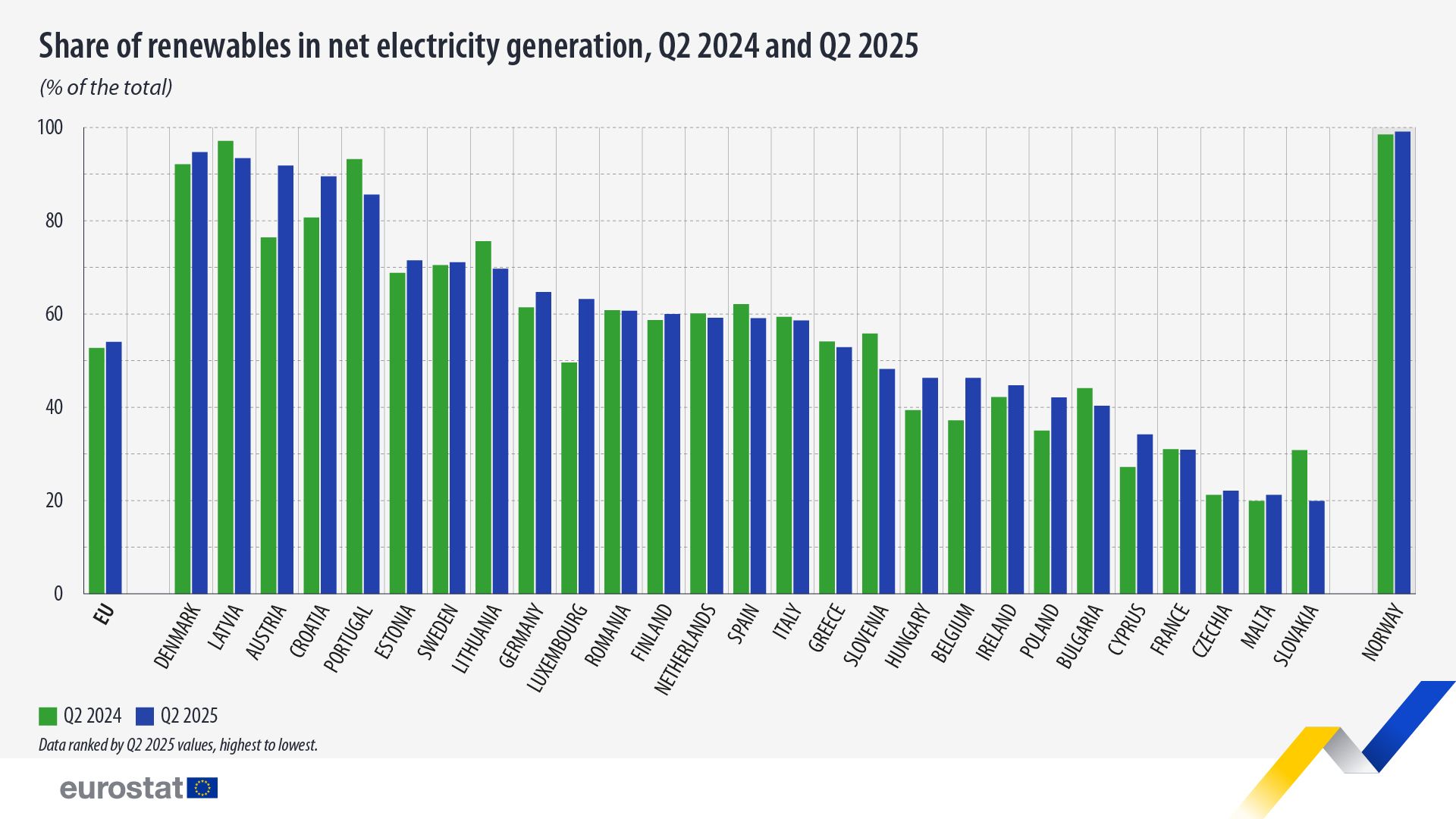
Photo: eurostat
EU countries with the lowest share of renewable energy:
1) Slovakia – 19.9%;
2) Malta – 21.2%;
3) Czechia – 22.1%.
Overall, during the second quarter of 2025, 15 EU countries saw an increase in the share of renewables. The largest year-on-year increase was recorded in Luxembourg (+13.5%) and Belgium (+9.1%), mainly thanks to solar power.
Currently, Norway has the highest percentage of renewable energy (almost 100%), although it is not a member of the European Union.
The predominant types of renewable energy in the EU:
1) solar (36.8%);
2) wind (29.5%);
3) hydropower (26.0%);
4) combustible renewable fuels (7.3%);
5) geothermal energy (0.4%).
We remind EcoPolitics readers that in the first half of 2025, countries around the world invested 10% more in renewable energy than in the same period in 2024.
In the first half of 2025, investments in renewable energy technologies and projects worldwide reached a record $386 billion, which is about 10% more than last year.
According to experts, global energy investment is likely to reach about $3.3 trillion by the end of 2025. However, more than $1 trillion of the total amount is unlikely to be spent on fossil fuels. Instead, it is expected that about $2.2 trillion will be invested in low-carbon energy generation.