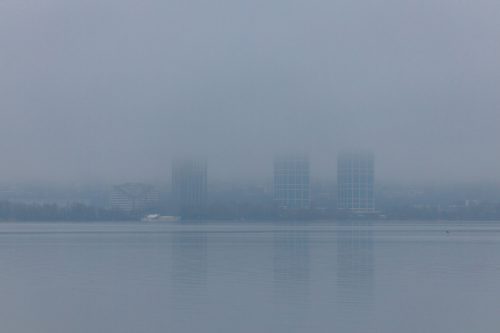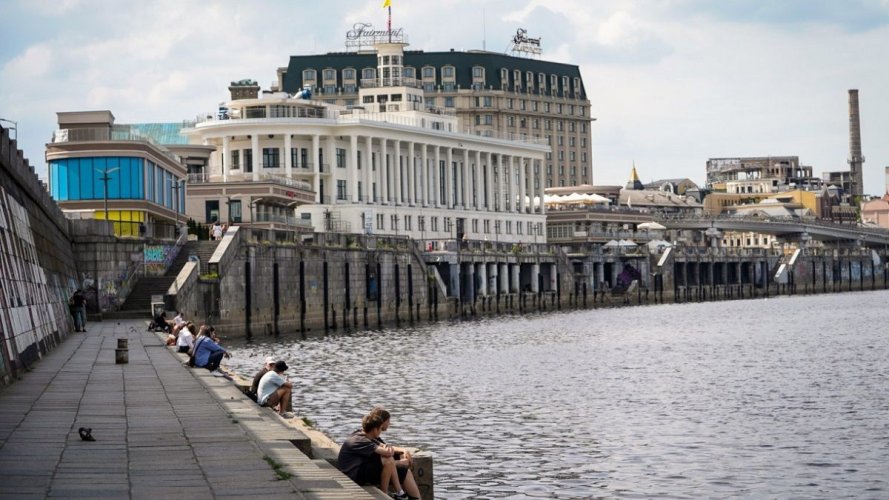
Kyiv residents complain that the Dnipro River has taken on an emerald hue. Large amounts of algae have been observed in the water, which is gradually being washed ashore.
This information has been reported on social media and news Telegram channels in the capital.
This is the result of active algae blooms, which have been triggered by stagnant water, heat, and an excess of phosphates. Massive accumulations of algae are most noticeable in places without active currents, where their accumulation reaches its peak. The proliferation of algae is not only causing trouble for Kyiv residents, but also for the aquatic inhabitants of the Dnipro. According to ecologist Pavlo Lomazov, oxygen is being depleted, which has a negative impact on marine fauna.
Kyiv residents are urged not to swim in the Dnipro until additional water quality tests have been conducted. No large-scale studies of the quality of Dnipro water have been conducted recently. We are relying on the latest data.
In June 2025, environmental monitoring experts took water samples from the Dnieper. According to Yaroslav Kriska, deputy director of the environmental policy department of the Dnipro City Council, the water quality is normal. Residents were told that they could swim in the river without fear for their health: no contraindications for human skin were found. However, it is advisable to avoid contact with the water around areas that are prone to irritation: eyes, open wounds, mucous membranes, etc. The water should also not be used for cooking or drinking. During the inspection, only the pH level (acidity indicator) was found to be at the limit of normal, but according to experts, this is not critical.
The water test also showed a low concentration of salts in the Dnipro, which is typical for such a reservoir. Mineralization is at the level of 215 mg/l. The oxidation-reduction potential was found to be low, indicating a poor degree of self-purification. As a result, there is insufficient potential to combat microorganisms in the water and inhibit the growth of pathogenic microorganisms. Its indicator remains at +30 mV.

Why does the water have a large amount of algae and has changed color?
Excessive blooming and turbidity of the water may be influenced by the warm summer climate and solar activity, which is temporary.
According to the latest data, the most polluted areas of the Dnieper are the Kyiv, Kaniv, and Kremenchuk reservoirs.
As previously reported by EcoPolitic, the Mokra Moskovka River in Zaporizhia was polluted by oil due to fuel oil leaks. Rescuers and environmentalists joined in the cleanup, but they were unable to completely stop the spread of fuel oil.