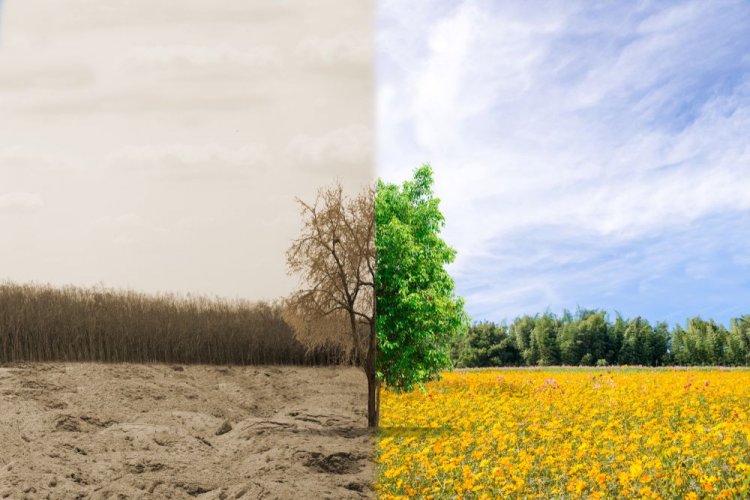
The Ministry of Environment and Natural Resources of Ukraine, APENA 3 project experts and regional environmental departments jointly presented the first climate change adaptation strategies in Ukraine for 3 pilot regions: Mykolaiv, Lviv and Ivano-Frankivsk.
This was reported in Ministry of Environment and Natural Resources.
The development of strategies lasted about 3 years. During this time, scientists investigated the current state of the climate in each region, built climate forecasts by the end of the century, assessed the vulnerability and risks for various sectors of the economy. Based on this array of data, they developed a set of recommendations that includes adaptation measures required for a particular industry.
The project experts calculated the required number and cost of adaptation activities for 3 pilot areas, which include:
- early warning systems;
- protective engineering structures;
- irrigation and drainage systems;
- smart grids, etc.
For Lviv region specialists predicted 168 climate change adaptation measures with a total cost of €273.7 million.
For the Mykolaiv region 171 measures are recommended. The required financing is €155.7 million.
For Ivano-Frankivsk region 158 measures are required for a total amount of €152.650 million.
Svitlana Krakowska, climatologist and key expert of the APENA 3 project, emphasized that other regions of Ukraine also need to develop strategies. In her opinion, now it is worth choosing at least one region in the north, east and center of the country in order to get a more complete picture of climate change in the entire territory of Ukraine.
"And if the development of documents for the first pilot areas took approximately three years, as the methodology needed to be updated taking into account progress in international and European science and practice, then for other areas, the preparation of documents can be done many times faster – in a few months," said the expert.
During the presentation of the strategies, the Minister of Environmental Protection and Natural Resources of Ukraine Svitlana Grynchuk assured that despite the war, climate policy remains among the main priorities of environmental reforms. She noted that Ukraine's post-war recovery should take place taking into account climate goals and implementing measures to adapt to climate change.
The official reminded of the progress made this year in matters of Ukrainian climate policy: the national climate strategy until 2035 and the action plan until 2026 have been approved, and the adoption of the framework climate law is expected. She said that Ukraine will present climate change adaptation strategies for 3 pilot regions at the COP29 climate summit in Baku.
"In addition to reducing emissions, adaptation to climate change is one of the aspects that Ukraine has a chance to take into account when planning its post-war reconstruction. Adaptation is a critical component of a long-term response to climate change at the global level in order to protect people, the economy and ecosystems," Torsten Voelert, Minister-Adviser for Energy, Climate and Environmental Protection of the EU Delegation to Ukraine, said during the presentation.
The other day, EcoPolitic reported that by 2026 The Ministry of Environment will develop adaptation plan of the Ukrainian agricultural sector to climate change.