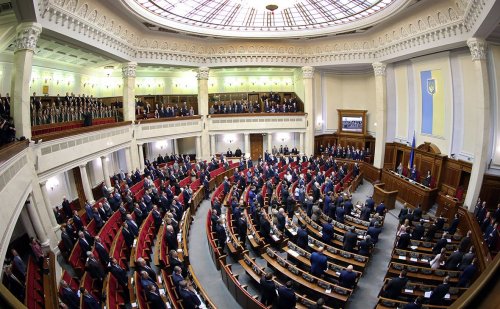
Members of the National Association of Mining Industry of Ukraine appealed to the deputies of the Verkhovna Rada with a request to amend the bill "On Integrated Prevention and Control of Industrial Pollution" No. 11355 and take into account three critical comments of the industry and the current economic situation in the country.
They published their appeal on the GMK Center website.
Market participants urged MPs to take into account the following factors when finalizing the bill:
1. War in Ukraine
According to the representatives of mining companies, the maximum period of 7 years for the transition to new environmental standards is insufficient, since the draft law does not take into account the real economic situation in Ukraine, which has suffered greatly due to the war. They recalled that the war significantly affects the work of metallurgical enterprises, creating additional risks for their activities, including the threat of physical destruction or seizure of production facilities.
2. European business support system
Representatives of the MMC sector emphasized that EU countries have a developed business support system in the form of multibillion-dollar grants for environmental modernization, which allowed European enterprises to successfully adapt to new environmental standards. In Ukraine, enterprises of the mining and metallurgical complex have suffered significant losses, and the lack of state support for ecological modernization only complicates the situation.
Entrepreneurs recalled that in the EU countries, the process of adaptation to new environmental standards lasted for about 30 years with significant state support. European companies received at least €803.5 billion in state aid from EU structural funds in the period 2000-2022, of which almost €200 billion was allocated in 2021-2022 alone.
3. Experience of the EU
Specialists of the Association of Extractive Industries of Ukraine emphasized that EU enterprises were able to reduce the amount of emissions of pollutants into the air to the current level only after an almost 30-year period of implementation of modernization projects, a significant part of which was financed by the EU countries. At the same time, the enterprises of the EU member states did not face challenges of such a scale as military actions, which significantly affect economic stability and development.
As EcoPolitic previously wrote, on June 20 Verkhovna Rada of Ukraine adopted as the basis for the project of the Law "On Integrated Prevention and Control of Industrial Pollution" No. 11355. We also analyzed the draft law and identified flaws in it, which may lead to the closure of some enterprises and the collapse of the permit system.