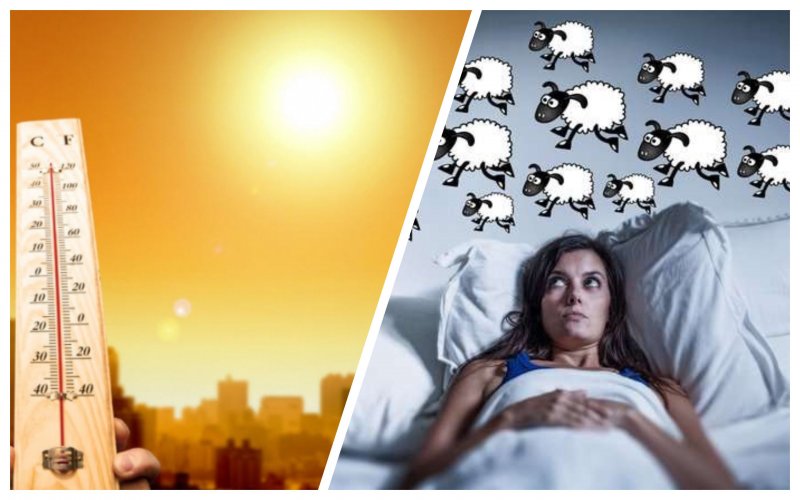
An American study showed that increasing the temperature to 30°C worsens the quality of sleep and reduces its duration by 14 minutes on average.
Currently, due to global warming, people are already sleeping 44 hours less each year, according to The Washington Post.
47,000 adults from 68 countries participated in the study.
It is noted that in many parts of the globe the temperature rises faster at night than during the day. By 2100, people worldwide could lose 50 to 58 hours of sleep per year.
"As warming continues, it will be difficult for people to get a good night's rest," the article says.
A lack of healthy sleep can increase the risk of many serious health problems, such as poor mental health, obesity, heart problems or even early death, it said.
"Now we are not fully adapted to the climate we live in," said one of the researchers, Nick Obradowicz. "High temperatures harm our sleep in all directions, but this connection is strengthened. It becomes more significant in size, the higher the temperature becomes."
Brigham Women's Hospital scientist Rebecca Robbins explained that during sleep a person's blood pressure drops to its lowest point. Without this natural drop, people are more likely to have high blood pressure that can lead to hypertension, heart attack or stroke. Thus, after the transition to summer time, the number of cases of heart attacks, car accidents and injuries at work increases sharply.
The material explained that the ideal temperature for falling asleep is 17-20°C, and lowering the temperature before going to bed helps falling asleep.
Researchers have found that extremely high temperatures have the greatest effect on sleep duration, delaying its onset. Short sleep duration was worst in the summer and among the elderly, probably because it is harder for them to regulate their body temperature. The greatest loss of sleep occurs precisely in the warm season.
It is noted that the quality of sleep suffered the most in people from low-income countries. This may be due to the lack of air conditioners.
According to forecasts, residents of the Middle East, Southeast Asia and Australia experience the greatest loss of sleep. By the end of the 21st century, people in the warmest regions are expected to lose three nights of sleep a year due to high nighttime temperatures.
Earlier, EcoPolitic wrote, that a study by climatologists with the help of artificial intelligence showed that the world cannot avoid warming by 1.5°C, which will occur between 2033 and 2035.
As EcoPolitic previously reported, an international study by the GlobeScan consulting company showed that fear of climate change forces 40% of people to avoid having children.