Eco-activists from DTKR investigated the quality of water from 5 sources in the village of Novolozuvatka, Dnipropetrovsk region, to assess the possibilities of alternative water supply in emergency conditions.
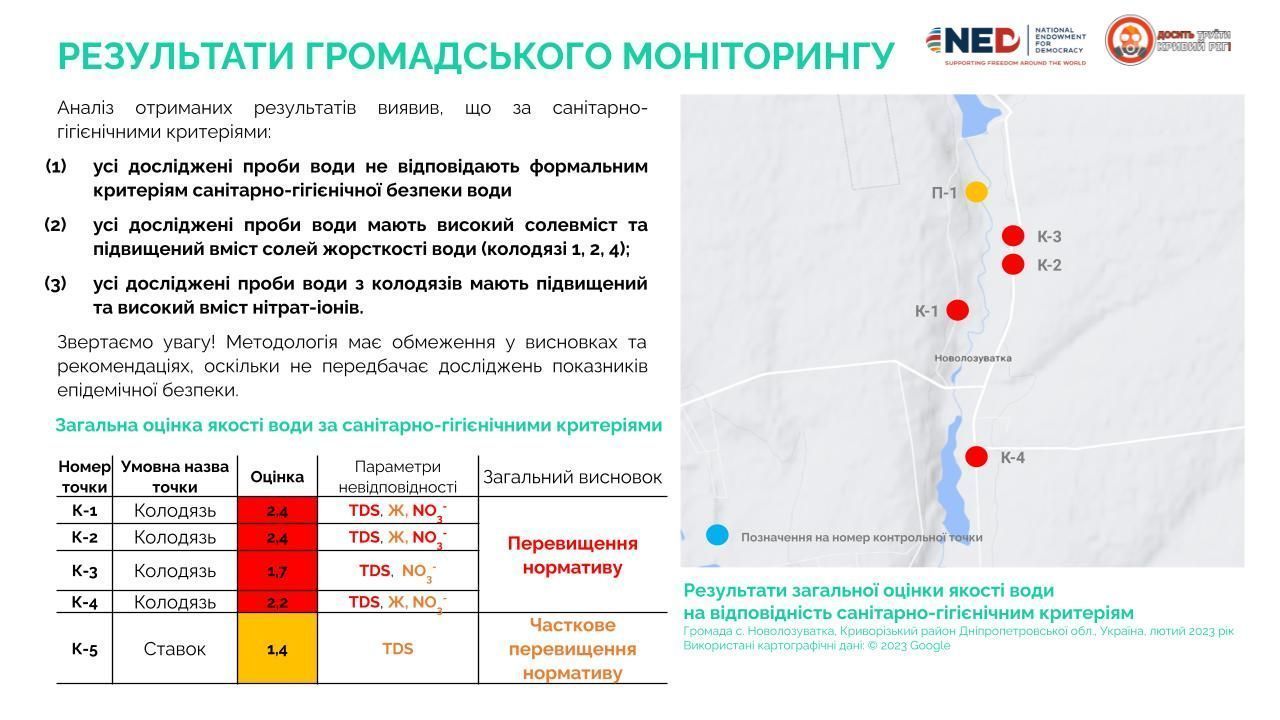
All the tested samples did not meet the formal criteria for sanitary and hygienic water safety, reports the public organization "Enough to poison Kryvyi Rih" (DTKR) on Facebook.
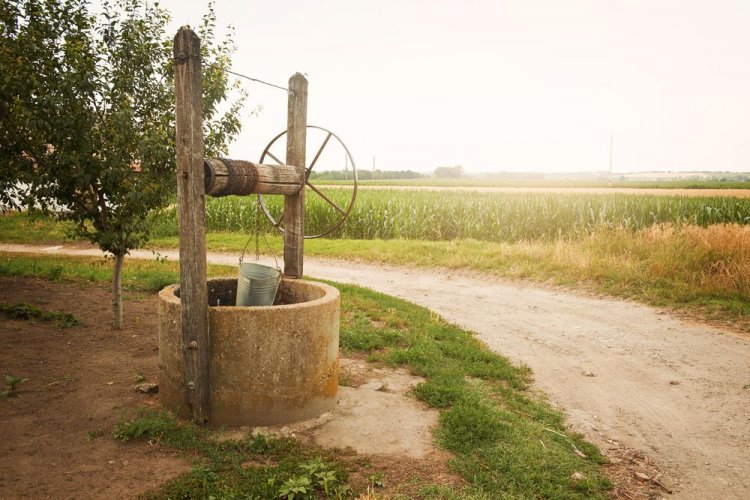
It is noted that eco-activists examined water in 4 village wells and a pond. The selected control points made it possible to assess the general ecological state of waters in the territory of the community, as well as the potential of non-centralized sources of water supply.
The message emphasized that residents of Novolozuvatka use wells, boreholes, catchment areas for drinking and household needs.
The DTKR study showed that all water samples:
- do not meet the formal criteria of sanitary and hygienic safety;
- have a high salt content and an increased content of hardness salts;
- water from all wells has an elevated and high content of nitrate ions
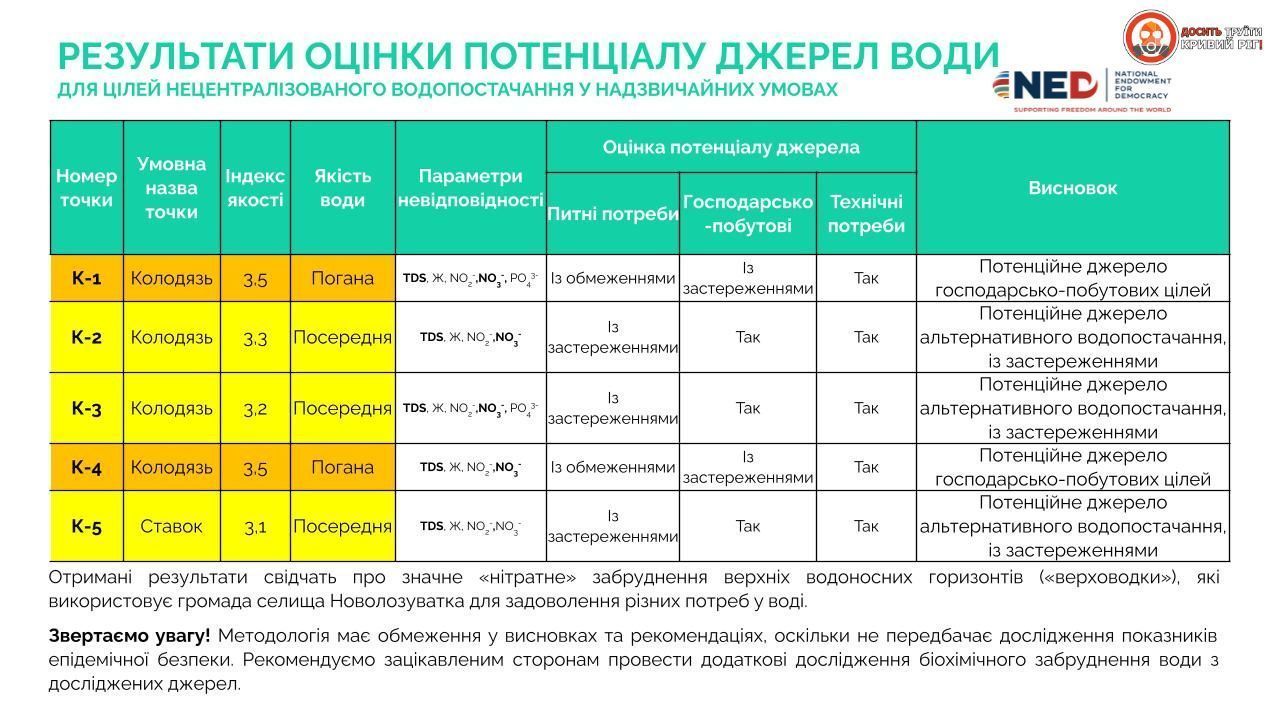
The report emphasized that water from the studied sources can be used for household needs. Although from two sources - with certain reservations due to the high salt content. Water from the pond and the other two wells can be used as drinking water in extreme conditions. However, only after additional cleaning, namely softening, removal of nitrogen and phosphorus compounds.
It is noted that all tested samples have:
- high salinity;
- increased content of nitrite and orthophosphate ions;
- high content of nitrate ions.
The DTKR explained that this imposes significant restrictions on the safe use of these sources for decentralized water supply.
"The obtained results indicate significant "nitrate" pollution of the upper aquifers," ecoactivists emphasized.
They added that drinking such water has long-term health risks, especially for vulnerable populations. Without special purification, we do not recommend using this water for children, pregnant women, the elderly, as well as citizens with chronic diseases of the digestive tract, kidneys, and hematopoietic organs.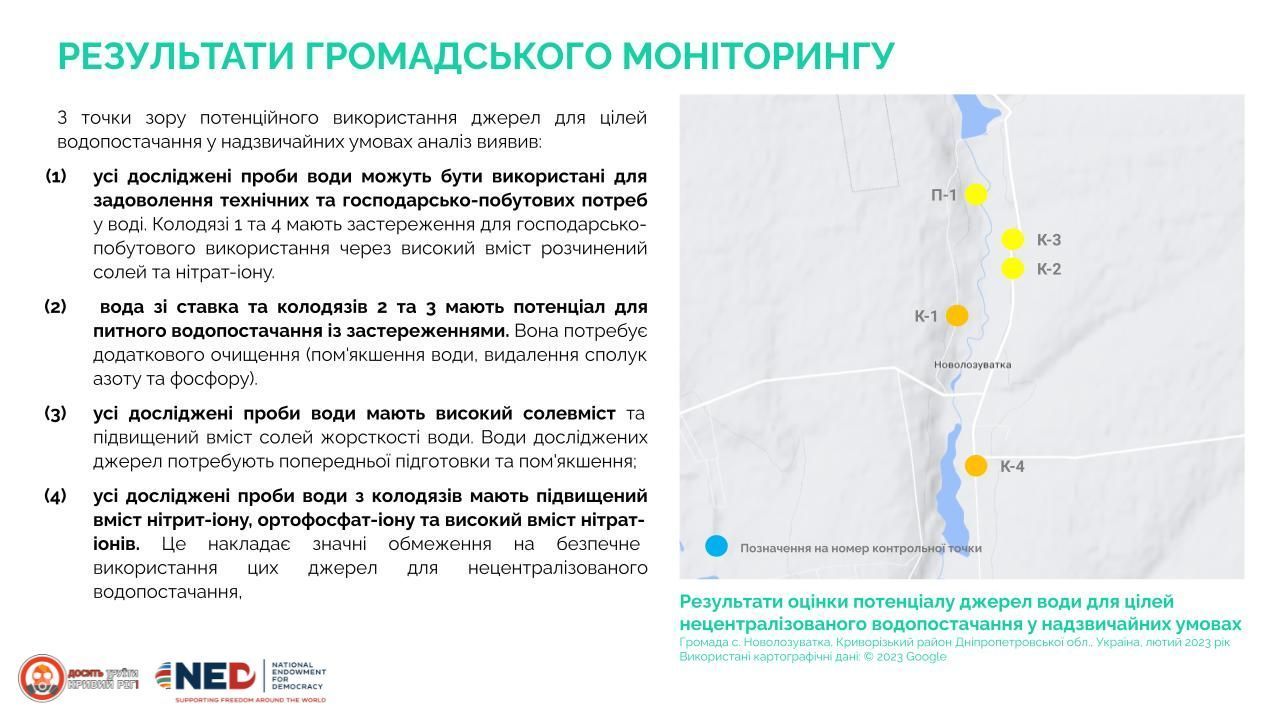
It is noted that the study should draw attention to the importance of controlling the use of water resources, the treatment of land with chemicals and the use of chemicals in everyday life. After all, Russian aggression exacerbated the problem of people's access to clean water.
Earlier, EcoPolitic wrote, that eco-activists urged residents of Kryvyi Rih to take care of drinking and technical water supply, as well as personal safety and alternative water supply in emergency conditions.
Previously, EcoPolitic conducted a unique study of surface water quality in 8 reservoirs and 11 pumping stations in Kyiv and the region. Exceeding the pollution standards was detected in 5 rivers and lakes, as well as in 1 pumping station.