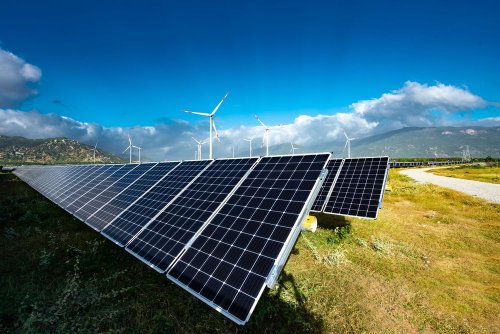
In the city of Konitz, Bosnia and Herzegovina, 6 local companies have established a joint venture Neretva Sol to produce green electricity for their own consumption.
This will help fulfill the conditions for exporting goods to the EU without paying the CBAM carbon tax, reports Balkan Green Energy News.
The article emphasized that business representatives are aware that they will need carbon-free electricity for production in order to remain competitive in exports.
As you know, the CBAM carbon border adjustment mechanism will cover imports of steel, iron, cement, aluminum, fertilizers, electricity and hydrogen. Its implementation will begin on October 1, 2023, when companies will have to report emissions in their supply chains. The pricing mechanism will be fully operational from 2026.
It is noted that business representatives held a meeting with Mayor Osman Čatić to ask for the support of local authorities and to present their plans. The entrepreneurs explained that they united around a common goal, namely to secure the future of their mostly export-oriented companies. For this, they invest in the production of solar energy.
The representative of the Zanat company, one of the founders of the joint company, Orhan Niksic, said that everyone knows that in the near future green energy will be a condition for export, and fines will be charged for carbon emissions.
"We are aware of this and want to secure the future of our company's exports and promote the development of renewable energy sources in the Konitz area, which is also the strategy of the local government," he said.
The article emphasized that Neretva Sol has already bought the land and is currently in the process of obtaining permits for the solar project. By the end of 2023, the power plant should be put into trial operation, and in 2024 - move to the next phase.
The mayor of Konitsa, Osman Čatić, said that the municipality intends to use green energy, as it is located in an area with potential for hydro, wind and solar energy production.
It is noted that the city can achieve climate neutrality by using available local renewable energy sources.
Earlier, EcoPolitic wrote, that the EU negotiators reached an agreement on the CBAM (carbon border adjustment mechanism), which, among other goods, will cover the import of hydrogen.
As EcoPolitic previously reported, entrepreneurs were urged to align their business models with the new EU requirements for the carbon tax (CBAM), which will come into force in 2023.