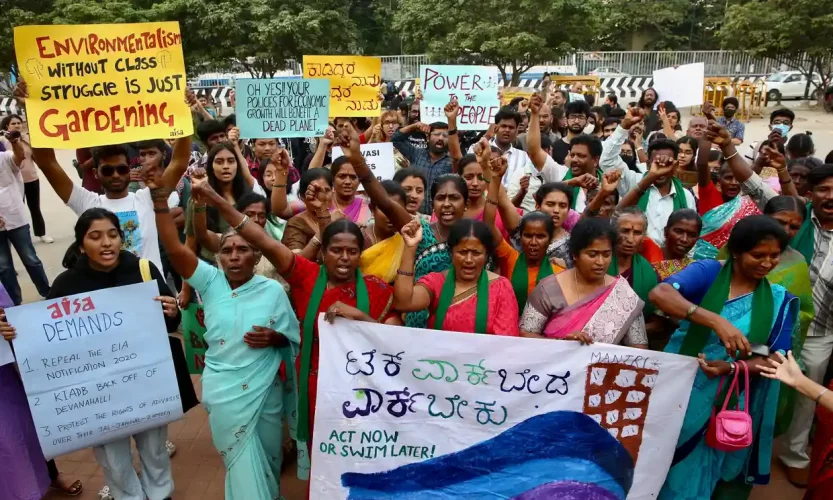
Thousands of eco-activists of the Fridays For Future movement organized a coordinated global climate strike, with a call for reparations for the victims of the climate disaster.
Strikes were planned in 450 cities across Asia, Africa and Europe 6 weeks before the Cop27 climate summit, reports The Guardian.
"In recent months, we have seen deadly floods engulfing large parts of Pakistan, forest fires ravaging North Africa, Europe and North America, as well as record heat waves in Great Britain and India," the report said.
At the climate summit, developing countries plan to demand compensation for climate-related destruction of homes, infrastructure and livelihoods. Eco-activists are demanding that rich countries pay for the damage that global warming is causing to the poor.
"We’re striking all over the world because the governments in charge are still doing too little for climate justice," said Daria Sotoodeh, spokeswoman for the group's German chapter.
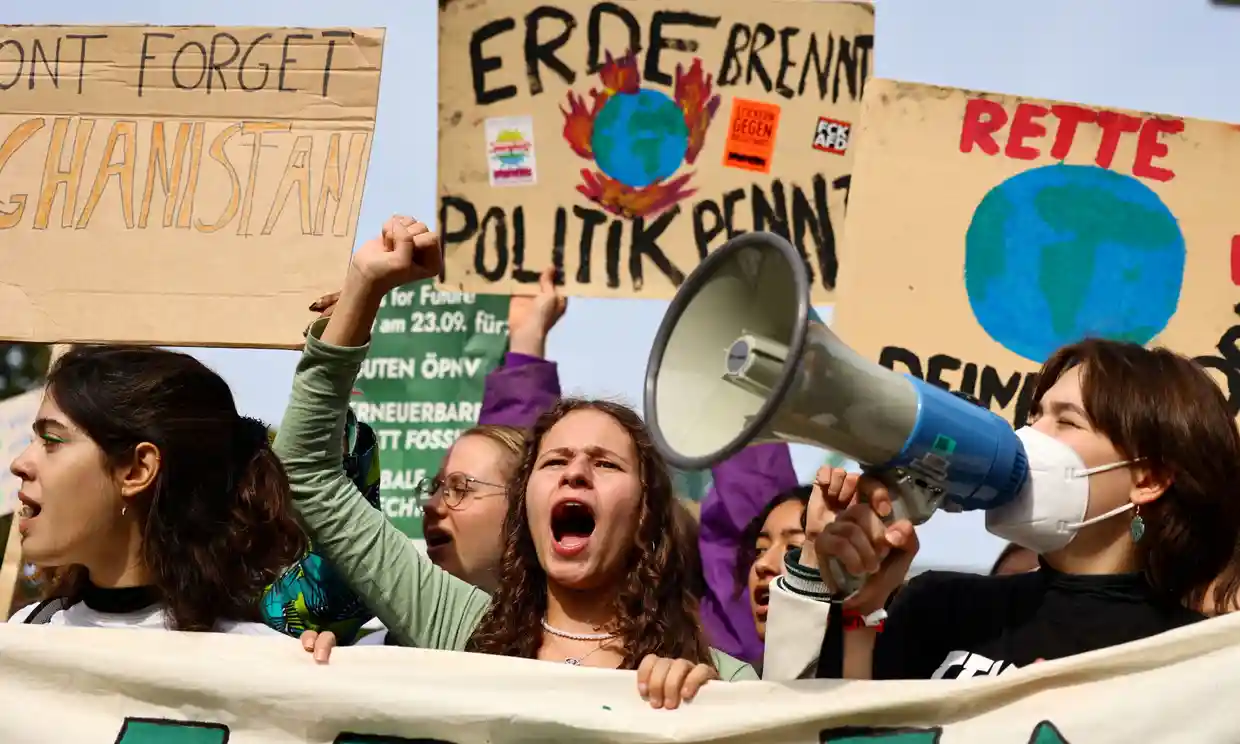
“One day, it could be my house that gets flooded,” said 15-year-old Park Chae-yun, one of about 200 protesting in Seoul, South Korea. “I’m living with a sense of crisis, so I think it is more important to deliver my concerns to the government to take preventive measures rather than going to school.”
The biggest strike took place in Berlin, with police in the German capital estimating 20,000 took part in a rally calling on their government to set up a €100bn fund for tackling the climate crisis.
About 400 young activists gathered in the Democratic Republic of Congo’s capital, Kinshasa, chanting “Act for Africa, protect our planet”. They marched on the shoulder of a busy thoroughfare carrying cardboard signs saying “Climate Justice” and “Climate SOS”.
The article noted that Denmark is currently the only rich country that has increased funding for the problem of "loss and damage" due to climate-related disasters. At the UN General Assembly this week, it said it would provide 100 million Danish kroner (about €13.5 million) to resolve it.
"Colonisers and capitalists are at the core of every system of oppression that has caused the climate crisis, and decolonisation, using the tool of climate reparations, is the best kind of climate action," said a statement on the Fridays For Future website.
The Fridays For Future youth movement emerged in 2018, inspired by Greta Thunberg's solitary protests outside the Swedish parliament. It reached its peak in November 2019, when 4 million people participated in 4,500 promotions worldwide on a single Friday.
Earlier, EcoPolitic wrote, that analysts expect COP27 to lead to many debates around loss and damage – that is, who should pay for the damage caused by climate change.
As EcoPolitic previously reported, Ahead of the UN climate summit COP27 on November 7, 2022 in Sharm el-Sheikh, Egypt, tensions are rising over compensation payments for the damages caused to the world's poorest people due to climate change.