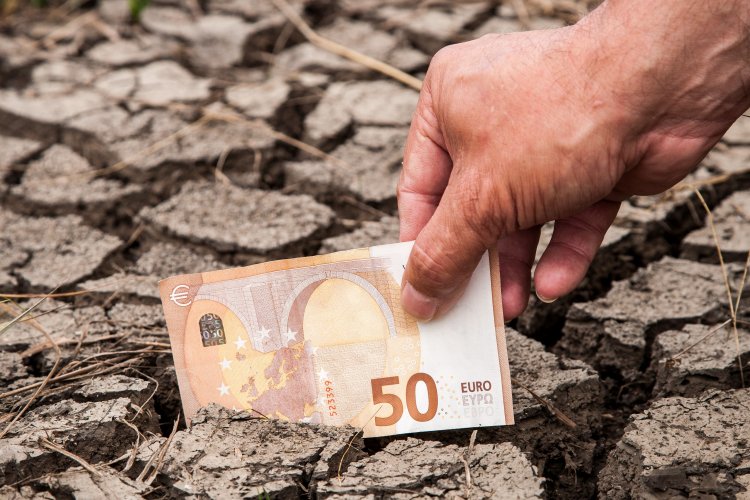
In the run-up to the COP27 UN climate summit on November 7, 2022 in Sharm el-Sheikh, Egypt, tensions are mounting over compensation for the damages caused to the world's poorest people due to climate change.
Climate losses are increasing in both rich and developing countries, reports EURACTIV.
Diplomats from almost 200 countries will meet at the summit. They will discuss how to reduce the CO2 emissions that cause climate change and deal with existing climate impacts, including deadly heat waves, wildfires, sea level rise and drought.
The report noted that the issue of losses and damages, or the climate-related destruction of homes, infrastructure and livelihoods in the poorest countries that have contributed least to global warming, is likely to dominate the talks.
According to the UN, the world's 46 least developed countries, home to 14% of the world's population, produce only 1% of global CO2 emissions from burning fossil fuels.
But in recent weeks, wildfires have engulfed vast swaths of land in Morocco, Greece and Canada, droughts have ravaged Italy's vineyards, and fatal floods have hit The Gambia and China.
Wealthy countries have also failed to meet a pledge of $100 billion a year by 2020 to help developing countries reduce emissions and prepare for climate change.
Loss and damage payments will be in addition to this $100 billion.
The inclusion of loss and damage financing in the COP27 discussion did not receive widespread support. The issue was also not added to the negotiations before COP27 in June in Bonn, Germany. Negotiations on UN technical assistance for loss and damage accounting also ended without agreement due to disputes over the management of the scheme.
"COP27 will be no easier as rich countries arrive with purse strings tightened by soaring energy costs, the economic fallout of the Ukraine war and the COVID-19 pandemic, which prompted wealthy countries to spend trillions of dollars propping up their economies," the statement said.
Matthew Samuda, Jamaica's economic development minister for climate change, expressed hope that developing countries will raise their collective voices to insist on adequate management of losses and damages.
Historically, prosperous economies, particularly the US and EU countries, have resisted steps that could impose legal liability or lead to compensation.
Negotiators at the UN's COP26 summit in 2021 agreed to launch a two-year dialogue on loss and damage, but failed to create an actual fund.
Putting the topic on the COP27 agenda could open up discussions on where the money would come from, how it would be distributed or even how to define climate-induced losses. Research suggests that losses could reach $580 billion annually by 2030.
"Everything’s been left quite uncertain on how to rebuild the trust between developed and developing countries," said Alex Scott, an expert on climate diplomacy at the E3G think tank.
Some countries with limited resources are hoping for a breakthrough.
We are hopeful that the international community will soon step up,” said Madeleine Diouf Sarr, chair of the Least Developed Countries bloc in UN climate negotiations, pointing to a growing acknowledgement among rich countries of the need
During a visit to the Pacific archipelago Palau last month, for example, Germany’s foreign minister said her country would prioritise the issue in its international climate policy.
Earlier, EcoPolitic wrote, that Finland has become one of the most ambitious countries in climate policy, as it has set a legislative goal for achieving zero emissions in 2035 year.
As EcoPolitic previously reported, The European Commission presented a list of main indicators for progress monitoring in achieving the goals of the Green agreement.