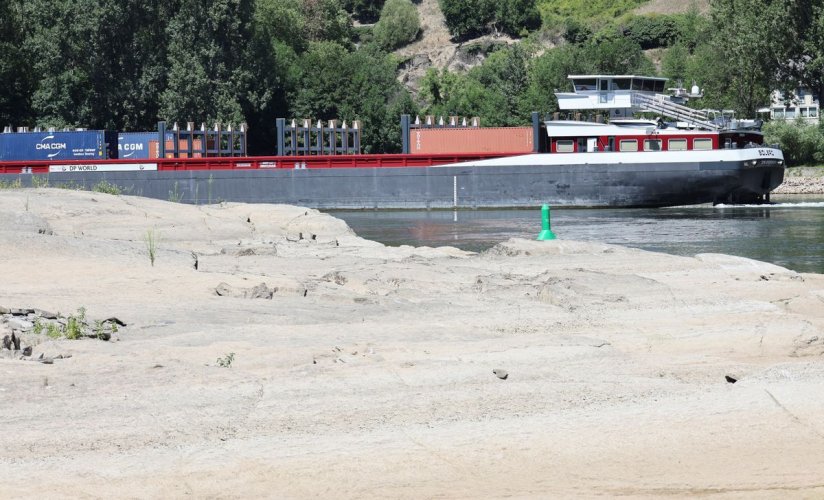
In Germany, the water level in the river Rhine is falling due to the heat has led to an increase in shipping costs to around €94 per tonne, from €20 per tonne in June 2022.
Ships cannot sail on the river fully loaded and are sometimes forced to leave 75% empty, reports Reuters.
The water level is particularly low at the Kaub Bay point near Koblenz, where the waterline level on August 5 was only 56 centimeters. For the normal operation of cargo shipping, this level must reach approximately 1.5 meters of the waterline, so that vessels can sail with a full load.
"We are continuing to sail but we can only load about 25% to 35% of vessel capacity," said Roberto Spranzi, director of the DTG shipping cooperative.
He explained that under such conditions, customers would need three ships to transport cargo instead of one.
Shipping authorities do not close the river during low water, leaving the question of stopping cargo traffic to the discretion of vessel operators.
"We will continue sailing while it is navigationally possible," Spranzi added.
Chemicals group BASF said its output has not been affected but it could not rule out production reductions by individual plants in the coming weeks. The company is looking for alternative ways of transportation, including rail.
The material emphasized that The Rhine is an important transport route for goods, including grain, chemicals, minerals, coal, petroleum products and fuel oil.
In addition, demand for river shipping has increased as Germany plans to increase coal-fired power generation in preparation for cuts in gas supplies from Russia.
Earlier, EcoPolitic wrote, that Germany will resume work of 16 inactive power plants, which run on fossil fuels, and will extend the operating permit for 11 more.
As EcoPolitic previously reported, the global group of UN climate scientists confirmed that climate change is making the heat hotter and more frequent in most terrestrial regions of the world.