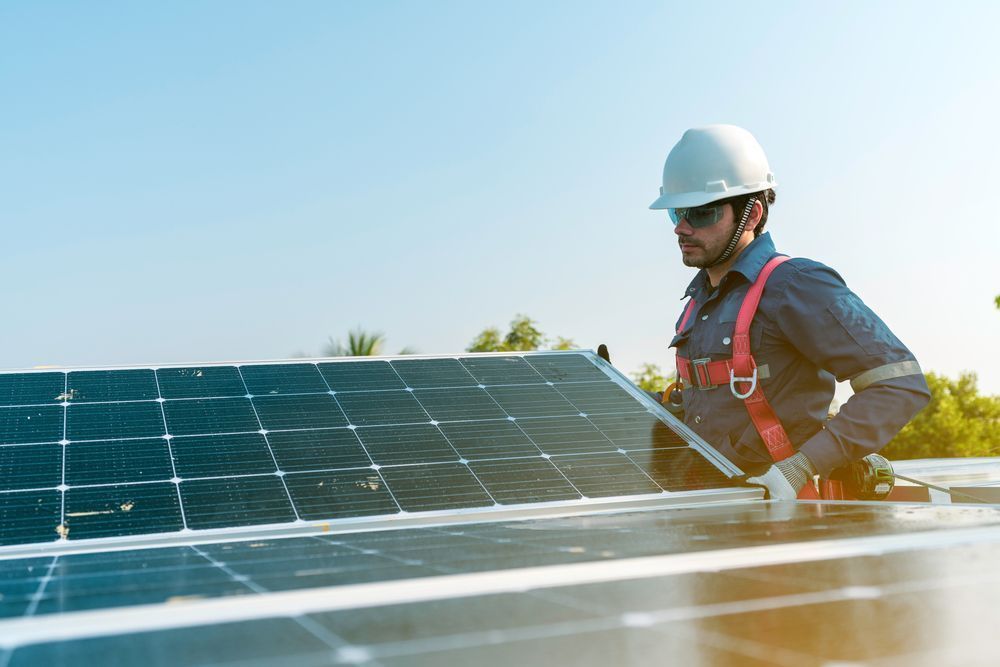
Energy independence is becoming a strategic priority for Ukrainian businesses. Last winter, companies faced production downtime and losses, so they are now increasingly investing in the construction of their own solar power plants. According to observations by YASNO, this has been accompanied by a rise in demand for energy storage systems (ESS).
Serhiy Kovalenko, the company’s CEO, spoke about this in an interview with Delo.ua.
Businesses are acting out of pragmatic considerations
Frequent power outages in the first months of 2026 affected most Ukrainian businesses. According to Serhiy Kovalenko, companies now recognize the value of energy independence and are therefore investing more actively in their own power generation.
Solar power plants have become one of the most popular solutions. At the same time, demand for energy storage systems has been growing since 2026. Currently, the popularity ratio of solar power plants to energy storage systems among Ukrainian companies is about 1:1.
“The beginning of 2026 has cemented a new reality: business has ceased to be just a consumer of electricity, it is now creating its own energy system, participating in the market, and supporting the country’s energy system,” emphasized the CEO of YASNO.
Potential for demand growth
The company is already receiving many inquiries from new clients. In the opinion of the YASNO CEO, even those who still had doubts have now put them aside.
Meanwhile, businesses that already have their own generation capacity want to expand it. According to expert estimates, annual demand for SPPs is growing by about 20%.
Cost and payback of energy projects
Serhiy Kovalenko notes rising demand for integrated solutions-SPPs plus ESIs. Storage systems allow energy to be accumulated during peak generation hours and used during low-generation periods.
Currently, 1 kW of SPPs “turnkey” costs from $350. Many factors affect the price-from equipment configuration to cable run lengths. The cost of 1 kW for ESIs starts at $230.
The average payback period for a solar power plant starts from two years. For ESIs, the situation is somewhat different-it depends on how the equipment is used. For example, if an ESI is used solely as a backup power source, then the payback period is defined by the cost of production downtime that would have occurred without the ESI.
Dynamics of solar projects
In the summer of 2024, YASNO resumed its division for the installation of solar power plants-for both businesses and individuals.
The company notes a shift in the residential segment-from meeting basic needs to achieving complete energy independence and controllable consumption. For business clients, solutions are mostly customized and tailored to each client’s consumption profile.
The company does not disclose cumulative project statistics. They only indicate that there are about 100 clients accounting for dozens of megawatts, and this figure continues to grow monthly.
Bureaucratic barriers
According to Serhiy Kovalenko, the bureaucratic side of SPP installation for business has not become any simpler. Yet at the implementation level, it is now more manageable. Most processes have already been standardized thanks to recent experience.
“Companies that professionally implement such solutions handle the entire cycle: from obtaining technical specifications to commissioning the station and connecting it to the grid. For the client, this looks like a turnkey process without the need to navigate regulatory nuances,” said the CEO of YASNO.
Challenges remain in the customized design of solar power plants due to varying technical characteristics and energy metering requirements. Additionally, bureaucracy can pose extra hurdles if a business wants to sell surplus generated energy.
The timeframe for approving a typical connection project can vary greatly-from a few weeks to several months.
EcoPolitics previously reported that in 2025, Ukraine installed 1.5 GW of new solar generation capacity. This figure is almost double last year’s amount.