The European Commission (EC) on Wednesday, May 18, in Brussels presented a plan for the transition to renewable energy sources and the rejection of energy resources from the Russian Federation.
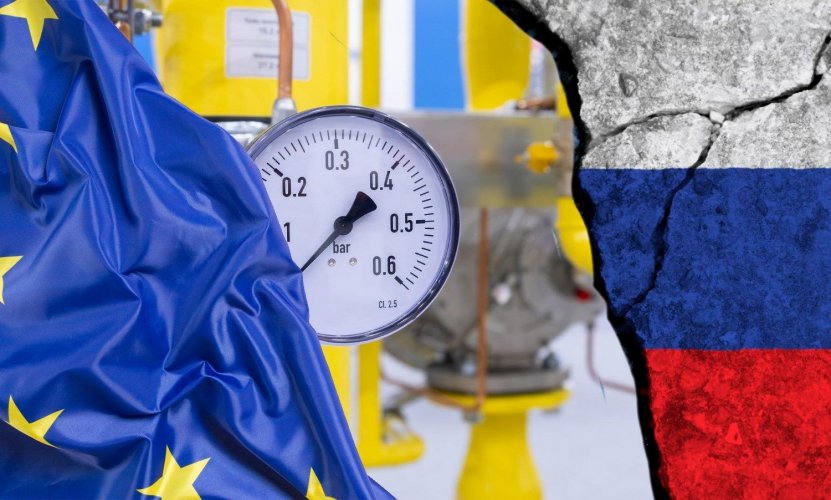
A program called REPowerEU to rapidly reduce the European Union's dependence on Russian energy and accelerate the transition to a green economy aims to raise €300 billion by 2027. Details of the plan are published on the website of the European Commission.
"There is a dual need to transform Europe's energy system: to end the EU's dependence on Russian fossil fuels, which are used as economic and political weapons and cost European taxpayers nearly €100 billion a year, and to tackle the climate crisis," the EC said in a statement. .
It is noted that the new European energy strategy REPowerEU was developed in response to "difficulties and disruptions in the global energy market caused by Russia's invasion of Ukraine."
According to the communiqué, 85% of Europeans are in favor of reducing dependence on Russian gas and oil as soon as possible in order to support Ukraine.
"Putin's war greatly undermines the global energy market. It shows, on the one hand, how heavily we depend on fossil resources, but also how vulnerable we are, relying on energy supplies from Russia. And therefore, we must get rid of dependence on Russian energy resources as quickly as possible ", - said the President of the European Commission Ursula von der Leyen.
The REPowerEU plan proposes to do this through energy conservation, diversification of energy supplies and accelerated development of renewable energy sources, which will lead to the replacement of fossil fuels in homes, industry and power generation.
About €300 billion will be allocated for this - about €72 billion in grants and €225 billion in loans.
REPowerEU provides:
- accelerating the procedures for issuing permits for renewable energy sources and related infrastructure;
- mandatory installation of solar panels on the roofs of new commercial and public buildings by 2025 and on the roofs of new residential buildings by 2029;
- common purchases of energy resources, which will ensure the import of energy without competition between EU Member States;
- raising the EU energy efficiency target for 2030 from 9% to 13%;
- increasing the target for the share of renewable energy in the EU from 40% to 45% by 2030.
It was also noted that before the aggression of Russia, the EU will support Ukraine, Moldova, the countries of the Western Balkans and the Eastern Partnership, as well as the most vulnerable partners.
“Together with Ukraine, we will continue to work together to ensure the security of supply and a functioning energy sector, paving the way for future trade in electricity and renewable hydrogen, as well as renewing the energy system as part of the REPowerUkraine initiative,” the EC noted.
Overall, reducing imports of Russian fossil fuels could save around 100 billion euros a year.
Before EcoPolitica wrote that by 2025 production of hydrogen generation plants (electrolysers) in Europe will experience a tenfold increase.