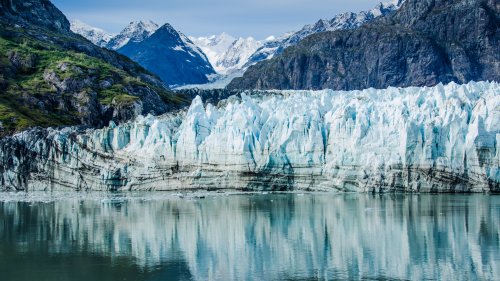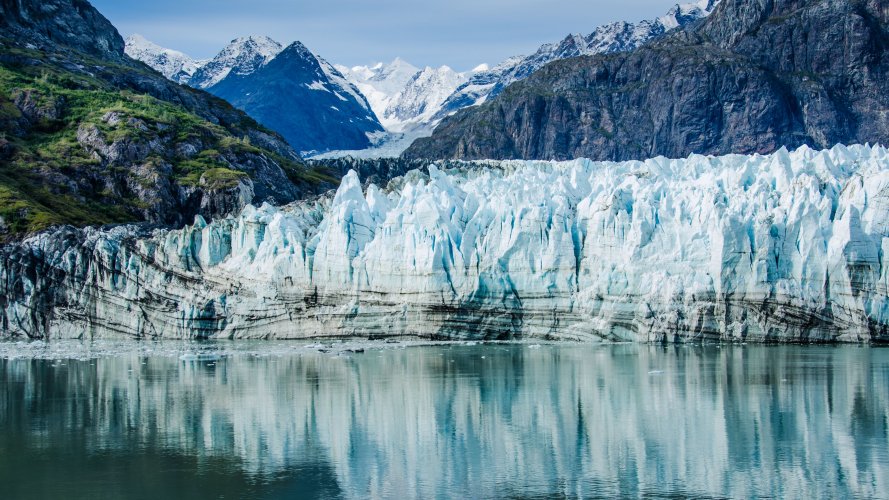
A study by a group of international scientists confirmed the accelerated melting of the Earth's ice sheets.
From 1992 to 2022, the frozen poles of the planet lost 7,560 billion tons of mass, which accounts for a quarter of all sea level rise, the BBC reports.
It is noted that the past decade has seen seven of the worst melting years. The worst year of melting was 2019, when the ice sheets lost 612 billion tons, of which 444 billion tons were in the Arctic.
The study found that in the early 1990s, the melting of the ice sheet accounted for only 5.6% of sea level rise. Currently, this indicator has increased 5 times to 25.6%.
The article explained that sea level rise is caused by a number of factors, namely:
- thermal expansion of water in a hotter world;
- runoff of meltwater from glaciers beyond the ice sheets;
- changes in the amount of water held on the continents.
Professor Andrew Shepherd, from the University of Northumbria, said the acceleration in ice sheet loss means sea levels are expected to rise significantly over the next decade.
"In past decades it was about 3 mm per year. Soon we will see 4 mm, 5 mm, 6 mm per year," he said.
Earlier, EcoPolitic wrote, that scientists have discovered that deep cracks are forming in the Thwaites Glacier in Antarctica, which is called the Doomsday Glacier, and it is melting at a significant speed. Its partial destruction could lead to a sea level rise of more than 70 cm.
As EcoPolitic previously reported, preliminary data from the National Oceanic and Atmospheric Administration (NOAA) showed that the average temperature on the surface of the ocean since the beginning of April reached 21.1°C. This is a new record level that has led to marine heat waves around the world.