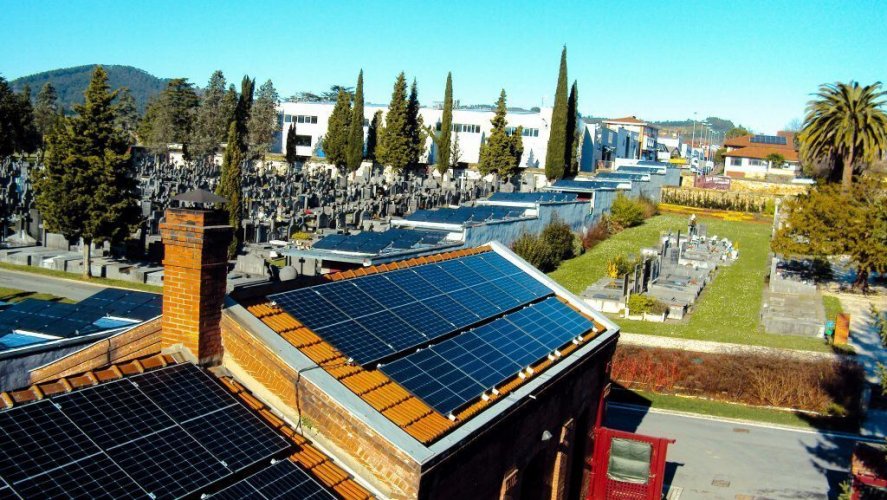
The authorities of Valencia, Spain, have launched the RIP project to install more than 6 thousand solar panels in cemeteries around the city. The city authorities intend to make this ambitious initiative the largest urban solar power plant in Spain.
Euronews writes about it.
As part of this project, about 810 solar panels have already been installed at the Grau, Campanar, and Benimamet cemeteries. A total of 6,658 units are planned to be installed. They will generate a total capacity of more than 440,000 kW per year. According to the local council, this will also reduce carbon dioxide emissions by more than 140 tons per year.
Alejandro Ramón, Valencia's advisor on climate emergency and energy transition, also said that the project will be the largest urban solar power plant in the country.
The resulting energy will mostly be used to power municipal buildings, but 25% will also power 1,000 vulnerable households.
The RIP is part of Valencia's wider Climate Mission 2030, which is one of the key reasons why the city has been chosen as European Green Capital 2024. The Climate Mission's long-term goal is to produce 27% of the city's energy from renewable sources.
As EcoPolitic previously reported, solar power plants save Ukrainians from power outages during the day.