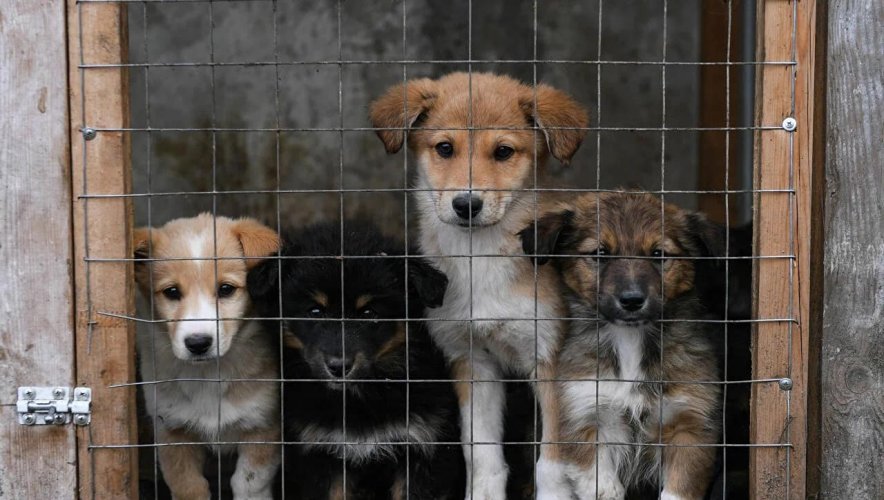
Cabinet of Ministers of Ukraine has adopted a decision that will allow monitoring the number of stray animals by humane methods in accordance with European best practices.
It was reporteded about it on Friday, June 24 by press service Ministry of Environmental Protection and Natural Resources.
The head of the Ministry of Environment, Ruslan Strilets, emphasized that with the start of a full-scale war, the number of homeless animals in Ukraine has increased significantly, and this issue must be resolved in a civilized way.
"Even before the Russian invasion, Ukraine began to implement European values and standards for the protection of animals from cruelty, implemented into national law the relevant provisions of international agreements and EU directives in the field of wildlife protection. Now we are not going to deviate from this path," he said.
The Procedure for regulating the number of dogs and cats living on the street, approved by the Cabinet of Ministers, determines:
- measures for catching and sterilizing stray animals;
- a list of persons, institutions and organizations that can provide such services;
- means of catching and the procedure for handling homeless animals.
What will happen to homeless animals
- They will be caught and, if necessary, provided with veterinary care.
- They will undergo veterinary examinations, vaccinations, biosterilization and other sanitary measures.
- Each animal will be identified, and data about it and photos will be entered in the municipal register.
- After that, the animals will be transferred to shelters, rehabilitation centers or under the supervision of public and charitable organizations, which will take care of the animals and find them a new home.
- If the animal is returned to the place of capture, it will be supervised and revaccinated annually.
"All these measures will help reduce the risk of various diseases, eliminate the danger to humans and protect animals from cruelty," the ministry said.
It is envisaged that local authorities in different oblasts should develop their own programs to regulate the number of stray animals, guided by legislation on the protection of animals from cruel treatment.
The Ministry of Environment added that they had consulted with animal protection organizations to prepare the Procedure.
Before EcoPolitics reported that animal rights activists are demanding that the authorities ban the breeding and sale of animals during martial law and for 5 years after its end to resolve the issue of stray animals.