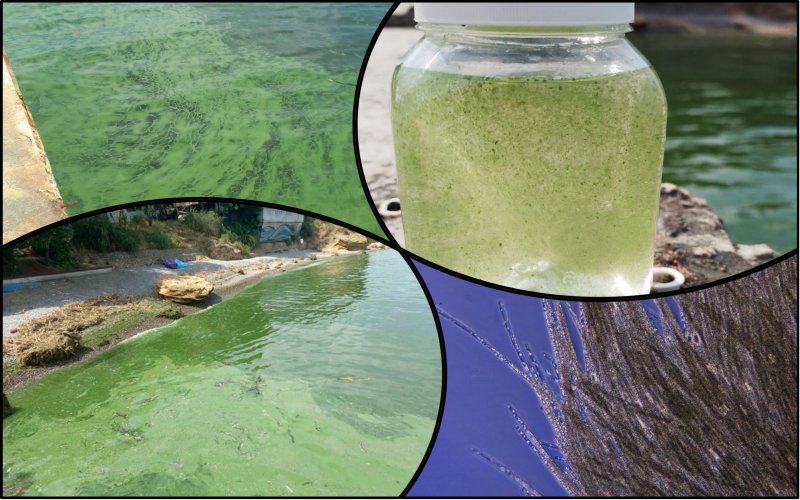
Near the coast of Odessa, the water of the Black Sea turned into a green liquid due to the blooming of algae.
Potentially toxic cyanobacteria multiplied massively in the water, Galina Terenko, an employee of the Ukrainian Scientific Center for Marine Ecology, said on Facebook.
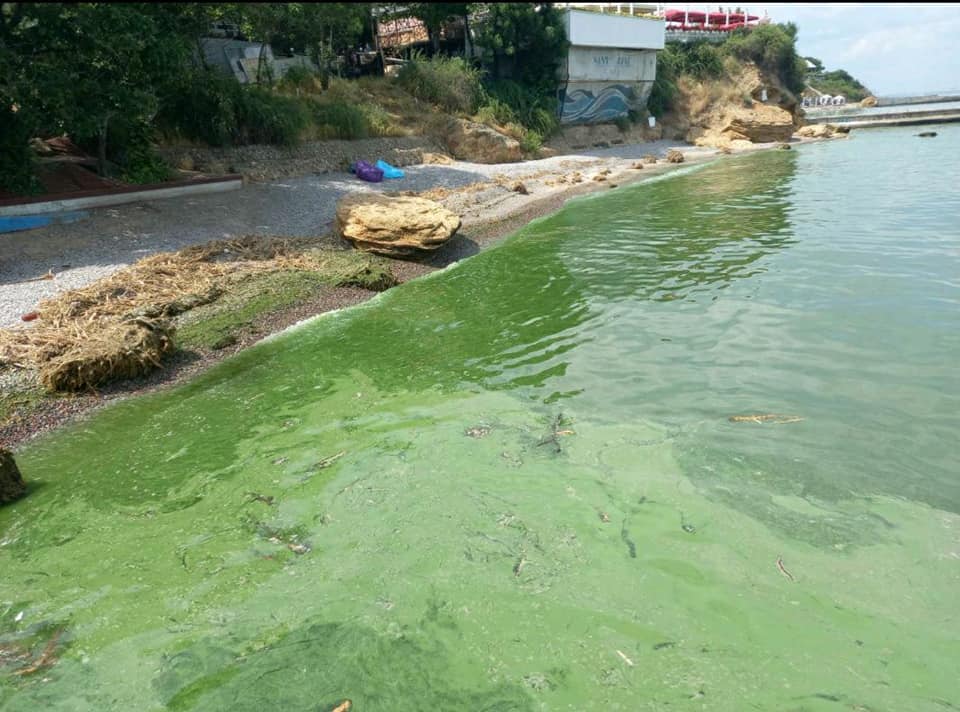
"This time, massive bunches of Aphanizomenon flos-aquae were accompanied by colonies of Dolichospermum flos-aquae and microcystis Microcystis aeruginosa, at a seawater salinity of 5.1 ppm and a temperature of 19 degrees," she said.
Terenko emphasized that no Nodularia spumigen algae, which has been observed in the Black Sea for a long time and often caused "blooming", was not found in the water samples. This species requires water with higher salinity.
As you know, due to the explosion of the Kakhovskaya HPP, the salinity of the sea water near Odesa has decreased. In addition, the flood flows were contaminated with a number of chemicals and brought with them furniture, animal carcasses, plant remains, garbage, machinery, buildings, etc.
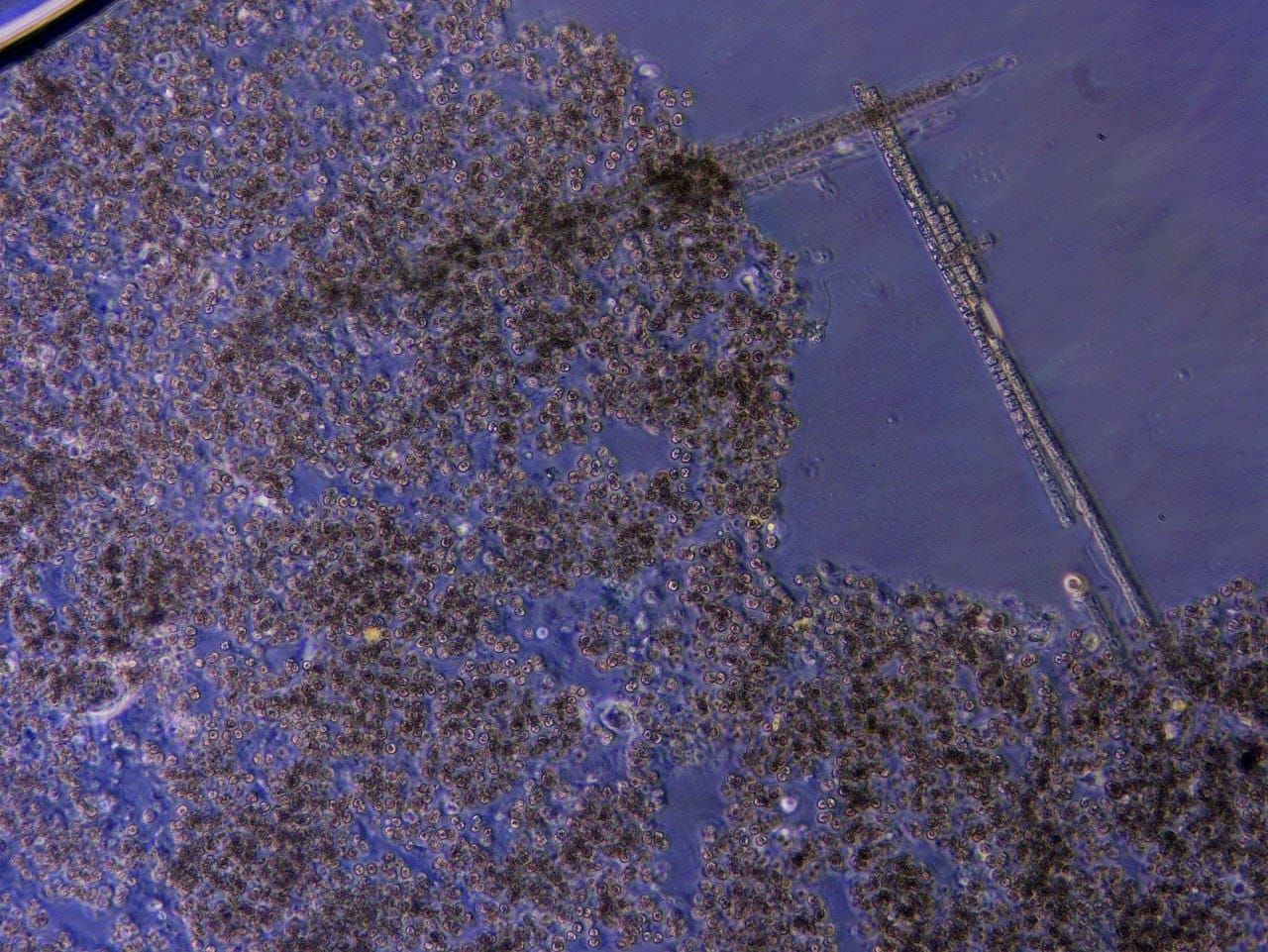
Algae begin to multiply massively and cause a "bloom" when the water has a high content of certain organic and inorganic substances.
Earlier, EcoPolitic wrote, that residents of Odesa and its surroundings temporarily it was forbidden to visit beaches and swim in the Black Sea, because the water does not meet sanitary-hygienic and epidemiological standards. Due to the explosion of the Kakhovskaya HPP, flood flows brought poisonous substances, pathogens of infectious diseases, mines and other dangerous objects into the Black Sea.
As EcoPolitic previously reported, eco-inspectors found reducing the salinity of the Black Sea water in Odesa by almost 3 times after the explosion of the Kakhovskaya HPP.