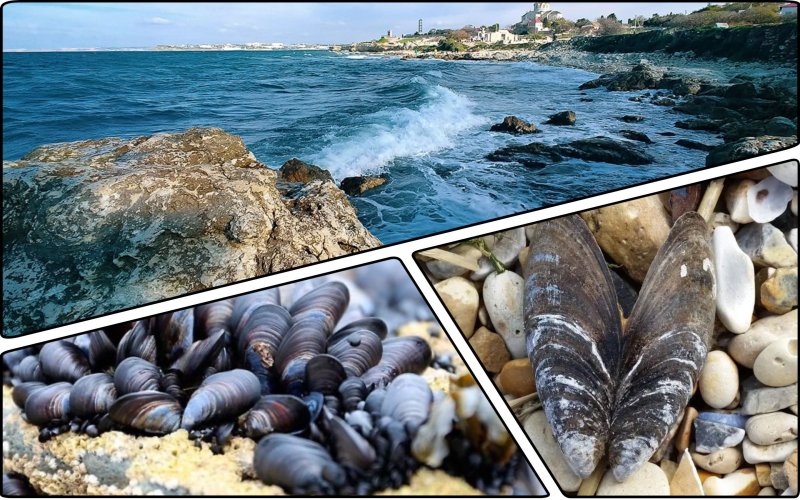
Research by ecologist Vladyslav Balinskyi showed that hundreds of tons of mussels died in the Odesa water area due to desalination as a result of the explosion of the Kakhovska HPP.
In the beach pool About 50% of all mussels died near the "Doggy" shore, he wrote on his Facebook page.
Balinsky said that there were such losses in mollusk colonies in a pool bounded by a breakwater and piers on two sides.
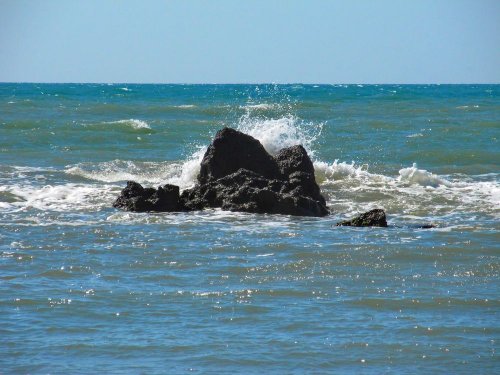
"The process is so large-scale that in places the limestone rocks have been exposed, it turns out that they are yellow in color and have a beautiful perforated texture. I think the situation with mussels is similar on all Odesa beaches with breakwaters," said the ecologist.
He added that it is also worth investigating the state of colonies in other zones. After all, only 20% of mussels died in colonies 100 meters from the shore.
"But even this, within the sea water area that has undergone desalination, is hundreds and hundreds of tons," he emphasized Balinsky.
According to him, the molluscs that survived were also affected. After all, colonies covered with mucus like a film. Clouds of turbid water rise from the bottom of the sea from plant remains, which probably cause serious damage to living organisms and especially molluscs-filtrates.
He emphasized that losses to mussel colonies should also be taken into account when calculating environmental damages from the explosion of the Kakhovskaya HPP.
Balinskyi also called the fact that the bottom of the sea is covered with remains of plants and various garbage a serious problem. He discovered a black sediment on the sand, which indicates the death of all benthic organisms that lived in the sand layer. Fatigue can also be indicated by a significant decrease in the number of goby fish.
"The ability of the sea to self-purify in the water area of the Odesa Bay, and especially its coastal part, is significantly and significantly undermined. Deposits of plant remains are a strong pollutant as a constant source of organic suspension and pose a threat from the point of view of local fatigue processes," the ecologist emphasized.
Earlier, EcoPolitic wrote, that in June, eco-inspectors found a decrease in water salinity of the Black Sea in Odesa by almost 3 times after the explosion of the Kakhovskaya HPP.
As EcoPolitic previously reported, near the coast of Odessa, the water of the Black Sea turned into a green liquid due to the blooming of algae after the explosion of the Kakhovskaya HPP.