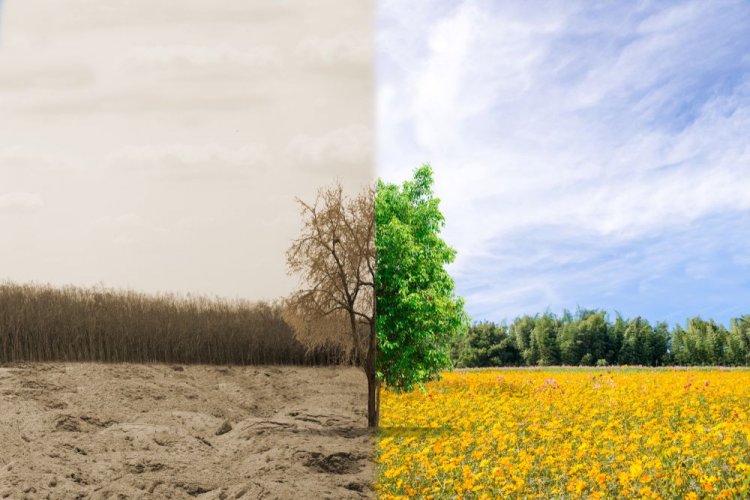
Only 1.4% of publications in online media are devoted to environmental issues.
Such results of own monitoring were made public by the NGO "Institute of Mass Information" (IMI).
What is the reason?
For comparison, in 2021 this figure was 2%. IMI experts believe that the decrease by 0.6% occurred due to a shift in journalists' attention to the war and events related to it.
"However, such a shift of focus from environmental problems is dangerous, because environmental issues, including the consequences of military actions, remain important for the long-term development of Ukraine," they are sure.
Which mass media monitored
IMI research covered 10 popular Internet media: "Ukrainian Pravda", "Censor.Net", "24 Kanal", "Suspilne", "Focus", "Gordon", "Korespondent.net", TSN, UNIAN, NV.
From September 24 to 30, IMI specialists monitored 13,771 materials on these resources.
What topics are covered
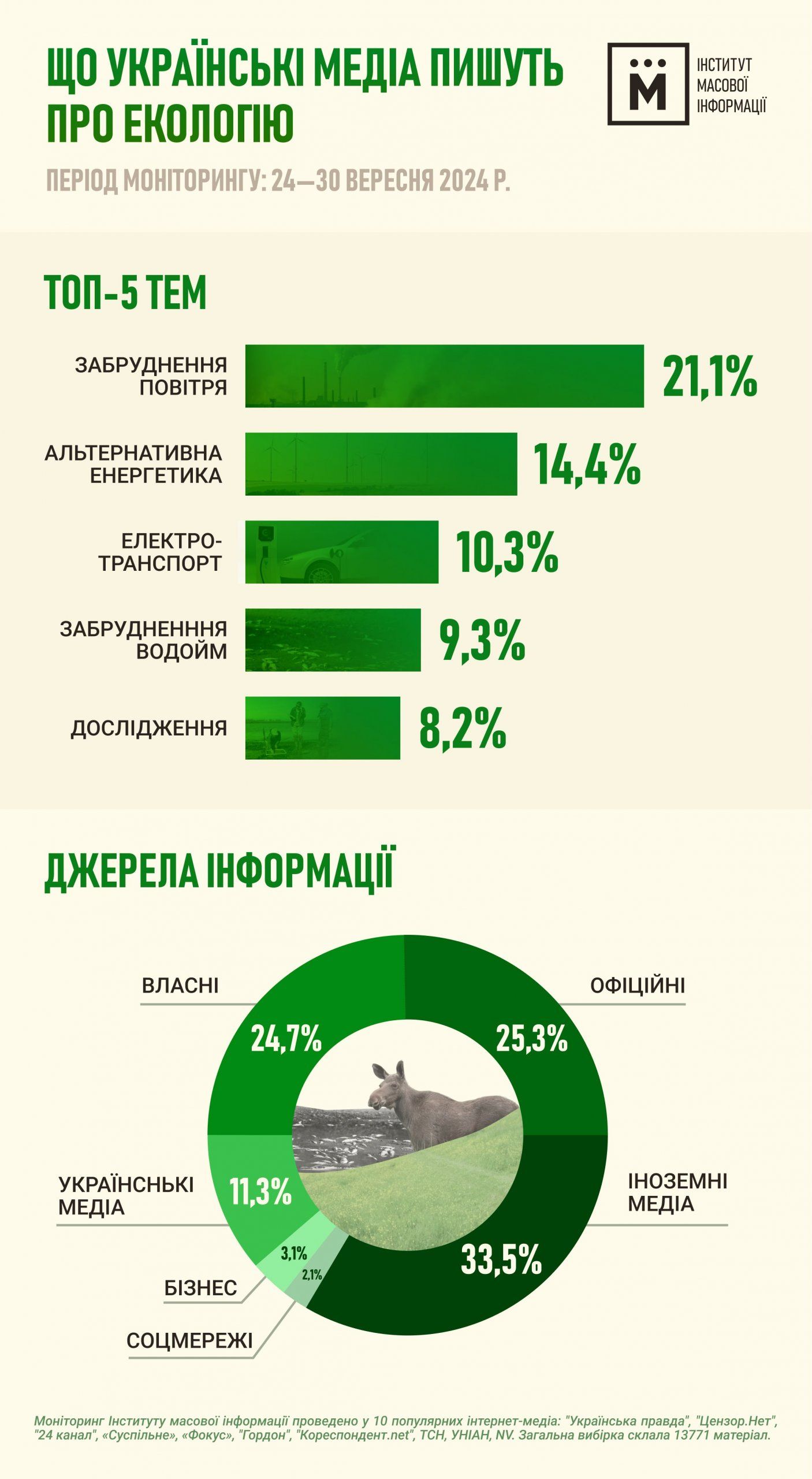
The researchers showed a list of the most popular topics for news materials and their primary sources on infographics:
Source: imi.org.ua.
During monitoring, IMI researchers recorded the following:
- in terms of the share of materials on environmental topics, the following publications became the leaders: "Focus" (3.6%), "Suspilne" (2%) and "RBK Ukraine" (1.8%);
- the TSN site became the outsider in terms of the percentage of materials on ecology (0.3% of the total number of news on the site in the monitoring period), which is 12 (!!!) times less than that of the leader, the publication "Focus";
- Internet media most often covered the following topics: air pollution, alternative energy, electric transport, water pollution and environmental research;
- geographically, in materials about environmental problems, Ukraine is most often mentioned (59%) from the total number of news items included in the sample.
IMI specialists noted that a large percentage of publications on the state of the atmospheric air are related to fires in the forests of the Kyiv region, as well as to the dust storm that came to the territory of Ukraine from the Caspian region and covered half of the country.
News about alternative energy mainly concerned the launch of new sources of generation.
IMI analysts were surprised by the unexpectedly large number of materials about electric transport (10.6% versus 4% in 2021).
The most important information drive on the topic of water pollution was the pollution of the Sejm and Desna and the mass death of fish due to the discharge of pollutants from a plant on the territory of Russia.
Earlier, EcoPolitic reported that 80% of people in the world want from governments to act more decisively in the fight against climate change and the environmental problems caused by it.