Ukraine has recently started supplying biomethane to the European Union.
This was announced by the Ukrainian Ministry of Energy and VITAGRO Group of Companies.
The ministry called it a “historic event” for our country's energy sector and “a breakthrough on the way to energy independence and European integration”.
The Energy Customs specified that they cleared the first batch of biogas for export on February 6.
“Ukraine has a huge potential for biomethane production and can be an important supplier of green energy on the European market,” the report said.
Who became a pioneer
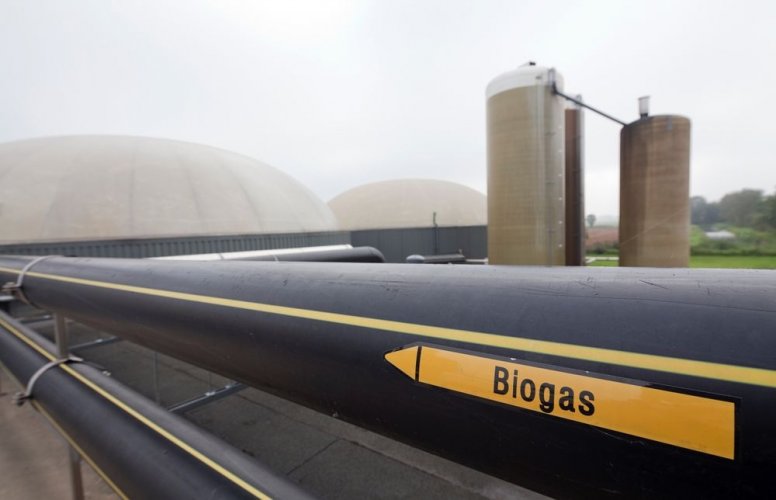
The first test delivery was made to Germany. Its volume amounted to about 68 thousand cubic meters. This biomethane was generated at the biogas plant of VITAGRO Group, launched in September 2024. It is located in Khmelnitsky region.
According to the producer, the plant will produce 3 million cubic meters of biomethane annually, which is equivalent to the gas consumption of 2,000 German households.
“Thanks to the support of our partners and the growing demand for biomethane in the EU, we are already planning further investments in this promising sector,” VITAGRO said.
According to the head of the board of the Bioenergy Association of Ukraine Georgiy Geletukha, the average price of biomethane when exported to Europe can be about €900 per 1000 cubic meters.
Earlier, Oleg Ryabov, head of the RES division of Gals Agro agricultural holding company, said that their company plans to start exporting biomethane to the EU at the end of February this year. In 2024, Gals Agro was the first to start pumping biogas from its plant in Chernigov region into underground storage facilities.
In 2025, their example was followed by Orel-Leader, a division of the international company MHP in Dnipropetrovsk region. It also plans to produce liquefied gas for export.
Why it is important
The Ministry of Energy reminded that biomethane is purified biogas, the characteristics of which correspond to natural gas. It can be used for heating, electricity generation, as a fuel for transportation. This biogas can be integrated into the gas infrastructure without additional costs for new networks, which makes it available for widespread use.
According to Energy Minister German Galushchenko, exporting biomethane from Ukraine to the EU will help:
- strengthen energy independence;
- integrate our country into the European energy space;
- open new opportunities for our energy sector;
- decarbonize the economy;
- reduce dependence on fossil fuels.
As EcoPolitic reported in early October 2024, the first Ukrainian biomethane started flowing into the domestic gas transportation system (GTS).