On Monday, March 18, the world celebrated Recycle Day, which aims to raise awareness of the importance of recycling. It encourages individuals, communities, and businesses to embrace recycling as a fundamental part of their daily lives, contributing to a circular economy where resources are reused and continuously recycled.
EcoPolitic has prepared interesting facts about this day and the benefits of recycling for its readers.
Wildlife functions according to a cyclical model. Some organisms produce organic matter, while others consume it. And waste products and dead organisms become food for utilizing organisms, i.e. reducers, and return to nature as fertilizers. However, humanity's high-tech waste cannot follow this path and needs to be processed industrially.
World Recycling Day was launched by the Global Recycling Foundation in 2018. The initiators sought to unite all people to put the planet first. After all, every year humanity produces 2.1 billion metric tons of solid waste, of which 46% can be recycled. However, this figure actually reaches 16%. Even this amount avoids more than 700 million tons of carbon emissions that cause climate change. This figure is expected to increase to 1 billion tons by 2030.
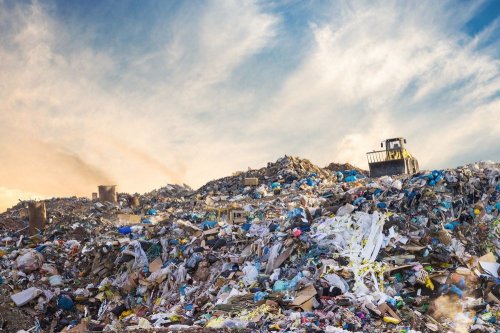
Recycling also saves natural resources. After all, widely used plastic is made from oil. Since the beginning of the plastic industry, humanity has produced approximately 9 billion tons of this material, of which about 9% has been recycled and 12% incinerated. The rest of the plastic still remains in landfills and in garbage patches in the ocean.
"There is no doubt that recycling is at the forefront of the war to save the future of our planet and humanity," the Global Recycling Foundation said, emphasizing that the last decade has been the hottest on record and that the world is facing a climate emergency of unprecedented proportions.
The development of recycling depends on each individual, namely the practice of sorting garbage, composting organic and reusing things. However, without a clear public policy, such efforts will not have a significant effect.
Thus, in Ukraine, in 2023, the European integration Law 2320-IX "On Waste Management" came into force, which launched the waste reform. This framework document envisages the introduction of extended producer responsibility and mandatory recycling of not only household waste but also other types of waste, such as cars, used oil, etc.