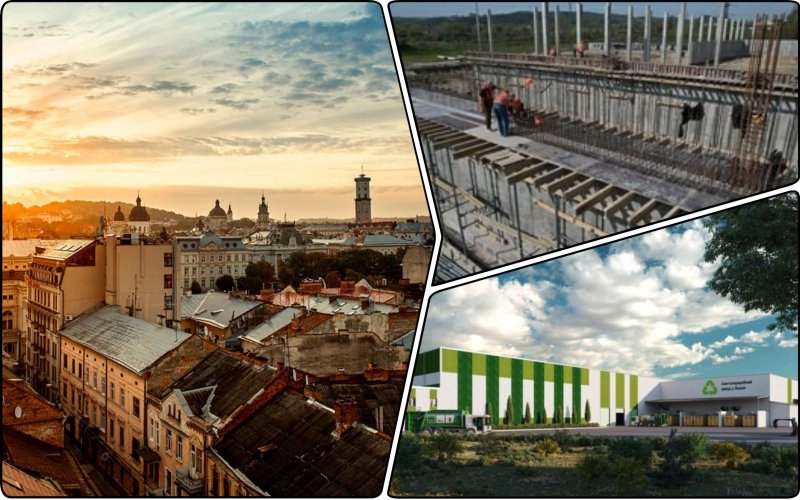
In Lviv, the construction of the waste processing plant was completed by 37.7%, in particular, the foundation for the walls of the complex was installed.
Construction should be completed by the end of 2023 and the plant should be launched in February-March 2024, Lviv City Council reports.
It is noted that the mechanical-biological complex of overloading and processing of solid household waste will be able to process 250 thousand tons of waste per year.
The press service said that construction of the biological part of the plant is currently underway. The walls for 24 biodrying chambers are reduced by 82%. And in the mechanical part, the retaining walls have already been completely completed. In addition, all the necessary contracts for the construction of the roof have already been concluded.
In the message, it was emphasized that the arrangement of the technological pit for conveyors – the foundation of the pit – is also in progress. It should be concreted during July-August.
It is noted that the final list of manufacturers and suppliers of equipment for the complex has already been agreed upon.
"We continue to work on the implementation of this important environmental project and are making every effort to complete the construction part of the works by the end of the year and start installing equipment, putting it into operation and receiving waste already next year," said Taras Kaluzhny, director of the Green City LLP.
The press service added that about 184 people will work at the waste processing plant. In order to study in detail all the processes of the complex, the management team of the plant will go to study in Poland.
Earlier, EcoPolitic wrote, that in April 2023, 100% of the design and 25% of the construction works for the waste processing plant in Lviv were completed.
As EcoPolitic previously reported, in Chervonohrad, Lviv Oblast, a project of an industrial park on the territory of coal mines, which are subject to closure as part of the transformation of coal regions, was developed. The community also plans to build wind power plants and a waste processing plant.