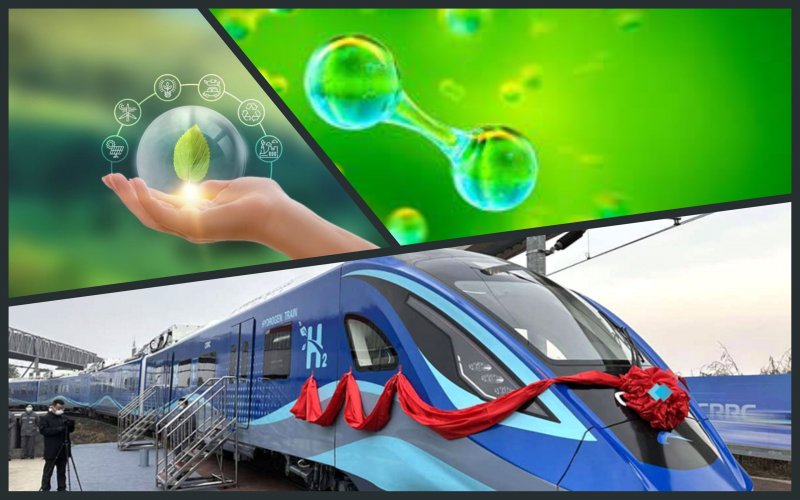
In China, the world's first urban train with a hydrogen engine, which has a maximum speed of 160 km/h, was launched at the production base of Xinjiang, Chengdu.
The train will be able to travel 600 km before needing refueling, reports FUELCELLSWORKS.
The article emphasized that the train has key technologies of the Fuxing high-speed train and includes four carriages.
The train is said to use a combination of hydrogen fuel cells and supercapacitors as a power source, replacing the traditional catenary power supply. Energy is produced by the electrochemical reaction of hydrogen and oxygen in the fuel cell. As a result of the reaction, only water is formed, without emissions of nitrogen, sulfur and other pollutants.
The authors emphasized that the train will be able to transport 1,502 passengers at the same time. It is also equipped with intelligent driving functions such as automatic wake-up, start and stop, return to depot, intelligent monitoring systems for increased safety, etc.
"The development of this hydrogen-powered urban train marks a new direction for ecological and low-carbon urban transport and will stimulate the growth and innovation of industrial chains related to hydrogen energy," the material said.
As EcoPolitic reported before, in Germany, the diesel trains of the LNVG regional connection were replaced by the first ones in the world trains on 100% hydrogen engine.