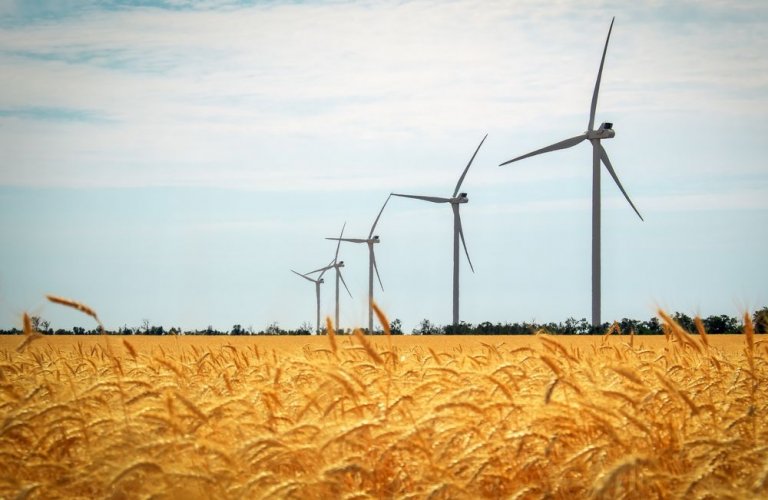
A study by the European Wind Energy Association showed that in 2023, 17 GW of new wind power capacity was launched in the EU, including 14 GW of onshore and 3 GW of offshore wind farms.
Now, the share of wind energy in Europe's electricity balance reaches 19%, according to the Ukrainian Wind Energy Association on Facebook.
It is noted that this growth has become greater than the annual growth rate of any previous year. Germany, the Netherlands and Sweden became the leaders in the commissioning of new wind farms. In particular, in 2023, the Netherlands built the most new offshore wind farms, including 1.5 GW Hollandse Kust Zuid, the largest wind farm in the world.
The report said that, according to the International Energy Agency, the EU should commission 23 GW of new wind farms annually during 2024-2028. Instead, WindEurope is convinced that in order to achieve the EU's wind energy goals by 2030, new wind farm capacity should reach 30 GW.
According to the German institute Fraunhofer ISE, in 2023, out of a total of 2,403 TWh, RES provided 43.6% or 1,044.87 TWh of electricity generation in the EU. Onshore wind turbines generated 399.55 TWh, and offshore wind turbines generated 194.11 TWh.
Earlier, EcoPolitic wrote, that according to the International Energy Agency (IEA), in 2023 the global capacity of renewable energy increased by 50% from the level of 2022, i.e. to 510 GW.
As EcoPolitic previously reported, at the COP28 climate conference, 118 governments promised to triple the global capacity of renewable energy sources by 2030 and to abandon fossil fuels by 2050.