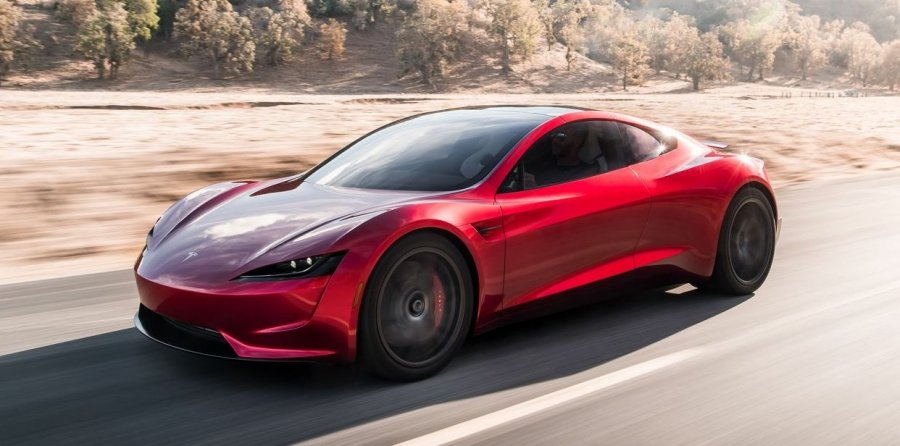
In 2022 sales of electric cars around the world increased and accounted for about 10% of the total market, thanks to significant growth in China and Europe.
During this time, sales of electric cars reached 7.8 million units, which is 68% more than in 2021, reports The Wall Street Journal.
The head of the Chinese business of Volkswagen AG, Ralf Brandstetter, said that electric cars continue to gain popularity in the country. Between 2025 and 2050, sales of traditional cars may begin to decline in China as electric vehicles take up a larger market share.
It is noted that the share of electric cars and hybrids in Europe in 2022 increased to 20.3% of the total, and the share of electric cars in China reached 19%.
In addition, 807,180 fully electric vehicles were sold in the US during the year. This increased their share to 5.8% of all cars sold from 3.2% a year earlier. And in Germany, the largest car market in Europe, electric cars accounted for 25% of the year's new car production. In December, more electric cars were sold in the country than conventional cars. People took advantage of government subsidies to buy electric cars.
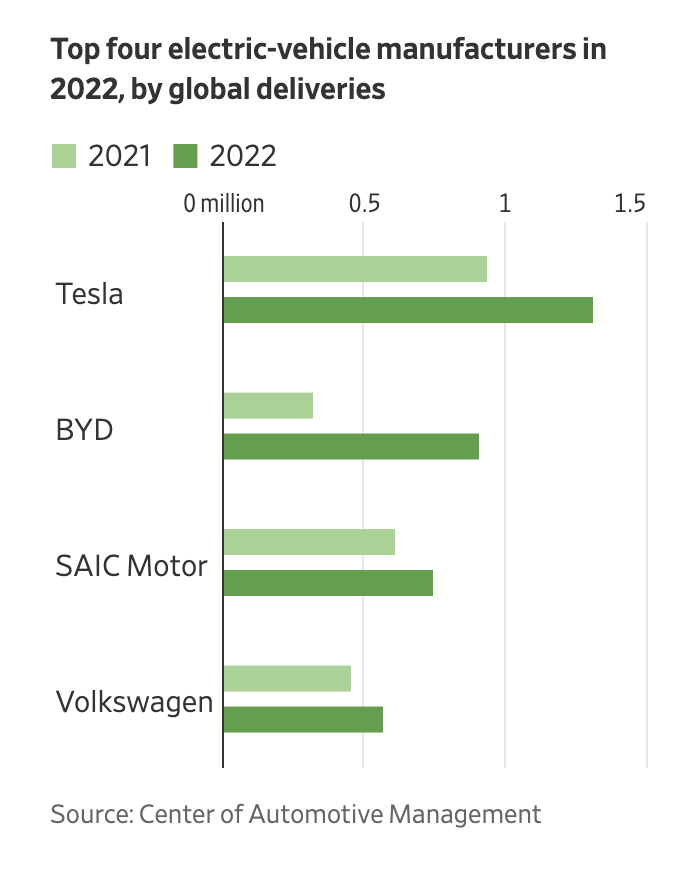
The article emphasized that Tesla Inc. remained the market leader in 2022. It is followed by Chinese manufacturers BYD Co. and SAIC Motor Corp., as well as brands within the VW Group.
In Ukraine, 13,321 electric cars were registered in 2022 - a 56% increase compared to 2021, when their number was 8,541. The total number of electric cars reaches 46,830, bit.ua reports.bit.ua.
As EcoPolitic reported before, in EU in full cars will be banned with internal combustion engines from 2035.