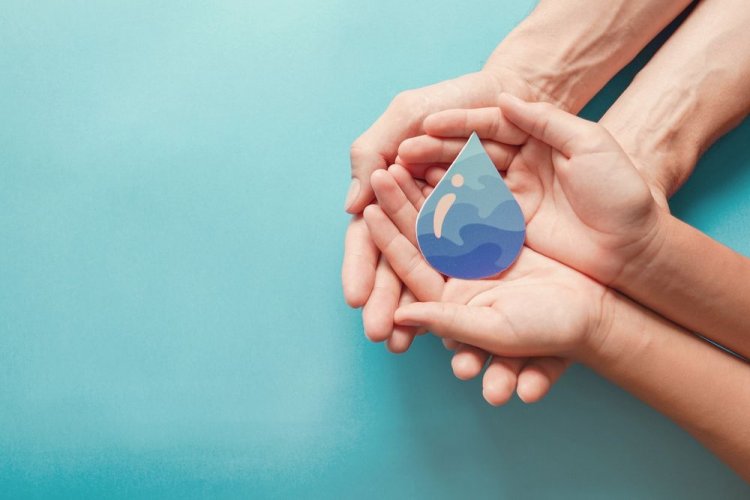
Water is the foundation of life on our planet. The functioning of living organisms, irrigation of crops, domestic needs, and industrial processes—countless areas of human activity are impossible without water resources. To draw attention to the importance of conserving them, the UN General Assembly declared March 22 as World Water Day back in 1993.
The world has entered a period of global water crisis
Droughts, floods, water pollution—due to these and other “water-related” factors, life in entire regions and ecosystems is becoming a challenge. Not long ago, the United Nations declared: there is no water crisis in the world; the world is water-bankrupt.
The water shortage is so colossal that a third of the planet’s population already feels its effects every day. Over the past half-century, the planet has lost 30% of its glacial volume and over 400 million hectares of wetlands.
Inequality in the face of the problem
The theme of World Water Day in 2026, proclaimed by the United Nations, is “Water and Gender”. It is noted that in regions with a lack of water, women and girls feel this most acutely. They are the ones responsible for sanitation and hygiene in households, and everything-from cleaning and cooking to caring for children and domestic animals-requires water.
“Where people do not have the right to safe drinking water and sanitation, inequality thrives, and women and girls bear the brunt of the burden. It is time to focus attention on water-related solutions,” the United Nations emphasizes.
The state of water resources in Ukraine
There are several factors that exacerbate the water crisis in Ukraine. EcoPolitic emphasizes the significant impact of the following:
- climate change;
- water pollution;
- irrational water use;
- the impact of the full-scale war.
For southern Ukraine, there is already a threat of desertification. The lack of precipitation, combined with the destruction of the Kakhovka Hydroelectric Power Plant by the Russians, has severely affected entire regions. In addition, summer droughts further deplete soils and prevent water bodies from replenishing.
At the same time, military actions have undermined the stability of the hydraulic infrastructure. Experts report that over 1,500 structures have already been destroyed, including dams, embankments, sluices, and pumping stations.
The shortage of water resources should motivate the preservation of water bodies, but unfortunately, this is not the case in Ukraine. Pollution of water bodies is a fairly common environmental crime, which EcoPolitica frequently mentions in its weekly summaries of environmental violations. For example, not long ago, there was a massive fish die-off in a pond in the Ternopil region. Environmentalists blame the ineffectiveness of the municipal wastewater treatment system. In Volyn, effluents pollute the Styr River, and the city water utility is suspected of misappropriating UNICEF program funds intended for the reconstruction of treatment facilities.
International Water Resources Day is a sobering reminder for every inhabitant of the planet. Water is not a given, but a limited and extremely fragile resource, without which humanity cannot survive.