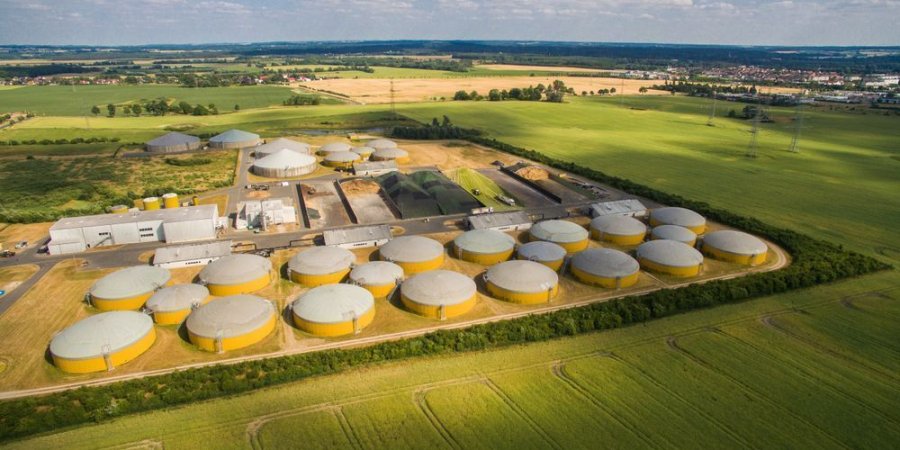
The State Agency on Energy Efficiency and Energy Saving of Ukraine is actively working on the creation of a digital Biomethane Register, which will start operating in test mode by the end of summer.
Representatives of the agency spoke about the current state of implementation of this project during the roundtable “Digital Registries – the Basis for a Transparent Renewable Energy Market.”
This digital tool is being developed to change approaches to the accounting, certification, and circulation of biomethane in Ukraine.
Hanna Zamazeyeva, Head of the State Agency on Energy Efficiency and Energy Saving, said that the agency has developed and regularly updates the Procedure for Maintaining the Biomethane Register. In cooperation with business, associations and specialized structures, they have created terms of reference and requirements for the Biomethane Register information and communication system. It is planned to be launched in test mode by the end of summer.
During the roundtable, Volodymyr Korotkov, Deputy Head of the Agency for Digital Development, Digital Transformation and Digitalization, presented the current state of implementation of the Biomethane Register and demonstrated its functioning in a test environment.
Why it is important
According to Minister Oleh Nemchinov, Ukraine has the potential to become a key supplier of renewable gases to the EU, especially biomethane and hydrogen. He noted that the full launch of the Biomethane Register is needed not only to organize exports, but also to protect the economic interests of the state.
The Digital Biomethane Register should ensure transparency of processes, compliance with European standards, and facilitate the integration of domestic biomethane into the EU internal market.
Hanna Zamazieieva also said that the State Agency on Energy Efficiency and Energy Saving is in constant dialogue with the European Commission on technical integration, signing of the relevant agreement and data exchange, and is working on international recognition of Ukrainian guarantees of biomethane origin at the EU level. The official promised that the registry will be launched only when the market is ready.
“After all, we are all interested in ensuring that this is not just the launch of an IT system, but the launch of an effective mechanism that will work for the result,” added the head of the State Agency on Energy Efficiency and Energy Saving.
One of the key agreements following the roundtable was the establishment of a coordination headquarters for biomethane and bioethanol, which will include representatives of the Ministry of Energy of Ukraine, the Ministry of Agrarian Policy and Food of Ukraine, the State Agency on Energy Efficiency, the market and the legislative branch.
As a reminder, on September 17, 2024, the Cabinet of Ministers of Ukraine adapted the Procedure for the Biomethane Register to European requirements. EcoPolicy also recently reported that Ukraine exported the first batch of liquefied biomethane to the EU.
Earlier, we informed about the shortcomings that environmentalists found in the biofuel draft laws.