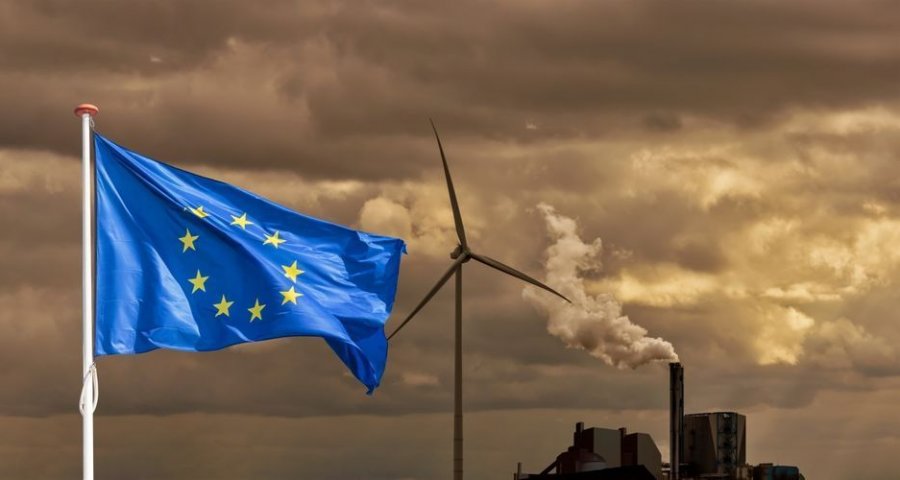
The European Commission has approved the Horizon Europe Work Programme for 2026–2027 with a total budget of €14 billion. At least 35% of its funding will be spent on climate goals.
This was reported on the website of the European Union's main executive body.
The approved program provides for a new open competition worth €540 million to support the Clean Industry Agreement. It will focus on two key areas:
- clean technologies for combating climate change;
- decarbonisation of energy-intensive industrial sectors.
This call is aimed at supporting “ready-for-implementation” projects with an emphasis on industrial competitiveness. It will launch on December 18.
The largest contribution to climate action will come from the second component of the programme (Pillar II) “Global Challenges and European Industrial Competitiveness”, which, among other initiatives, includes the following climate research and innovation activities:
- Cluster 4 “Digital Technologies, Industry and Space” allocates €437 million to initiatives covering low-carbon, clean, and circular industry, as well as advanced and innovative materials.
- Cluster 5 “Climate, Energy and Mobility” has the highest anticipated spending on climate – €1.644 billion. It covers a wide range of areas, including:
- development of climate science;
- creation of solutions for energy storage;
- advancement of renewable energy production;
- modernisation, increased flexibility, and integration of energy networks;
- development and improvement of technologies for carbon capture, utilisation, and storage (CCUS);
- enhancing efficiency, accessibility, and resilience of energy use in buildings and industry;
- promotion of zero- and low-emission vehicles, electrification, and sustainable types of fuel.
3. Cluster 6 “Food, Bioeconomy, Natural Resources, Agriculture and Environment” directs €778 million, in particular to support projects that reduce climate impact and adaptation in terrestrial and aquatic sectors. It will contribute to transforming agriculture and the food system towards sustainability and also support a low-emission circular economy that protects ecosystems and enhances resilience.
Recently, EcoPolitic reported that the European Commission presented a law on environmental deregulation, which provides for the simplification or weakening of several “green” directives and regulations. Environmentalists criticized such a move by the officials.