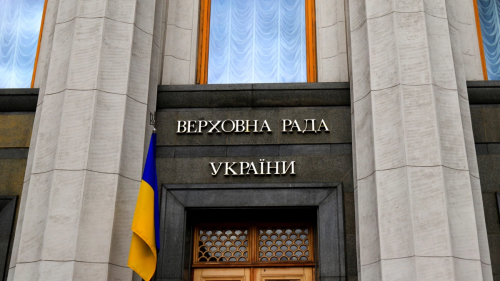
Members of the Committee on Environmental Policy and Nature Management reviewed draft laws on flood risk management and regulation of the biocides market. The documents concern not only safety, but also the approximation of Ukrainian legislation to European standards.
This is stated in a report by the eco-committee.
Civil protection and flood control
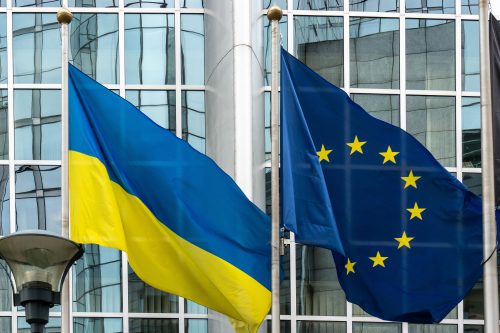
The main focus was on draft law No. 13418. It aims to amend certain legislative acts relating to flood risk management. The amendments are also intended to ensure Ukraine's participation in the European Union's Civil Protection Mechanism.
The document has been prepared for its second reading. A total of 1,107 proposals and amendments were submitted. The committee decided to submit the final version of the bill, drafted by MPs Oleg Bondarenko and Anzhelika Labunska, to the Verkhovna Rada and recommend its adoption in its entirety in the second reading.
Regulation of the biocide market
The second draft law reviewed by the environmental committee concerns the placing on the market and use of biocidal products (No. 13604). Its purpose is to implement European Regulation No. 528/2012 of 22.05.2012 and to establish a modern regulatory system in Ukraine for placing on the market and use of biocidal products.
The draft law aims to simultaneously protect people, animals, and the environment from the negative impact of biocides as well as from the harmful organisms targeted by these substances. This was stated at the meeting by Mykhailo Radutskyi, Chairman of the Parliamentary Committee on National Health, Medical Assistance, and Health Insurance, who presented the new document.
Members of the environmental committee decided to recommend that the Verkhovna Rada adopt draft law No. 13604 as a basis, taking the remarks into account.
Additional issues
The environmental committee approved the tentative meeting schedule for January. The next meeting is planned for January 28.
Committee members were presented with information about the progress of legislative work in 2025, and they also approved proposals on environmental issues for inclusion in the draft agenda of the next parliamentary session.
As previously reported by EkoPolitic, at the previous meeting the environmental committee reviewed draft laws concerning the improvement of subsoil use and the status of mountain settlements.
Parliamentarians also submitted proposals for a joint decision based on the results of the offsite meeting in Zakarpattia, where compliance with legislation during the construction of wind power plants in the mountains was discussed.