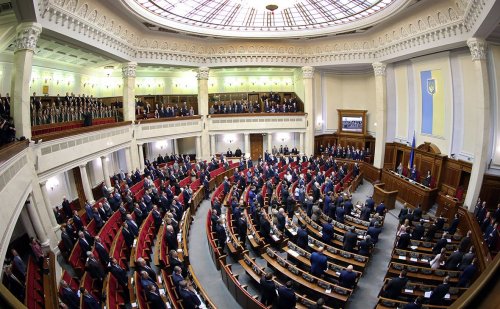
The Verkhovna Rada of Ukraine adopted as a basis in the first reading the government draft law No. 8410 "On amendments to the law of Ukraine "On Environmental Impact Assessment".
The corresponding decision was supported by 253 people's deputies, the representative of the government in the Verkhovna Rada, Taras Melnychuk, reported in Telegram.
He emphasized that the document will improve the norms of the current legislation, as well as digitalize the permit procedure. In addition, the draft law shortens the terms of the EIA procedure and reduces the body's discretionary powers when making decisions.
Melnychuk added that the adoption of the act will ensure:
- reasonableness of decisions regarding the planned activity;
- taking into account the interests of the interested public;
- guaranteeing the right to a safe environment.
According to the Minister of Environmental Protection and Natural Resources Ruslan Strilets, shortening the duration of the procedure does not violate the EU directives on air traffic control and the Aarhus Convention and will not affect the quality of its implementation in any way. Currently, businesses need about 216 days for all stages of the procedure, but after the adoption of the draft law, it will last up to 67 days.
He added that the updated EIA procedure will take on a more convenient format for all subjects of its conduct, but at the same time will not lose a single element.
Strilets emphasized that the document will contribute to the European integration of Ukraine, while at the same time easing the pressure on business.
The press service of the Ministry of Environment also emphasized that the document lays the groundwork for the post-war reconstruction of Ukraine and business development, taking into account the environmental component.
The draft law will also provide more effective and targeted information to the public about the start of the procedure, the possibility to subscribe to selected cases online and monitor the course of their consideration. Every Ukrainian or public organization will be able to sign up for notifications from the EIA register and promptly learn about each new document added to the procedure.
The draft law is designed to solve the problems of the EIA procedure, which were discovered during five years of its implementation. However, the document does not take into account comments and suggestions of the public, as well as a number of negative norms are not worked out.
As EcoPolitic previously reported, the president of the Association of Environmental Professionals PAEU, the founder of the Office of Sustainable Solutions, Ludmila Tsyganok, criticized draft law No. 8410 "On Environmental Impact Assessment" and the position of the Ministry of Environmental Protection and Natural Resources.