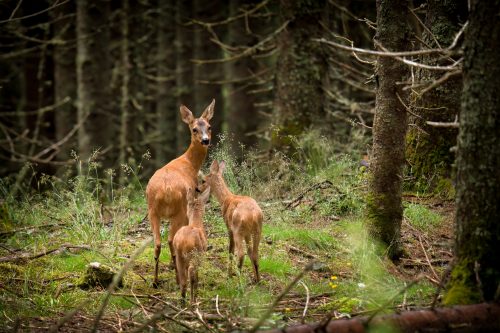
Back in 2023, unique areas of primeval and quasi-primeval forests in the Ivano-Frankivsk region were placed under the protection of the state-owned enterprise "Forests of Ukraine." However, over the years, the enterprise has failed to fulfill its obligations to ensure that these 1,590 hectares of relict forests are protected. Consequently, without land-use planning projects and established boundaries, the forests face the threat of unauthorized interference and even logging.
According to the Ivano-Frankivsk Regional Prosecutor’s Office, this has led to three lawsuits filed against the State Enterprise “Forests of Ukraine.”
Sites requiring urgent protection
The prosecutor’s office’s complaints concern 15 sites within the nature reserve fund. These unique areas are located within the Vorokhta, Nadvirna, and Deliatyn forestry enterprises, which are branches of the state-owned enterprise.
Among others, the following sites are involved:
- “Quasi-primeval Forests of the Richanske Forestry” (465.6 ha);
- “Primeval and Quasi-primeval Forests of the Polianytske Forestry” (229.8 ha);
- “Quasi-primeval Forests of the Zelenske Forestry” (109.6 ha);
- “Quasi-primeval Forests of the Biloooslavske Forestry” (107.4 ha);
Unfulfilled obligations
In 2023, the Ivano-Frankivsk Regional State Administration transferred the relict forests for protection to the State Enterprise “Forests of Ukraine,” formalizing the corresponding protective obligations. The enterprise was supposed to prepare land management projects and establish official boundaries of the protected areas. However, even now, in 2026, the foresters have failed to do so, making it impossible to protect the forests themselves or create protective zones around natural monuments.
"The law requires the mandatory creation of a protective zone around primeval forests, at least twice the height of the primeval stand. This acts as a buffer area where any logging, even sanitary, is prohibited. However, to be able to delineate it, there first needs to be a clear boundary established between commercial forest and the nature monument, and currently, there is none," said the head of the Nadvirna District Prosecutor's Office, Illia Starov.
Among the prosecutors’ demands is to recognize the State Enterprise “Forests of Ukraine’s” inaction as unlawful and to oblige the enterprise to establish the boundaries of primeval forest nature monuments on the ground.
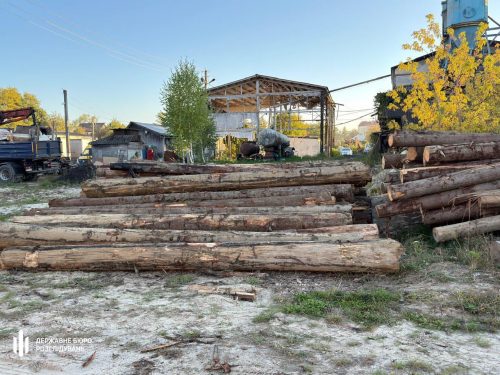
EcoPolitic earlier reported on schemes used by forestry workers to illegally harvest timber. In order to conceal a crime with sanitary logging, they resort to outright falsification.