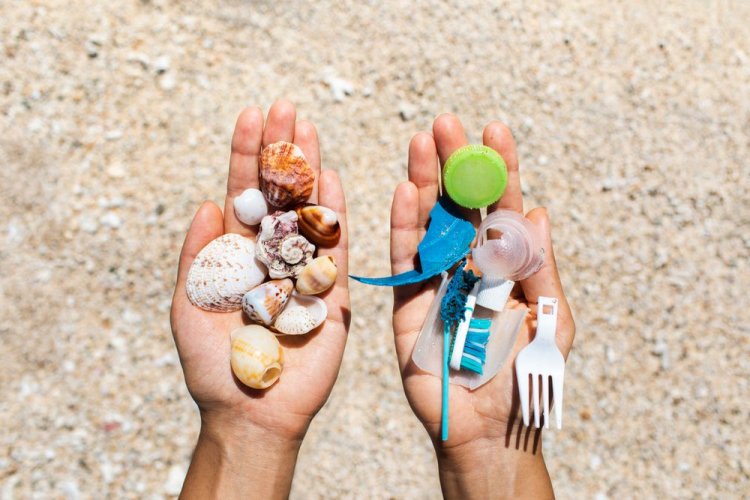
A study by the United Nations Environment Program (UNEP) found that global plastic pollution could be reduced by 80% by 2040 if a series of measures were taken.
This will reduce the negative impact on the environment, climate and human health, as well as avoid 500 million tons of carbon emissions per year, The Guardian reports.
The article emphasized that plastic is currently polluting the entire planet, from the top of Mount Everest to the deepest oceans. In addition, microplastics were found even in the blood and breast milk of people.
"Currently, the world produces 430 million tons of plastic per year, two-thirds of which is a short-lived product that soon becomes waste. Production is planned to triple by 2060," the authors said.
To reduce plastic pollution, UNEP offers:
- abandon unnecessary plastic, in particular excessive packaging;
- increase the reuse of plastic, which will reduce pollution by 30% by 2040, in particular through a deposit return scheme for containers. Such a scheme should work in England in 2025;
- increase processing - by 20%. Taxing virgin plastics and eliminating fossil fuel subsidies will make recycling more economically attractive;
- replace plastic with greener alternatives - by 17%. Takeaway food containers dominate among oceanic trash. They can be replaced with paper or compostable materials.
The authors emphasized that reducing plastic pollution would prevent losses in the amount of more than $3 trillion. This amount takes into account the impact on health, climate, air, environment and ocean pollution. As well as legal costs in cases brought against plastic companies.
UNEP added that this will help reduce plastic pollution in 2040 to 40 million tons. If the current situation does not change, it will reach 227 million tons. In addition, it will create about 700,000 jobs, mainly in low-income countries.
The material added that in March 2022, 193 countries agreed to put an end to environmental pollution with plastic. Negotiations are currently underway for a legally binding agreement until 2024.
"There will still be a need for plastic," she said Executive Director of UNEP Inger Andersen . "But we need to rethink where we use it and how we use it so that much more of it is [reused and recycled] and much less is just disposable."
It is noted that the total investment to reduce plastic pollution will reach $65 billion per year. But this is only about half of what has already been invested by the plastics industry.
Earlier, EcoPolitic wrote, that a study by Austrian scientists showed that particles of polystyrene, a plastic made from cling film, can enter the human brain.
As EcoPolitic previously reported, a report by the environmental group Oceana showed that the world's largest Internet company Amazon created more than 97 million kilograms of plastic packaging waste in 2021, which can be used to wrap the Earth more than 800 times.